Online Reporter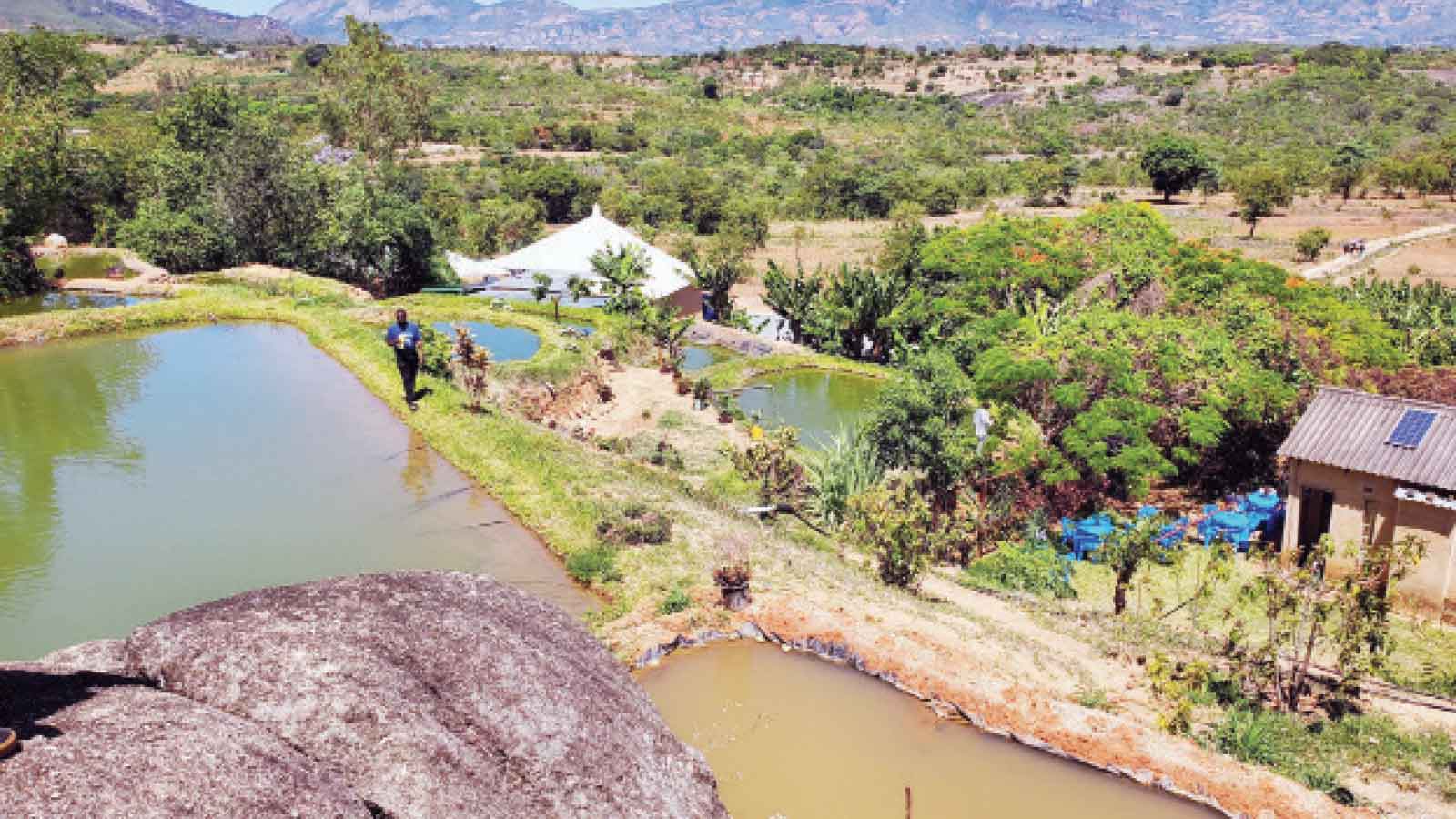
Theseus Shambare-Features Writer
The Mbona homestead is an Eden carved from vision, sweat and love.
While some pay for weekend getaways in manicured gardens to breathe, slow down, and reconnect, Excellence Mbona and his wife Catherine from Sahumani in Honde Valley, Manicaland Province, have built theirs.
Some invest in pumps and solar systems to secure water.
At Sahumani in Honde Valley, water flows freely, guided by gravity, mountain springs and quiet ingenuity.
Some pay for mountain hikes but the Mbonas wake up owning one.
Well, last Saturday was Valentine’s Day.
While many celebrated with flowers or candle-lit dinners, the Mbonas chose a different kind of ritual: a photoshoot across their homestead.
Not in botanical gardens, not in places bought for beauty, but amidst their crops, ponds and irrigation channels; spaces they built with their own hands.
Here, love hangs in the air — not as perfume, but as purpose.
This is not a story about romantic gestures.
It is about marriage as labour, sacrifice and shared vision.
The Mbonas are a couple who planted banana groves together, dug fish ponds side by side and built an ecosystem from the ground up.
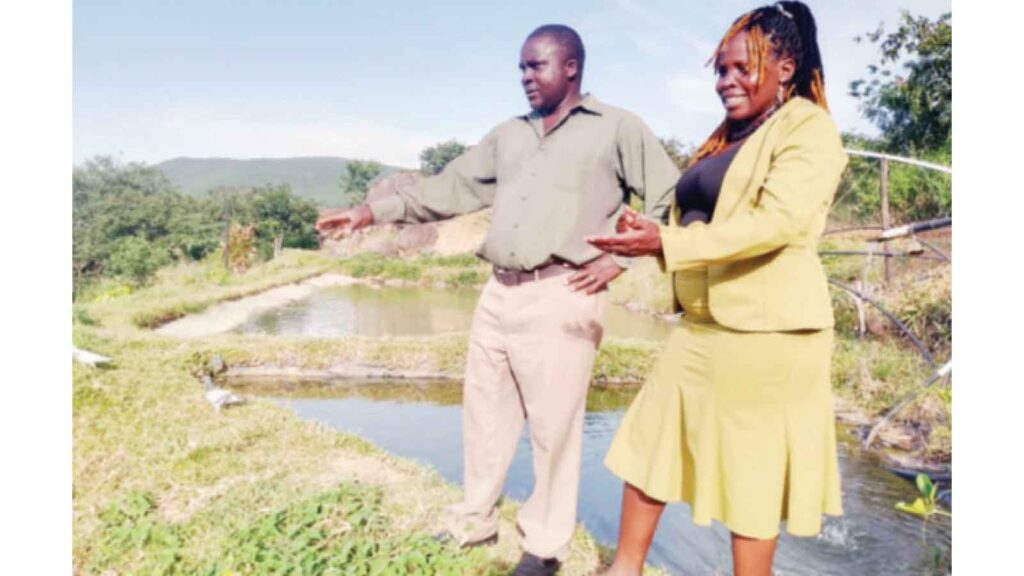
Mr Excellence Mbona and his wife, Catherine.
In 2010, long before their farm became a reference point for sustainable agriculture, they stood with picks and shovels, carving out their first fish pond.
“We did not have money to hire anyone,” Mr Mbona told The Herald.
“But we had each other. And that was enough.”
Mrs Mbona echoes: “My classroom was the field.
“Our lesson was patience.”
Over the years, droughts shrivelled banana plants and ponds ran low.
Yet the couple persevered.
Eleven fish ponds now cascade into over 10 000 banana plants, creating a closed-loop system where nutrient-rich water nourishes crops, livestock waste becomes fertiliser and energy costs drop to near zero.
“This land taught us that nothing should be wasted — not water, not effort, not people,” Mr Mbona says.
Water is more than irrigation; it is life.
It is climate-smart agriculture practiced deliberately and consistently — the same way their marriage has endured harsh seasons.
“Fish feeds the body, but the land feeds the family,” Mrs Mbona adds.
“When the land is healthy, the home is healthy.”
The homestead has grown beyond production.
At its centre stands a modest conference hall, where farmers from across Honde Valley gather to learn fish farming, banana cultivation, irrigation management and sustainable land use.
“We did not want success that ends with us,” Mr Mbona says.
“Love that does not share is incomplete.”
Workshops are held regularly in the guesthouse and in a stroke of innovation, the couple has introduced a farm junior school.
While parents absorb agricultural lessons, children in Early Childhood Development (ECD) classes learn alongside them.
A large play centre ensures that early learning is part of the same environment as agronomy, instilling respect for land and labour from a young age.
Gogo Christine Gwenzi (79), part of an all-women farming group mentored by the Mbonas, puts it simply: “They gave us courage,” she says.
“At my age, that is worth more than money.”
Local headman Mr Moji Sahumani added: “They did not just show us how to farm. They showed us how to love each other and believe in what is already around us.”
The couple’s mentorship extends beyond conventional farming.
They support people with disabilities, recognising agriculture as a pathway to dignity.
Youth programmes aim to steer young people away from drugs and into productive livelihoods.
Their philosophy is holistic: a farm must raise people, not just crops.
“Development that leaves others behind is failure,” Mr Mbona says.
Their solar-powered home, resting at the foot of the mountains, is both sanctuary and statement — a symbol of what happens when education meets innovation, and when love chooses direction.
On Valentine’s Day, the photo sessions across ponds, banana fields and irrigation channels symbolised more than marital affection.
They celebrated partnership, vision and legacy.
Each frame captured patience, resilience and the quiet triumph of love intertwined with agriculture.
The Mbona homestead is now a model for the Honde Valley community.
One women-led cooperative runs a fingerling distribution hub with support from the Fisheries and Aquaculture Resources Department and the Food and Agriculture Organisation.
It is a milestone rooted in mentorship, not luck.
Beyond the immediate harvests, the couple’s work demonstrates the power of scaling knowledge.
Children at the farm school see irrigation, conservation and ecosystem management in practice.
Farmers gain confidence to adopt climate-smart techniques.
Livelihoods expand.
“This is what true partnership looks like,” Mrs Mbona says.
“It is measured in seasons worked, not flowers given.”
In Honde Valley, love does not arrive wrapped in ribbons. It flows with water, bends with the land, and survives harsh seasons.
It grows patiently.
It is planted.
It is worked on.
And like the Mbona legacy, it feeds many.