Sundaymail Editor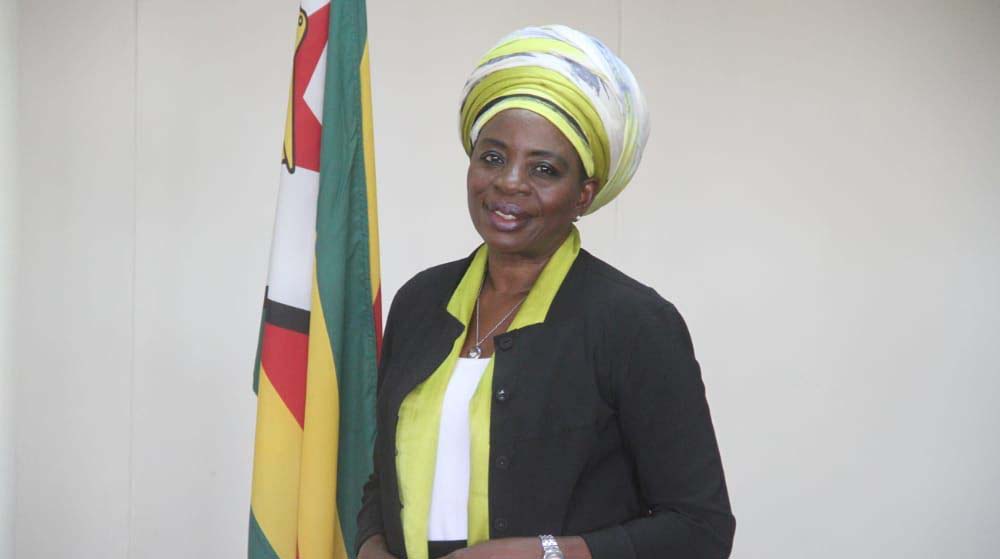
GOVERNMENT has placed re-industrialisation of the local economy at the centre of its development agenda. Over the last year, local industries have undergone rapid transformation owing to decisive interventions that have been introduced by the Government. To further stimulate growth, the Ministry of Industry and Commerce has introduced several policy interventions that are expected to maintain the embryonic growth trajectory.
Our reporter Veronica Gwaze spoke to Industry and Commerce Minister Dr Sekai Nzenza who outlined her plans for local industries.
Q: Tell us about your experience working under the Second Republic administration?
A: Under the First Republic, there were no clear and consistent policies, a situation that made it difficult for investors to come.
We did not have a whole Government approach to doing things, so one had to move from one Ministry to the other for assistance but still would not find answers.
I recall at one time I was trying to export one big piece of machinery to Zambia and I found it difficult establish which office to go through.
I was tossed around.
However, under the Second Republic, it is clear that Zimbabwe is open for business, which means right and consistent policies are key.
The President has launched the National Development Strategy 1 and my Ministry was tasked with developing the value chain and embracing value addition and beneficiation.
Under the Second Republic, we work as a team.
Q: What strategies has your Ministry introduced in order to ensure Vision 2030 becomes a reality?
A: In the past, we imported almost everything.
What we are doing now is to exploit our own resources; human capital is available, so we are using that to revive our manufacturing industry through embracing the fourth industrial revolution and technology.
My Ministry’s role is to facilitate the coming in of new technology.
Over the past two months we have been launching strategies to guide how we can revive industries, key being the Pharmaceutical Strategy and Zimbabwe Leather Sector Strategy which seek to cut imports because this is one of the reasons our prices are not consistent.
So we are looking at import substitution or domestication.
Q: What is the Government doing to ensure that local companies become more competitive in the region?
A: We recently launched the National Quality Policy which looks at producing goods that meet international standards, working closely with the Standards Association of Zimbabwe (SAZ).
We are looking at issues of quality, standards and competitiveness.
We have also embraced the African Continental Free Trade Area, meaning that we have to produce products that meet international standards and quality.
I also want to bring in the Consumer Protection Act because it is key to how the average consumer accesses those goods.
The Act was launched last year in October and its main aim is to ensure that consumers are able to access goods that meet quality and standards and are also affordable.
As part of my next 100 days programme, we have started an awareness campaign, looking at the role of the Consumer Protection Commission and ensuring that it is spelt out in many different languages and for consumers to understand their rights.
Q: Since the coming in of the New Dispensation, the manufacturing sector has been growing exponentially. Can you outline this growth trajectory and what it means for industry?
A: In March 2020, according to the Confederation of Zimbabwe Industries (CZI) report, capacity utilisation was low and this was around the time that Covid-19 hit.
However, the Covid-19 pandemic induced challenges created an opportunity for local industry.
Prior to Covid-19, a lot of goods were coming in through the borders, but when borders closed we had to look inwards and local companies started producing much more than before.
By end of year, about 85 percent of basic food commodities were now being produced locally, while goods for export went up by 18 percent.
We are predicting that the increase in local production will go up to at least 60 percent so, generally, we have produced good results in terms of increased local production.
I feel like the Zimbabwean story is not being told enough.
Q: Which sectors have performed the best?
A: All sectors have done well but the manufacturing sector is on an exciting growth trajectory.
Q: This year the country recorded a bumper harvest. How will this translate to the revival of local industries?
A: To put it simply, maize comes with a lot of benefits for the economy including abundant livestock feed, raw material for corn oil, cereal and other products.
We will be able to feed industry, boost local manufacturing and reduce imports.
We are looking at producing more fertiliser locally as well and this will feed into food security.
Already, the President and Cabinet have approved a five-year import substitution strategy for fertiliser.
A key raw material in fertiliser production is phosphate and we have high grade phosphate at Dorowa Minerals.
What is left is bringing in the latest technology.
Q: Can you give us an update on the revival of Zisco Steel, which is a key conduit for facilitating the transformation of the local economy?
A: I am the chairperson of the Zisco Steel Taskforce and we are working on a plan to help reduce steel imports.
We have an Iron and Steel Strategy whereby we intend to, through Zisco, capitalise on the iron ore that we already have.
We also need investors who will produce steel locally and this will feed into the down and upstream industries.
It is exciting because this comes with job creation too.
Q: Last year, the Government announced a blanket ban on the importation of second-hand vehicles which are older than 10 years. Has this helped with the revival of the local vehicle manufacturing sector and what are your long term plans for this sector?
A: We plan to produce vehicles locally and also invite investors who are interested in working with us to implement the motor vehicle strategy.
We did not ban import of motor vehicles older than 10 years, we simply put in a control mechanism to enable local manufacturing and to be able to utilise the available steel.
I am pleased, we are making progress.
Q: Of late companies have been complaining about delays in the disbursement of forex they would have acquired through the RBZ auction system. How are you addressing this?
A: Together with the President we have visited a number of companies and we have engaged the Reserve Bank of Zimbabwe, the Ministry of Finance and the private sector to work together in finding the best way forward to ensure companies are able to access foreign currency on time.
Q: President Mnangagwa has been calling for increased collaboration between industry and tertiary institutions through Innovation Hubs. Can you outline how universities and industry are collaborating to facilitate local production of goods?
A: We are working with the Ministry of Higher Education through Innovation Hubs, looking at the low hanging fruits.
We are saying, through innovation hubs, how can we make this a large parental infusion.
The Ministry of Higher and Tertiary Education has a triple helix model which includes collaboration with our Ministry and the Ministry of Health to facilitate research and development.
Everything we want to do has a research and development component which is why we are working closely with industrial innovation hubs because they feed into industry.
So my Ministry is like the centre, reaching out to all the Ministries.
***************
Minister Nzenza Fact File
Born May 9, 1959 in Chikomba, Mashonaland East.
Attended Sengwe Primary School and Kwenda Mission School.
Moved to the United Kingdom and trained as a nurse.
Developed interest in history and literature.
Published “Zimbabwean woman: my own story” in 1988.
Developed interest in the politics of development.
Enrolled for a PHD in International Relations at the University of Melbourne.
Joined World Vision International and worked in crisis hotspots in Rwanda, Sri Lanka, India and parts of Asia.
Returned to Zimbabwe in 1996 and worked as a programmes manager for Uzumba-Maramba-Pfungwe Agriculture, Health and Water for three years.
Moved to the United States after being appointed senior Corporate Governance analyst for an international development organisation
Returned to Zimbabwe in 2011 with her daughter to live in her rural home
Joined a local burial society and began writing a weekly column for The Herald about her experiences
Helped the burial society establish a workshop to make coffins, procure a grinding mill, establish nutrition gardens and drill boreholes in order to cut funeral expenses
Used her Diaspora networks to set up the “Simukai” community project
Locals requested that she join politics and challenge for the National Assembly seat
Campaigned under the theme: “Chihera for development”
Was elected Chikomba East legislator in 2018.



 Online Reporter