admin
admin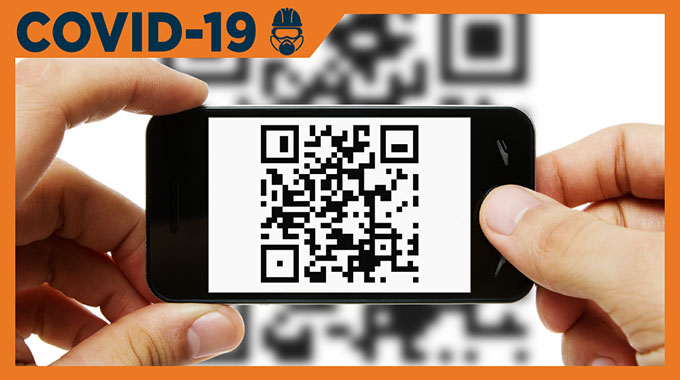
Roselyne Sachiti-Features, Health and Society Editor
Covid-19 changed the way people socialise and put plugs on international, regional and local travel when it was declared a pandemic early last year.
With many airlines being grounded as scientists tried to understand the novel virus that caused Covid-19, only a few continued to spread their wings, delivering essentials like face masks, sanitisers, personal protective equipment to various countries across the globe.
For months, boarders were closed, only allowing essential service providers like haulage trucks through.
In some countries, returning residents were only permitted as airlines also tried to find out how they could keep passengers and crew safe.
As research on Covid-19 continued, with scientists across the globe getting a better understanding, and vaccines found in record time; travel started opening up again, with airlines taking off and landing at various airports.
This meant stricter measures for travel, as those intending to do so have to go through rigorous checks that include PCR tests within 72 hours of travel, filling out health forms prior to travel, among others.
Why the permit to Travel
Certificate/QR Code?
Because of an increase in the number of people presenting fake negative Covid-19 results, many countries now require a permit to travel certificate with a Quick Response (QR) Code.
QR codes go directly to a specific page that one would have to spend 10 minutes trying to find by typing manually.
This means a reduction in time spent on each passenger and helps decongest airports.
Many countries have joined the list of countries that have introduced additional entry requirements to protect public health.
For example, all travellers who wish to enter Nigeria must register via an online travel portal, complete the online “Health Declaration/Self-Reporting Form” located on the portal and upload their negative Covid-19 PCR test result.
A permit to travel certificate with a QR code is then generated.
This is generated from the Nigeria International Travel Portal on completion of a health questionnaire, uploading of a negative Covid-19 PCR result and schedule of PCR test at day-7 of arrival in Nigeria.
Passengers failing to show a Permit to Travel Certificate/QR Code will not be allowed to board on all airlines.
According to Nigeria’s presidential taskforce on Covid-19 revised quarantine protocol (Pre-departure from country of exit), airlines that board passengers without any of the two documents (a negative Covid-19 PCR test done not more than 72 hours prior to boarding and a permit to travel certificate/QR code), shall be sanctioned as follows:
“Passengers, who are non-Nigerians, will be refused entry and returned to the point of embarkation at cost to the airline;
“Passengers who are Nigerians or holders of permanent resident permit will be allowed entry, but subjected to the procedure outlined in Section D. In addition, passengers arriving with forged (fake) Covid-19 PCR results shall be referred for prosecution.”
In Ethiopia, travellers must have the right kind of coronavirus test for Ethiopia.
There are several different Covid-19 tests available, and the Ethiopian authorities accept only specific types.
“The Ethiopian government has stipulated that a Reverse Transcription Polymerase Chain Reaction (RT-PCR) test is required,” the country outlines. “The RT-PCR is a molecular diagnostic test that detects whether the individual is currently infected with coronavirus disease.”
Many countries have now started coronavirus vaccination programmes.
As a result, travellers who have already received the jabs may be wondering whether they need a Covid-19 test to visit Ethiopia.
At the moment, vaccinated and unvaccinated passengers are subject to the same entry requirements: everyone needs to present the negative test result certificate to enter the country.
When I recently travelled to Nigeria, all the above became a reality.
Having not travelled outside the country for a whole year, the journey was both exciting, interesting and a learning process to new travel regulations.
Transiting through Addis Ababa, Ethiopia, overnight, I also had to fulfil that country’s travel health requirements.
This meant I needed to fill out two different online health forms, one for Nigeria and the other for Ethiopia to get my QR codes.
Going through the process, it became clear that despite having a valid passport and visa to enter Nigeria, the QR codes also mattered.
Testing positive for Covid-19 would mean no travel even if I had both visa and travel.
At Lancet Laboratories in Harare, a day before my travel, I quietly sat in a tent outside waiting for my turn to be called in.
Because of Covid-19 regulations, only two clients were allowed inside at a time.
When it was my turn, I went inside and paid US$60 for the test. I was told to go outside and wait to be called for the test.
Moments later, I was called back in and sat on a chair at the reception area.
Learning my head backwards, the PCR test was done. The tingle in my right nostril left me a bit uncomfortable, yet this was a necessary process one can never get used to. Being told my results would be ready in six hours, and that an SMS would be sent to notify me of their availability, I was a bit anxious.
Medical tests always make me anxious and this day was no different.
After six hours, around 5pm the SMS from Lancet finally came through and I dashed to collect the results.
I had to fill out the health forms required by both Nigerian and Ethiopian port health officials before embarking on my journey the next day.
I now appreciated the importance of the QR code.
On the forms, I had to fill in information that included my PCR test result, travel history, health history, including if I had experienced symptoms like coughing, fever, sore throat, general tiredness etc.
They also required information on whether I had come into contact with a person who had tested Covid-19 or had symptoms of the viral disease.
Doing this online was flawless. In a few minutes I had uploaded my test result on both the Nigerian and Ethiopian health forms.
After getting my QR code, I sighed. It was like crossing the finishing line for a race.
On travelling day, I was at Robert Gabriel Mugabe International Airport two hours before my departure.
Passing through a sanitising booth, I immediately came face to face with port health officials who immediately asked for my permit to travel certificate.
I immediately handed it over to them, they scanned it and got my first passage.
At the check in desk, I also presented the permit alongside my passport and other documents.
Luggage check in done, I went through other formalities that included document security checks, customs immigration, and finally security.
Arriving in Addis Ababa, the process was smooth as the QR code revealed all my health information seconds after scanning.
The following day, on my flight from Addis Ababa to Abuja, the QR Code was once again required.
Upon arrival in Abuja, visitors and returning residents stood in a queue, two meters apart as port health officials reminded everyone to social distance.
They also asked if any of the travellers was coming from a high risk country like India, Turkey etc.
One by one, we presented our permits which were also scanned giving passage to proceed for immigration formalities.
The ritual was the same.
I had to be tested again in Nigeria, present the negative Covid-19 PCR test and permit to travel certificate at their point of departure to be allowed to board flights.
I realised how the QR code had become so important in travel. No negative test, no travel, as countries try to minimise imported cases.
Enter vaccine certificates
Vaccine certificates are now being discussed by countries across the world, however, it is not yet clear whether African countries will benefit given the different vaccines that are being used.
The European Union’s vaccine passport — the Digital Covid Certificate — is being rolled out across all 27 member nations.
The Digital Covid Certificate is a way for citizens across the EU to prove they have been vaccinated against Covid-19, recently had a negative PCR test for the virus or recently recovered from Covid-19.
However, there are fears that the Digital Covid Certificate may discriminate against travellers from countries that use vaccines not approved by the EU.



 Online Reporter