Online Reporter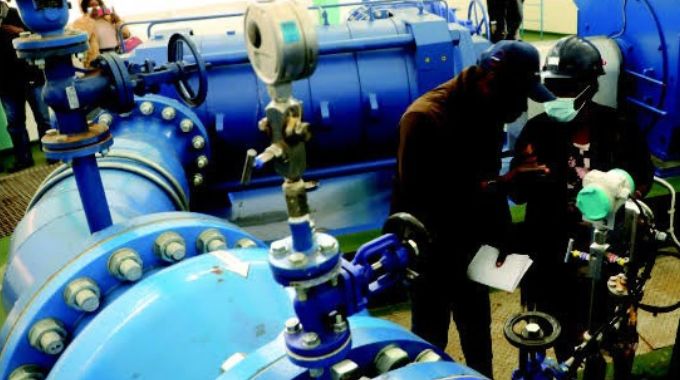
Raymond Jaravaza, [email protected]
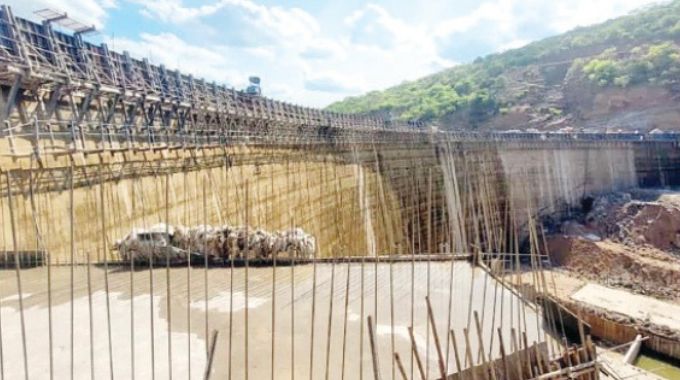
AS the construction of Lake Gwayi Shangani reaches the final stretch with the massive project expected to be completed at the end of the year, the Government has moved in to start the construction of a water treatment plant in Cowdray Park, which will feed water into residents’ homes in Bulawayo, bringing an end to water woes that have plagued the city for decades.
The Gwayi-Shangani Water Treatment Plant, being constructed on the outskirts of the city, is expected to provide a reliable water supply to Bulawayo, delivering 220 megalitres per day, a volume that exceeds the city’s daily demand which is at 165 megalitres.
The water treatment plant will include the construction of a 10-kilometre pipeline that will feed treated water into the Magwegwe Reservoir and the construction of raw water and clear water pump houses. It will also have a raw water reservoir, 10 sedimentation tanks, 10 filters and a clear water tank.
Water plant resident engineer, Paul Dengu, told a delegation led by Special Advisor to the President responsible for monitoring and implementation of Government programmes and projects, Dr Joram Gumbo that toured the site on Thursday that the contractor moved on site on 22 May and has since deployed the necessary plant, equipment and personnel.
“The project is in the design phase, with geotechnical foundation investigations for the proposed water treatment plant facilities underway to inform the final structural and foundation designs,” he said.
“An additional 25 hectares of land is required for temporary accommodation, workshops and equipment and material storage during construction of the water treatment plant. Allocation of the land by the local authorities remains outstanding, thereby constraining the establishment of the required temporary facilities,” said Eng Dengu.
For water to reach Bulawayo from Lake Gwayi-Shangani, six pump stations will be constructed along the 252 kilometre pipeline to Cowdray Park. At every pump station along the pipeline, 200 hectare irrigation plots will be established.
Eng Dengu said clearing the 50-hectare piece of land where the water treatment plant will be built has been completed.
“Geotechnical foundation investigations for the water treatment plant facilities are in progress and are scheduled for completion by 30 September 2026, while construction of the perimeter security fence around the plant has also been completed,” he added.
“For the contractor’s personnel to be able to reach the temporary accommodation, workshops and equipment and material storage site across the railway line, NRZ (National Railways of Zimbabwe) was very helpful when they completed the construction of a railway level crossing.”
It has also emerged that provisions have been made for the pipes to be supplied by a company in South Africa, although the contractor would prefer that they be manufactured in the country to save on transport and other logistical costs.
“A haulage truck can only carry six pipes and bringing them from South Africa would be costly. So, we would prefer having the pipes manufactured locally. The pipeline will be buried underground as leaving the pipes exposed to weather elements would affect their structural integrity,” said Eng Dengu.
“In terms of the water that will be used during the construction of the plant, we drilled on site but
did not encounter any water because this area has limited underground water. So, it was proposed that the water be sourced from the Nyamandlovu Aquifer.”
In his remarks, Dr Gumbo said that while the Government continued to fund the construction of the Lake Gwayi Shangani, the water treatment plant needed to be finished on time.
“Bulawayo’s water challenges will be a thing of the past once the Gwayi Shangani Dam is completed and I’m happy that Government continues to release monthly funding for the project,” he said.
“The contractor has assured us that constructing the 252 kilometre pipeline is the easiest part, so while the dam reaches completion, work at the water treatment plant must start.
“The geotechnical foundation investigations that the contractor is presently busy with are very important, otherwise, if constructed on a weak foundation, then the water treatment plant will collapse,” said Dr Gumbo.
According to Eng Dengu, the pipeline can be constructed in seven months with 12 contractors involved in the project.
The multi-million-dollar project is a key component of the National Matabeleland Zambezi Water Project (NMZWP) and forms part of broader efforts to improve water security, agricultural production and economic development in the Matabeleland region.
The completion of Lake Gwayi-Shangani is one of the flagship investments under the Second Republic led by President Mnangagwa, expected to unlock opportunities in irrigation farming, tourism and rural industrialisation, while strengthening climate resilience in Matabeleland North.
The project is expected to transform agricultural production in Matabeleland North by supporting irrigation schemes along the pipeline corridor and creating new opportunities for large-scale commercial farming.