Tichaona Zindoga
Come to think of it: the world’s most influential political party is the Communist Part of China. No, it is not a party from America, Europe or Asian which are associated with (Western-style) democracy.
The CPC is the most influential party among some of the world’s biggest institutions, primarily defined by their governing power in major global economies and their massive memberships. They shape both domestic policies and international geopolitics.China has a membership of 101 million people, governing the world’s second largest country.
However, if one were to look at the history of the party, and how it has developed in over a century, the CPC is one of the most important institutions to be seen in contemporary human history.
This is based on the CPC’s powerful socialist ideology, its invention of the guerrila warfare, contribution to ending Fascism, assisting African and Third World liberation struggles against colonialism and imperialism and providing a modernisation template that has become a hallmark of development.
And, too, this is the party of Chairman Mao Zedong, Deng Xiaoping, and now, Xi Jinping.These are men whose contribuition to China at the helm of the CPC contributed to its modernisation and influence globally.China is itself an ancient civilisation of more than 5 000 years, which also happened to be a world power and commercial capital and interacted with other capitals including here in Zimbabwe, over the intervening years.
Yet, it all began quite modestly,105 years ago.
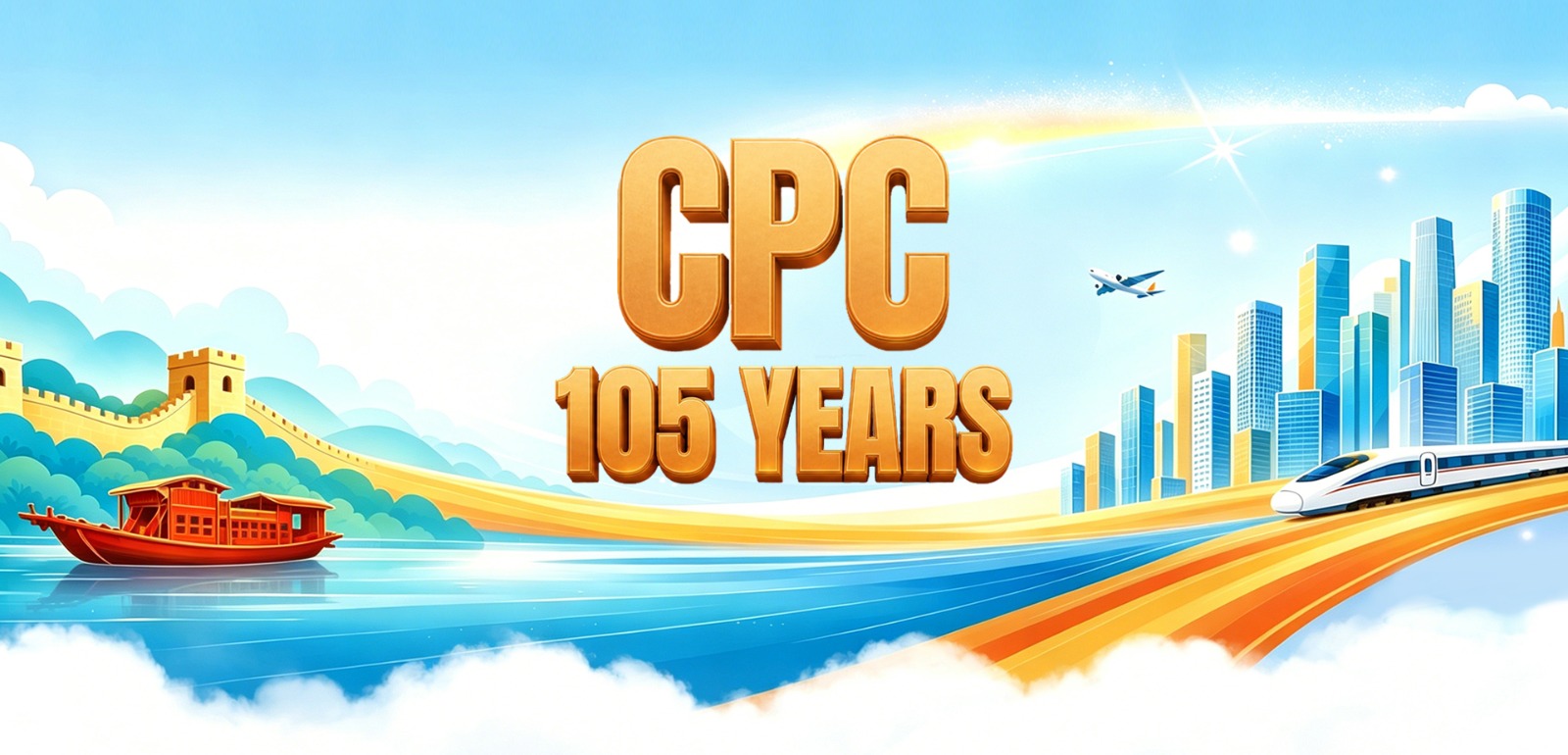
According to Chinese accounts, back in July 1921, 13 delegates representing merely 50 Party members nationwide convened the First National Congress aboard a small boat near Shanghai. Today, the CPC has grown into the world’s largest ruling political party, boasting over 101 million members who unite and lead the 1.4 billion Chinese people forward.
Through 105 years of relentless hard work, the CPC, as a pioneering trailblazer, has guided the Chinese people through countless hardships and successfully forge and stay committed to the path of socialism with Chinese characteristics.
For many of us who have studied China, from school textbooks to experiencing a modern China through visiting the country, the CPC – and the country at large – is an open book full of lessons.
Zimbabwe is among many countries globally that closely follow the Chinese model politics, governance and society.
The liberation struggle that was waged from the 1960s gave birth to Zanu-PF as the political organisation, socialism as the ideology and an army fashioned along the lines of the People’s Liberation Army. Zanu was formed in 1964, and it is considered a fraternal or sister party.
Back in the 1960s, China gave military training to Zimbabwe’s liberation fighters, first happening in China where President Mnangagwa got his instruction at Nanjing, then Nanking.
According to Zimbabwe’s former Ambassador to China, Cde Chris Mutsvangwa, the President is among the first three luminaries of the revolutionary partyu to make first contact with China – the other ones being Herbert Chitepo, former Zanu chairman, and military commander Josiah Magama Tongogara.
China’s contribution to Zimbabwe’s liberation led to Independence in 1980, while nealry over the past 46 years, China and Zimbabwe have stood shoulder to shoulder through profound changes taking place in the world.
The CPC and Zanu-PF relationship is the glue that holds our two countries together.
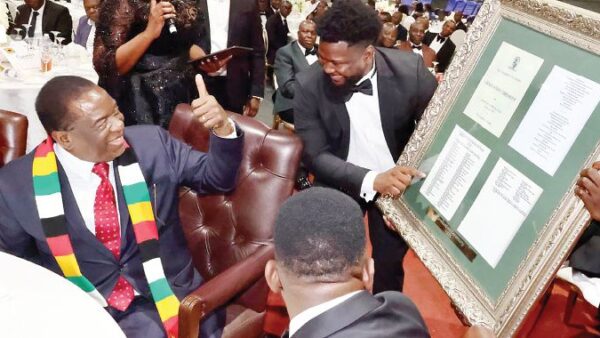
In a presentation commemorating the 105th anniversary held in Harare on Thursday, Chinese Ambassador to Zimbabwe, mr Zhou Ding, said: “The CPC shares weal and woe with the people, bound to them heart and soul.”
(Which compares with the quote, “China and African countries have always been good friends who stand together through prosperity and adversity, good partners who share weal and woe, and good comrades who fully trust each other,” which is contained in the important paper, ‘Africa in the New Era: A Partnership of Equals’ released in 2021, the centenary year.)
China and Africa continue to strengthen relations across various areas – at multilateral and bilateral levels – thanks to the strategic nature of the CPC as the driving force behind the State.
Today, China is slowly building a new global consensus because the party is being led by a visionary leader, President Xi, who has over the years proposed various initiatives that could holistically change how the world runs and is governed.
Since 2021, President Xi has proposed “the four global inititiatives” – Global Development Initiative (GDI), the Global Security Initiative (GSI), the Global Civilization Initiative (GCI), and the Global Governance Initiative (GGI). Together, these initiatives seek to reshape the traditional international order by offering alternative pathways to progress and cooperation.
The GDI focuses on economic advancement and poverty alleviation aligned with United Nations goals, while the GSI advocates for a security model based on national sovereignty and non-interference over military alliances. Meanwhile, the GCI promotes cultural pluralism by rejecting Western-centric “universal values” in favor of diverse developmental models, and the GGI serves as the overarching operating system designed to elevate the voice and structural representation of the Global South in multilateral institutions.
The relevance and distinction of these initiatives are that they are straight from China’s socialist and internationalist orientation.
Apart from birthing these ideas for international recalibration, China has been a moving blueprint and encyclopaedia of political and organisational ideas.
A common criticism is that sometimes political parties elsewhere are not able to replicate the CPC. This argument is misplace – China itself advises that its system should not be “copied and pasted” but its model must be applied to suit local conditions not wholesale.
One can recall Deng Xiaoping telling Tanzanian President and father of African socialism that, in 1989.
The CPC has had remarkable characteristic of continuous self-reflection, self-evaluation and self-correction. This has led, in turn, to continuous self-improvement.
Unsurprisingly, ahead of the 105th anniversary, last month, Xi Jinping Thought on Party Building was formally introduced.
Its core tenets are encapsulated in the “Fourteen Insistences”, which deliver valuable experience and wisdom for political parties worldwide seeking to strengthen self-development.
The Fourteen Insistences, also referred to as the Fourteen Principles of Xi Jinping Thought on Party Building, include exhortations to, Uphold and strengthen the Party’s overall leadership over all undertakings; .Adhere to a people-centred approach to all work; Boost theoretical education and ideological development within the Party;
Refine a well-structured, fully connected Party organisational system; Cultivate a contingent of loyal, upright, responsible high-calibre cadres; Resolutely combat corruption and purify the political ecosystem within the Party; Reinforce the political accountability for full and rigorous Party self-governance; and Leverage Party building to underpin and advance national governance.
The CPC has been well endowed with thoughtful leadership and an ecosystem that allows ideas to thrive.
The party also implements resolutely its ideas, which have turned out to be brilliant.
It is no surprise that the CPC (itself the leader of a democratic internal co-governance system) is the world’s most influential political parties.
It is a good example to take a leaf from, because it is a political gift to the world.
To achieve longevity, African parties, including Zanu-PF in Zimbabwe should continuously study the CPC and invest in party building for the benefit of the future.
According to Ambassador Zhou, “The CPC keeps the bigger picture firmly in mind, balancing long-term national rejuvenation goals with pressing short-term domestic demands, and accurately grasping the tides of our times.”
Exactly what Zimbabwe and the ruling Zanu-PF need, as it charts its own path to the future. We should also have our own fundamentals or “insistences” to carry us forward.
*Zindoga is an expert on Zimbabwe-China relations. He is the director of a local think tank, Ruzivo Media and Resource Centre.