Online Reporter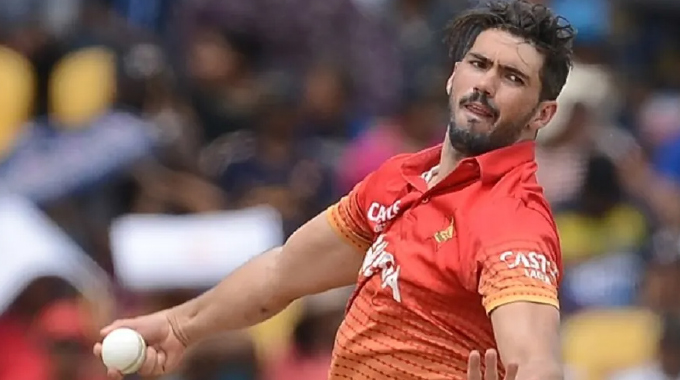
Brandon Moyo, Zimpapers Sports Hub
WHEN Zimbabwe Cricket (ZC) announced the return of former national team captain Graeme Cremer after a seven-year absence, it was framed as a story of unfinished business — a chapter the leg-spinner needed to close properly.
Cremer, who was 32 when he stepped away from the game, had put his career on hold due to family commitments, relocating to the United Arab Emirates where his wife was working as a pilot for Emirates Airlines.
At the time of his departure in 2018, Cremer said, “With my wife always away flying, I now have a full-time job looking after the kids and settling them into this new environment. I am hoping this may only be temporary, so I may be able to commute back and forth to Zimbabwe, but who knows what the future holds. That’s all I can say at this stage. But while I am away, I wish Zimbabwe Cricket all the very best in what’s to come, and I hope to join the boys again in the future.”

Now 39, Cremer has returned and was named in the squad that suffered a 3-0 whitewash in the T20I series against Afghanistan at Harare Sports Club. For some, his return is romantic — a Chevrons great coming back to right an ending that felt incomplete. However, sentiment, for all its emotional pull, can be a dangerous currency in sport.
While many have welcomed Cremer’s return, others have raised concerns. The game has moved on, and new talents have emerged in his absence. His selection has effectively displaced players who have been working hard to earn their place in the national setup. The likes of Vincent Masekesa, Ainsley Ndlovu, and Brandon Mavuta have all fought for the jersey, only to now risk being sidelined.
Cremer’s return is widely seen as a reflection of ZC’s structural shortcomings, particularly its failure to support and develop the younger players who have served the team since his departure. Mavuta, for example, has reportedly opted out of First-Class cricket this season in favour of club cricket in New Zealand. One can only sympathise with him, as the message from the selectors — prioritising Cremer — suggests a short-term mindset that undermines the long-term prospects of the national team. His decision to leave speaks volumes about the disillusionment felt by players who see their efforts overlooked in favour of a returning veteran.
Adding to the controversy is the basis of Cremer’s selection. He has not played professional cricket in seven years, and his recall was justified by his performance for Takashinga Patriots 1 in the National Premier League (NPL), where he finished as the leading wicket-taker in the 45-over competition. This standard is highly contentious, especially given that national team captain Sikandar Raza has publicly stated that club cricket numbers should not count for international selection. This contradiction leaves observers questioning the criteria used to justify Cremer’s immediate return to the national side.
The precedent set by selecting a player based solely on club cricket performance, bypassing the expected provincial pathway, is troubling. If NPL performance is now the benchmark, then players like Brian Chari, Tawanda Maposa, and Innocent Kaia — who also had strong campaigns — should be considered equally. This inconsistency sends a disheartening message to young players in the development pipeline. They are left wondering what incentive remains to pursue cricket seriously when a 39-year-old can bypass the system and walk straight into the national team. While some argue that age should not be a barrier if a player is good enough, the reality is that young players are told to take wickets in provincial cricket to earn selection. That standard must apply to all.
By not backing young leg-spinners against tough opposition, ZC may be undermining its own future. In a few years, the board may lament the lack of experienced players in the national setup. A more sustainable strategy would have been to blood younger players while using Cremer in a mentoring or coaching capacity. Although Zimbabwe has struggled to find a reliable wicket-taking leg-spinner since Cremer’s departure, the overall bowling unit has improved. His return, therefore, does not appear to address any urgent technical deficiencies.
While Cremer undoubtedly brings a wealth of experience, sport is not sentimental. It is indifferent to nostalgia. A player of his stature should have followed the same pathway as everyone else — earning his place through provincial cricket. Alternatively, his experience could have been better utilised in a coaching role, guiding the next generation of spinners. Cricket belongs to those who are playing it now. No matter how great a legacy, no one deserves to walk back into the national side after seven years away. Greatness earns respect, but respect is no substitute for readiness.
Perhaps the most perplexing aspect of Cremer’s return is that he did not play a single game in the T20I series against Afghanistan. This leaves the ultimate question hanging: what was the point of selecting a 39-year-old player if the management had no intention of fielding him?
— @brandon_malvin