Herald Reporter
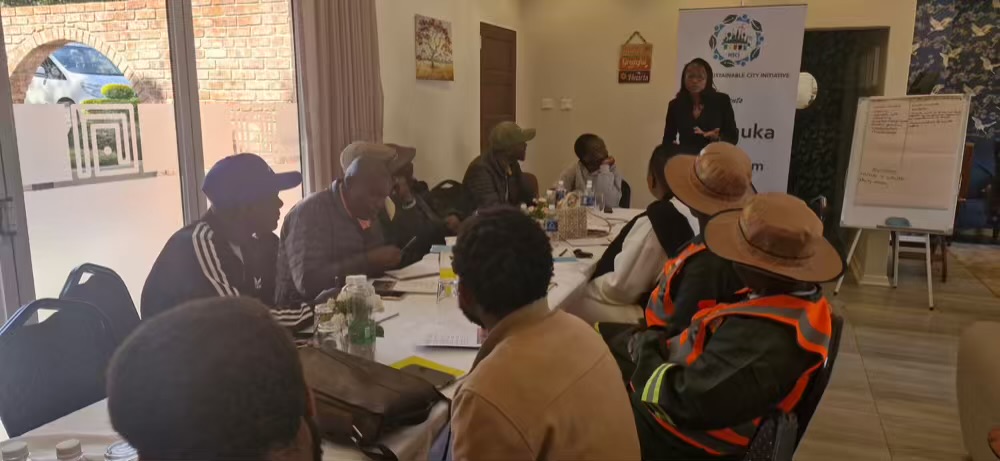
STAKEHOLDERS implementing the Harare Sustainable Cities Initiative (HSCI) today convened a script development workshop to harness the power of the creative arts in communicating the project’s impact on communities, with a focus on sustainable urban development, environmental stewardship and social transformation.
The full-day workshop, held in Highlands, Harare, brought together representatives from Government, the Environmental Management Agency (EMA), implementing partners, waste reclaimers, community organisations and creative practitioners to co-develop a production that will translate complex sustainability issues into compelling stories for communities across Zimbabwe.
Participants explored ways of using drama, music and storytelling to raise awareness on waste management, clean energy, waste-to-wealth initiatives, drug and substance abuse prevention, green infrastructure and the inclusion of waste reclaimers in the circular economy.
The Harare Sustainable Cities Initiative, chaired by the Government of Zimbabwe and implemented by UN-Habitat with funding from the Swedish International Development Cooperation Agency (Sida), seeks to improve the quality of life for Harare residents through sustainable waste management, clean energy, climate-responsive infrastructure and inclusive urban development.
The programme also promotes circular economy principles by transforming waste into economic opportunities while strengthening resource efficiency in the built environment.
Implementation is being carried out through a consortium comprising Practical Action, Soberlife International, Community Water Alliance, Green Building Council of Zimbabwe, Zimbabwe Sunshine Group, Action24, the City of Harare and Epworth Local Board, with each organisation leading interventions within its area of expertise.
Officials said the planned creative production will serve as a public education tool to promote environmental sustainability, social inclusion and positive behavioural change while ensuring that the voices of communities benefiting from the initiative are reflected authentically.
Environmental Management Agency official Mr Mugadza provided technical input throughout the workshop, guiding discussions on environmental protection, sustainable waste management and community awareness.
Speaking during the workshop, HSCI Monitoring, Evaluation and Communications Officer Ms Gamuchirai Gono said the production should accurately capture the project’s achievements while making sustainability issues accessible to ordinary citizens.
“This production is an opportunity to demonstrate what sustainable urban development means in people’s everyday lives,” he said.
“The Harare Sustainable Cities Initiative is not only about infrastructure; it is about empowering communities, strengthening local authorities and building cleaner, more inclusive and resilient urban systems in line with Sustainable Development Goal 11.
“The story should reflect the project’s full impact, from waste-to-wealth opportunities and improved livelihoods for waste reclaimers to clean energy, safer communities and greener, resource-efficient buildings.
“We also encourage the use of local languages so that communities can easily relate to and take ownership of the message.”
Zimbabwe Sunshine Group executive director Mr Ronny Mbaisa said the creative arts remain among the most effective tools for communicating development messages and inspiring behavioural change.
“Creative arts have the unique ability to educate, inspire and transform communities. People remember stories, music and drama far more than technical presentations,” he said.
“By working with artists, we are creating a platform that makes important messages on sustainable waste management, clean energy, environmental protection and social wellbeing easier to understand and more memorable.”
Mr Mbaisa said the workshop demonstrated the value of collaboration between Government, development agencies, environmental institutions and the creative sector in advancing sustainable urban development.
The Harare Sustainable Cities Initiative continues to implement integrated programmes that promote waste-to-wealth systems, resource recovery, renewable energy, energy-efficient buildings and improved urban services, with the broader objective of creating cleaner, healthier and more resilient communities.
The workshop drew contributions from several leading creatives, including Sakarombe Stewart, Rumbi Tapfuma, Karen Nyakudya, Martin Matamba, Agnes Trigy, Obert Chavhundura, Kuda Matsaugaise, Anthony E. Tongai, Willom Tight, Moses Kawara, Wilson Biswel, Charity Dhlodlo, Melysa Dlodlo, Obedience Chikwati and Taurai Kawara.