dyton mupawaenda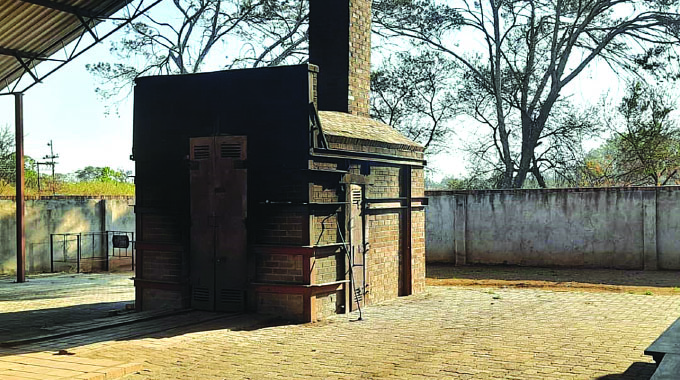
Bulawayo Bureau
CREMATION, a process shrouded in meticulous details, unfolds at West Park Cemetery in Bulawayo with a touch of reverence. Here, a specialist lays special wood in the crematorium, and the solemn ritual of transforming a body into ashes spans over 12 hours.
Cremation remains an unconventional choice in Zimbabwe, often perceived as “unAfrican,” despite fervent efforts by local authorities, including the Bulawayo City Council, to encourage its adoption due to the diminishing burial space within the city.
In the wake of the cremation of the esteemed academic, Professor Ntombizakhe Mlilo, at the West Park crematorium, a spirited debate has erupted on social media regarding the willingness of black individuals to embrace this practice.
The West Park crematorium is operated in partnership with Farley Funeral Services, and our Bulawayo Bureau had the privilege of speaking with Constantine Kaseke, the General Manager of Farley Funeral Services, to unravel the intricacies of cremation.
As per data from the BCC in 2019, a mere 120 cremations were conducted annually at West Park Cemetery, starkly contrasting with the 3 600 traditional burials. Notably, the refurbishment of the West Park crematorium was orchestrated by the Hindu community after its breakdown, an initiative revealing the diverse cultural tapestry of the city.
A sobering fact emerges – less than five black individuals opt for cremation here each year. This statistic poignantly reflects the lingering reluctance within the black community in Bulawayo to embrace this age-old practice.
“Cremation is still very unpopular among black people, we hardly do three cremations per year. The majority of people that do cremation are the Hindu community and white people. Special firewood is required for cremations so we have a person who supplies us with the wood when the crematorium is booked.
“Time is very important when we do a cremation because the process takes a lot of hours to be completed from the time the body is placed into the crematorium until the following morning when the ashes are collected, put into an urn and given to the family of the deceased,” explained Kaseke.
An urn is a special container were ashes of a cremated individual are placed.
An average of six bodies are cremated at West Park crematorium per month.
Families of a cremated deceased dispose of the ashes in various ways, depending on the wishes of the late individual such as scattering the ashes in a lake or dam where the late individual liked to fish, for example. Some families keep the ashes.
Contrary to popular belief that cremation is cheaper than burial, Kaseke said the costs are almost the same.
“You will realise that for instance, when a black person is cremated, costs such as buying a coffin, catering for mourners in the days leading to the cremation day still have to be met so it will be incorrect to say that cremation is cheaper.
“The paperwork for cremation is just the same as that of burials with the only difference being that a burial order is not required for cremations.
“The family of the deceased must go through the required statutory requirements as defined by the law then indicate with BCC that the deceased will be cremated,” he said.
The West Park crematorium sits on a fairly large piece of land with a chapel right next to it, where friends and relatives of the deceased can conduct a church service before the cremation.
A red brick structure with a chimney sits in the centre of a huge shade with metal roofing, next to a row of benches where relatives of the deceased sit before the crematorium is set on fire. An undertaker from Farley Funeral Services takes the mourners through the whole process.
In the case of the late Professor Mlilo, the body was placed in the crematorium together with the coffin before the fire was lit.
“The crematorium requires a lot of heat to burn the body to ashes, which brings me back to the point I made earlier about special firewood that is required for cremation. We do one cremation at a time, meticulously, so that each family is given the right ashes for their relative,” he added.
The West Park crematorium is the only one that serves the City of Kings.


 Online Reporter