daniel chigunwe
Trust Khosa
Black Umfolosi leader Sotsha Moyo embodies a unique blend of humility and extraordinary talent.
He may not catch the eye on the bustling streets locally, but his captivating voice has earned him recognition as one of Zimbabwe’s most sought-after musical and cultural ambassadors on the international stage.
His unassuming presence belies a depth of artistry that resonates deeply with audiences, transcending cultural boundaries and elevating the rich musical heritage of his homeland.
For nearly four decades, Sotsha has embarked on at least two international tours each year, performing for weeks or even months.
Backed by the ever-evolving Black Umfolosi outfit, formed in 1982 after the war, singing has always been his first love. Even after spending his teenage years as a freedom fighter under ZAPU’s military wing, ZIPRA, where he received military training, Sotsha continues to identify himself as a humble African singer.
Sotsha’s favourite genre is Imbube, which originated in the South African mines, where men and women would sing acapella tracks to pass the time. The genre is a creative blend of unique harmonies and engaging rhythms, captivating audiences wherever it is performed.
Although Imbube is particularly popular in Matabeleland and parts of the Midlands provinces of Zimbabwe, Sotsha has promoted it to become a national treasure by taking it overseas. His efforts have also resonated with non-Ndebele-speaking audiences across Zimbabwe, marking a significant achievement.
While many of these songs are traditionally performed at rituals, weddings, and other significant celebrations, Sotsha has successfully introduced the genre to international audiences, showcasing the rich cultural heritage of Zimbabwe.
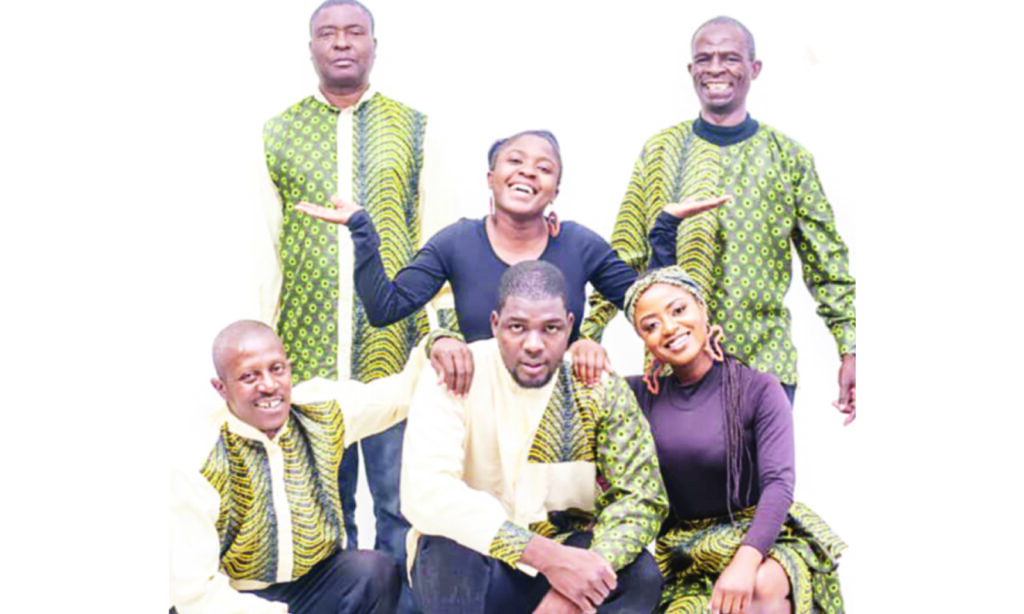
Being a cultural treasure that preserves how our ancestors used sound and frequencies, Sotsha is certainly a living legend who deserves special mention. Sotsha, who recently received an award at The Zim Community Trailblazers Awards, could not hide his elation after being recognised on his home turf.
Many people will easily remember the Black Umfolosi leader for their all-time anthem “Unity,” which continues to touch the hearts of generations. Wherever the song is performed, it leaves many yearning for peace, self-pride and Ubuntu, which Sotsha has been preaching over the years.
Taking The Herald Arts down memory lane, Sotsha, who has remained grounded, reflects on his identity as a role model and fighter.
Culturally, he has always wanted to defend his heritage while promoting unity across divides.
“It’s quite amazing when people respect me wherever I go with my group, Black Umfolosi, which was formed in 1982.
“The group was composed of students at George Silundika Secondary High School in Nyamandlovu.
“Our genre is Imbube, which propelled us to acclaim as we toured nearby countries like Botswana, Swaziland, and South Africa,” he said.
As has become the norm, some of the members left to pursue other career paths while others passed away. Sotsha, being the last man standing from the majority of the founding members, still dreams big.
“We have been to more than 30 countries across many continents, including Europe, Asia, and South America, alongside my group, Black Umfolosi. Since 1990, we have been touring Europe each year, and last year we performed in England and Wales. We are looking forward to another invitation this year,” he said.
Before he became the star he is today, he recounted his days in the liberation struggle.
“While many people know me as a singer, I went to war when I was 14 after my father’s huts were burnt down. Several other huts in our area were also burnt down by the Ian Smith regime. By then I was going to school, but I had to drop out and join others through Botswana under the ZIPRA wing towards Christmas time.
“In January (1977), I flew to Lusaka, Zambia, where I received basic training, especially in combat tactics,” he stressed.
After independence, Sotsha and other comrades stayed behind in Zambia and only returned home later.
“We came back home around May-June 1980 when Zimbabwe was a free country, but it was hard to integrate with locals back home.
“Since we went to war at a young age, we still had small frames, and it took a lot of counselling for us to reintegrate with others,” he said.
Sotsha chronicled how counselling helped them return to school.
“After the war, I still pursued education with others, but we were already popular as a band since we toured many parts of Zimbabwe.”
Despite losing most of his peers, Sotsha has remained firm and resolute in his quest to make an impression.
“Since 1990, I have been touring many countries with my group. I have been to Australia, Malaysia, and Europe doing live shows.
“We hold at least two international shows each year as a result of our music, which touches many people,” he said.
When it comes to awards, Sotsha believes he has done his best on home soil.
“As a group, we have won several awards both locally and overseas.
“We have won awards at ZIMA, NAMA on three occasions, and most recently, The Zim Community Trailblazers.”
His story would be incomplete without acknowledging the person who wrote the song “Unity,” which has also caught the attention of President Mnangagwa.
“I wrote the song together with Dennis Nkomo and James Zikhali. Sadly, two of my peers have died, but I still give them credit as well.”
Explaining the name Black Umfolosi, he mentioned its significance.
“The name Black Umfolosi is derived from a river that never runs dry. In our case, we are a river that will not run dry but will continue to flow for years.
“We are simply preaching the eternal gospel of peace and unity, which has made us distinct over the years,” he explained.
Who is Sotsha Moyo?
The talented crooner was born on April 24, 1965, in Bulilima-Mangwe, in Ngwana village, situated on the northern boundary of Plumtree Town.
He comes from a family of 11, being the fourth born. The singer plays traditional Kalanga music to honour his roots and language.
He has recorded several albums between 2003 and his latest in 2022, with the rest being singles, which he did with the Black Umfolosi Choir. Sotsha is married to Thalitha Mpofu, and the couple is blessed with four children – three girls and a boy.



 Online Reporter