

 Online Reporter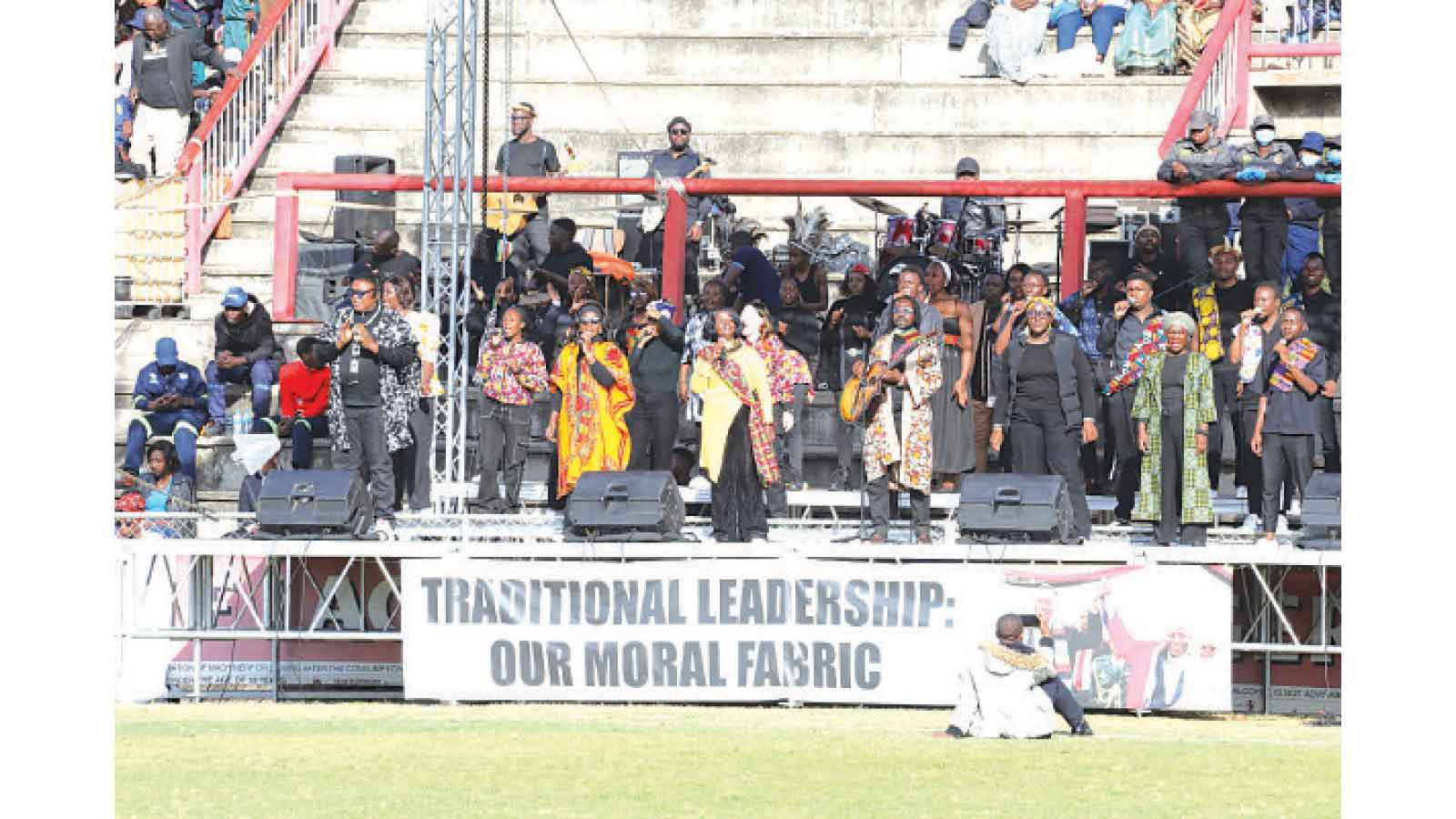
Lifestyle Writers
Culture and heritage are the bedrock of human society.
They shape our collective memory, define distinct identities and pass essential values from generation to generation.
Beyond grounding us in our roots, preserving traditions fosters global diversity, builds mutual respect and serves as a major driver of local economic growth through cultural tourism
In that regard, Bulawayo once again lived up to its status as Zimbabwe’s cultural heartbeat after hosting a colourful and emotionally charged Culture Month launch that brought together thousands of people from across the country in a grand celebration of identity, heritage and unity.
From the early hours of Thursday, the atmosphere around Barbourfields Stadium was electric.
Roads leading to the iconic venue were filled with people dressed in African attire, schoolchildren singing traditional songs, vendors selling cultural artefacts and creatives carrying drums, costumes and instruments as excitement swept across the City of Kings.
For many who attended, the event was not just another Government programme. It became a deeply emotional celebration of Zimbabwean identity, diversity and pride.
President Mnangagwa was the guest of honour at the event, which attracted Government officials, diplomats, traditional leaders, artistes, exhibitors and ordinary citizens in huge numbers.
Held under the theme “Cultural Diversity: Advancing Vision 2030”, the launch transformed Barbourfields into a vibrant carnival of music, dance, theatre, fashion and food, with Bulawayo proudly showcasing why it is regarded by many as the “Mecca” of Zimbabwean culture.
As thousands packed the stadium, the event delivered more than entertainment. It became a living expression of Ubuntu.
It was a reminder that Zimbabwe’s strength lies in its diversity, traditions and ability to unite through culture despite different languages and backgrounds.
The celebrations were organised by the Ministry of Sport, Recreation, Arts and Culture together with the National Arts Council of Zimbabwe and featured over 120 creatives from across Matabeleland and beyond.
One of the biggest highlights of the day was the inclusion of young performers, whose energetic displays stole hearts and left many inspired by the future of Zimbabwean arts and culture.
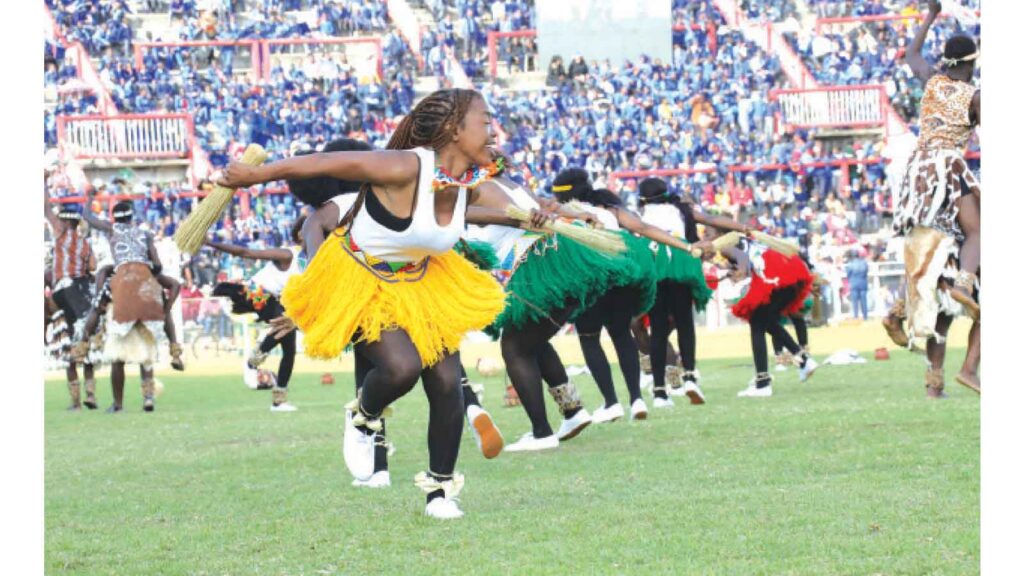
Some of the scenes at the Culture Month launch at Barbourfields Stadium in Bulawayo on Thursday.
Thirty schoolchildren drawn from Amaveni, Rangemore and Mkhithika Thebe primary schools took centre stage during a massive 30-minute cultural production that fused theatre, dance, storytelling and music.
The children had previously emerged among top performers at the Jikinya Dance Festival and their inclusion in the national launch reflected efforts to preserve indigenous culture by passing it on to younger generations.
Dressed in colourful traditional outfits, the youngsters confidently performed dances such as Hosanna, Ingquzu, Amabhiza, Isitshikitsha and Umdadada, drawing thunderous applause from the crowd.
At one point, many in the stadium rose to their feet as the children performed synchronised routines alongside seasoned artistes.
The production was led by producer and director Saimon “Mambazo” Phiri, choreographer Mehluli “Gomez” Dube and assistant choreographer Richard Ndlovu, while Umkhathi Theatre Works founder Joseph Ngubo served as stage manager.
Established groups and performers such as Amaqaqa, Gog’ Bekezela, Butholezwe Ntini, Iyasa, Thandanani Women’s Ensemble, Khaya Arts and Bolamba also added flavour to the showcase with polished performances celebrating Zimbabwe’s cultural richness.
Assistant choreographer Richard Ndlovu said organisers deliberately involved children to ensure cultural preservation.
“These children performed exceptionally well at last year’s Jikinya Dance Festival and because of their talent, we saw it fit to include them in this large-scale production,” said Ndlovu.
“Culture must be passed from one generation to another and by including them, we believe we have played our part in preserving our heritage.
“Even the President visibly enjoyed their performance, which shows the potential these young artistes possess.”
For many spectators, the inclusion of schoolchildren became one of the event’s most touching moments.
Parents and teachers could be seen proudly recording performances while the children danced fearlessly before thousands of people.
Away from the main stage, exhibitions also became crowd pullers.
One of the most talked-about stands belonged to Highlanders FC, whose exhibition celebrated the club’s century-long history and deep cultural connection with the Ndebele people.
Supporters flocked to the stand, taking photographs and admiring historical memorabilia associated with the football giants.
National Arts Council of Zimbabwe chief executive Napoleon Nyanhi said the Highlanders exhibition captured the imagination of many visitors because the club represents more than football in Matabeleland.
“In Bulawayo and Matabeleland, Highlanders is not only a soccer team but a way of life,” said Nyanhi.
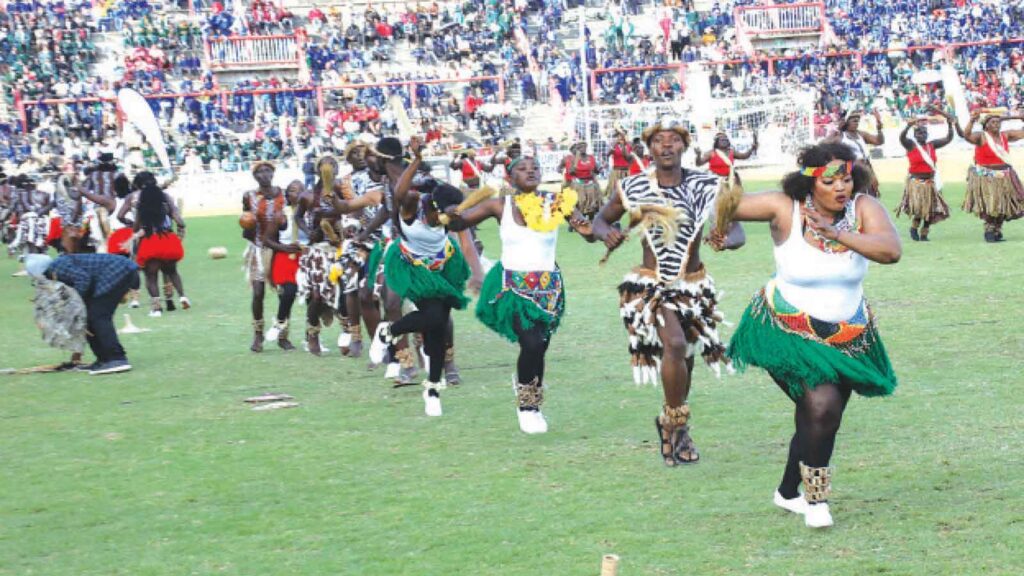
Some of the scenes at the Culture Month launch at Barbourfields Stadium in Bulawayo on Thursday.
“It’s a culture being practised there, and it was highlighted through an exhibition.”
Another emotional exhibition came from the Joshua Nkomo National Foundation, which displayed personal belongings and historical material linked to the late Vice President Joshua Nkomo.
Many visitors spent time learning about Father Zimbabwe’s contribution to national unity and cultural identity.
Foundation representative Hloniphani Nkomo said such platforms are important because they continuously remind citizens about their roots and heritage.
Traditional food exhibitions also added excitement to the celebrations.
Cultural chef Prince Sivalo Mahlangu, founder of Magriza Made Me Cook, attracted huge interest as he showcased indigenous Ndebele cuisine.
Visitors gathered around his stand sampling local dishes and discussing the importance of preserving indigenous foods.
For many young people, it became an opportunity to reconnect with meals and customs that are slowly disappearing from urban lifestyles.
Fashion also emerged as one of the strongest highlights of the celebrations.
Government officials, artistes and ordinary citizens proudly embraced African attire and Zimbabwe’s National Fabric, turning the stadium into a runway of colour and creativity.
Sport, Recreation, Arts and Culture Minister Lieutenant General (Retired) Anselem Sanyatwe stood out after donning the National Fabric during proceedings.
In a speech read on his behalf by Deputy Minister Emily Jesaya, the minister encouraged Zimbabweans to celebrate African fashion and cultural identity.
“African apparel creates important expressions of cultural identity and diversity,” he said.
“Culture Month promotes Zimbabwean National Fabric and African apparel while creating economic opportunities for local producers, designers and creative entrepreneurs.”
The fashion statements at Barbourfields reflected how culture is increasingly becoming part of Zimbabwe’s creative economy, with designers, tailors and textile producers benefiting from growing interest in African wear.
Permanent Secretary in the Ministry of Sport, Recreation, Arts and Culture Nicholas Moyo, who also served as master of ceremonies, could not hide his excitement over the overwhelming turnout.
Wearing a Ndebele headband, Moyo praised Bulawayo residents for embracing the celebrations.
“We’re extremely happy that this year’s Culture Month celebrations were held here in Bulawayo, which is the home of culture,” he said.
“Thousands of people attended and we’re delighted that schoolchildren also participated in appreciating our culture through poetry, music, fashion and dance.
“Bulawayo lived up to its reputation and we can confidently say it’s indeed a cultural hub.”
For many creatives and arts stakeholders, the successful hosting of the launch further cemented Bulawayo’s reputation as Zimbabwe’s cultural capital.
The city has for decades produced influential musicians, dancers, poets, actors and visual artistes whose impact continues to shape the country’s creative landscape.
The decentralisation of the celebrations has also been praised for promoting inclusivity.
Last year’s national launch was held in Chiredzi, where Shangaan communities showcased their traditions and culture before national audiences.
This year, Bulawayo and Matabeleland took centre stage, highlighting the importance of giving different provinces opportunities to celebrate and preserve their unique identities.
The nationwide commemorations are expected to continue throughout the month, with provincial events focusing on cultural dialogue, heritage preservation, artistic collaboration and youth empowerment.
For many who attended the launch, however, the Bulawayo celebrations already set the tone. The atmosphere, the performances, the exhibitions and the spirit of togetherness left unforgettable memories.
At sunset, as drums echoed through Barbourfields and crowds slowly made their way home, one thing became clear: Culture Month had done more than entertain people. It had united generations, celebrated diversity and reminded Zimbabweans that their culture remains one of the country’s greatest treasures.
With the celebrations taking place countrywide, NACZ regional offices will be providing updates on major highlights expected in each province.
The last week of May is normally dedicated to cultural dialogue, where creatives will engage various stakeholders such as arts administrators, potential sponsors and less privileged creatives to uplift the arts sector.
In short, there was a sea of people in Bulawayo’s adored home of football, where fashion, culture and Ubuntu were celebrated.
Expectations are high as the celebrations continue in other parts of the country until the end of the month.



