


 Sundaymail Editor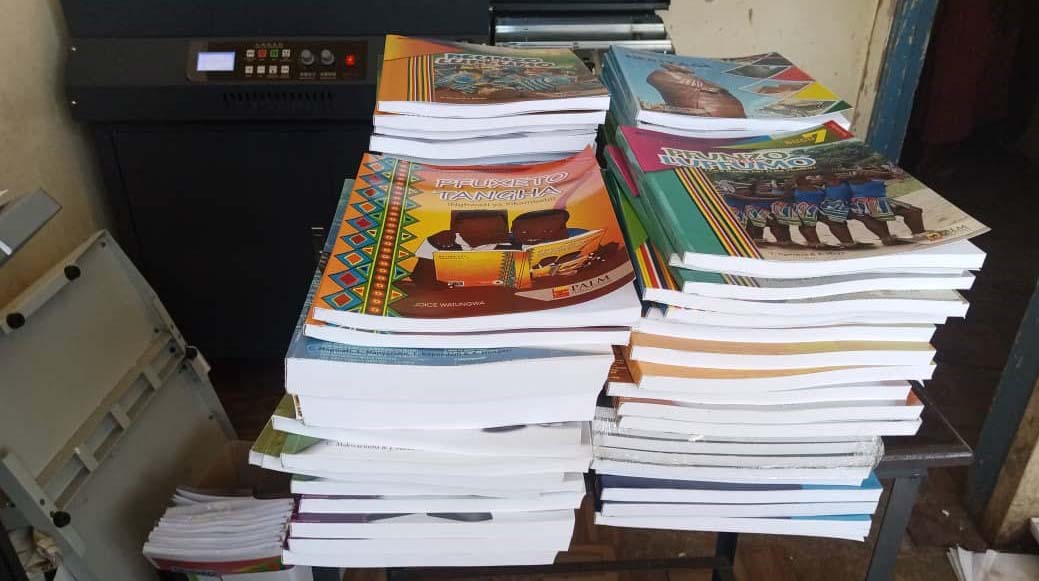
Leroy Dzenga
Senior Reporter
A new competence-based curriculum for primary and secondary school learners was introduced in 2016.
As is the case with most new ideas, adoption of the new learning system faced stiff resistance.
However, the structure of new curriculum was shaped by findings of the Presidential Commission of Inquiry into Education and Training (Nziramasanga Commission) of 1998, which recommended the need to impart practical skills in learners.
It also pushed for performance assessment to go beyond examinations. When the new curriculum was introduced, experts were concerned that it would be affected by lack of teaching material during the transitional period.
Half a decade later, the results are already showing. Local publishers have stepped up to the plate by producing a lot of content for the new curriculum.
The Sunday Mail has gathered that the Curriculum Development Unit in the Ministry of Primary and Secondary Education is reviewing more than 100 new texts produced by local authors every month.
Between 15 and 20 new books are being approved for use monthly.
In turn, this has created immense opportunities for indigenous writers, publishing houses and intellectuals who all play different, yet significant, roles.
Mr Tawanda Ndhlela, who runs Palm Publisher — a book publishing enterprise set up to produce content for the new curriculum — has been recording brisk business.
“As of now, we have 30 titles that have been approved by the Ministry (of Primary and Secondary Education),” said Mr Ndhlela.
“We have more than 30 titles which we are working on for their eventual approval.” The push to produce content has opened doors for new authors, who would otherwise have struggled to contribute content under the old system.
“We have given young writers opportunities whenever we want to do a book,” added Ndhlela.
“We look for the appropriate author with the capacity to produce a good standard book. We edit the book using our internal systems and then we submit their work to the Curriculum Development and Technical Services Department.”
Piracy
He said books that are submitted to the ministry undergo rigorous assessment to evaluate whether they meet the set guidelines. The work is then forwarded to evaluators, who then assess the material for suitability and appropriateness.
“The only challenge is that in spite their work in answering a clarion call to help the seamless transition to the competence-based curriculum, most authors have not garnered tangible returns. The process is quite difficult. Our authors face challenges such as access to funding for research. The publishing industry is also facing its biggest challenge from piracy.
“Some authors who produce quality content have since stopped writing, focusing on other income-generating projects.” Government, he added, must impose stiff penalties for piracy.
The 2013 Constitution recognises 16 official languages, creating the need for a broad range of content in multiple languages.
Previously, only English, Ndebele and Shona were recognised as official languages. The State is now obligated to ensure that learners receive instruction and are examined in any of those 16 languages. New content in all indigenous languages is therefore required.
Mr Samuel Mlaudzi, a writer who has been coordinating like-minded colleagues to write Tshivenda content, said there was now better representation of minority languages in the curriculum.
“If ever there was any representation, it was piecemeal and cosmetic. Like Tshivenda was only taught up to infant level. Thereafter, the learner was expected to transition to a second language — IsiNdebele. That was very poor language representation for an African language such as Tshivenda,” said Mlaudzi.
He has written five books, including a novel in Tshivenda, all of which have been adopted for use in schools.
Room for improvement
While teachers acknowledge the progress in content development, they argue there is room for improvement.
Zimbabwe Teachers Association (ZIMTA) chief executive officer Dr Sifiso Ndlovu said Government should put in place stringent quality control mechanisms.
“The books that are being developed should meet the standard dictated by the requirements of the new curriculum and written to syllabi,” said Dr Ndlovu.
Content quality control in the Ministry of Primary and Secondary Education is under the purview of the Curriculum Development and Technical Services Department (CDTS) and the Curriculum Development Unit (CDU).
Dr Ndlovu said production of new texts has so far resulted in mixed outcomes.
“Most texts dovetail with the syllabi and it is good that they have teacher guides,” he said.
“However, some texts have been rushed into production before soliciting inputs from the facilitators (teachers), thus compromising the quality of books as they lack some form of peer review.”
He said authorities should revisit some texts that received provisional approval for a thorough comb-through, now that more writers and books are emerging.
“Let me exemplify this without quoting publishers. In one agriculture text, for example, inappropriate taxonomy is used — agriculture implements are termed machines, while some field crops are classified as garden crops.
“However, you still have good books. For instance, some commerce books go into detail with concepts appealing to both cognitive and affirmative domains.”
To ensure that there is no disconnect between the content and learners, Dr Ndlovu added, experienced and specialist teachers should be commissioned to write books.
Progressive Teachers Union of Zimbabwe president Dr Takavafira Zhou called for the inclusion of more teachers in content development.
“There is need to produce textbooks that resonate with levels of cognitive development of learners,” said Dr Zhou.
“Teachers need to be engaged in research, innovation, setting benchmarks and the provision of life skills that can help students function beyond the classroom.”
He said while content on minority languages is being produced, there was still work to be done at policy level to ensure they achieve maximum effect.
“Fundamentally, there is no clear language policy in Zimbabwe and in many areas learners are left in quagmire and denied a choice of their preferred language from ECD to Grade Three. It is wrong to assume all learners in Masvingo speak Kalanga or that all pupils in West Nicholson speak IsiNdebele.”
He urged writers and content producers to consider covering Indigenous Knowledge Systems.
Director of communications and advocacy in the Ministry of Primary and Secondary Education Mr Taungana Ndoro said textbooks covering all learning areas are available.
“The material is there; we have an overload,” said Mr Ndoro.
“Curriculum content has taken root. The quality of work we are receiving is of a high standard. Writers are coming forward and our systems are in place to ensure that there is quality, fit-for-purpose material for study.”
He said the ministry was committed to ensuring there was quality content for all local languages.
He added: “Every language that we have on our list of official languages now has material.
“From ECD to Grade Two, learners should be taught using their indigenous language as a language of instruction.
“After that they slowly gravitate to English, but they should remain in touch with their local languages.
“The material is now available, we are working hard together with our partners to make sure no child is left behind, and books are a key part of that strategy.”



 Online Reporter
 leeroy