


 Tinaye Agere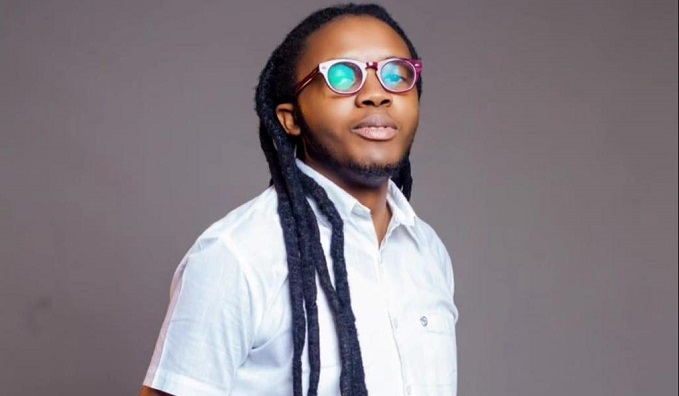
Richard Runyararo Mahomva
What is truth and who makes it?
THIS is such a difficult question whose basic and philosophical meaning could be cumbersome to explain.
Perhaps one can say truth is many perspectives to an issue, depending on who is saying what, to who and how?
Therefore, besides adopting the common sentiment that truth is not universal, we must think in terms of truth as a manufactured phenomenon to position a particular set of ideas, narratives and interests.
Therefore, if truth is a construction, then another question arises: In this cyber age, who makes the truth and for what reason?
Put differently, who makes information and for what purpose? With the fast evolution of the digital age, much news-making, advertising, edutainment is no longer a monopoly of the State, as was the case at least five years ago.
We now rely more on social media platforms, rather than traditional media, to build opinions on politics, religion, arts, culture and everything around us. Social media occupies a prominent stake in the broader cyber ecosystem.
As the name suggests, social media follows no rigid patterns of audience engagement like traditional media. Social media offers strong subscriber autonomy to make and challenge narratives — to and from others. That makes everyone a broadcaster as long they can afford data.
However, while you and me in the Global South are mere subscribers of X (formerly Twitter), Facebook, Instagram, TikTok, Messenger and Snapchat, to mention just but a few, our countries do not own these platforms. All these platforms return sovereignty to the nations of those who own and control them. This means the ownership of Facebook or Twitter underpins loyalty to its country of origin.
The racism of truth
With the West being the mother continent of most social media, it means all information dissemination via social media has a Western ideological filtering and perspective. Western-framed “modernity” and its pretences that the racist asymmetry of power ended when South Africa, last-born of decolonisation, attained freedom is one other (mis)truth Africa must grapple with.
We will be remiss to think that the façade of a global village exonerates Africa from the perennial prejudices of racism. The structures of racism are intact, though assuming various mutations. The transition from hard-power colonialism to soft-power colonialism is more operational in our lives.
The pervasive influence of social media and its Western sovereign origins is more contemporarily manifest in our daily lives.
The materiality of our colonisation is no longer defined in citizen subjectivity to the colonial state, as was in the colonial era.
Artillery warfare has been replaced by psychological and cyber warfare. Brute colonial subjection is now replaced by voluntary colonialism.
Cyber citizens and subjects
We are entangled in cyber subjectivity, and, in the process, we are default residents of cyber geographies defined in terms of the social media we follow and subscribe.
One’s account name or social media handle is the new human identifier, just like the national identity card or a passport. While we are Zimbabweans by birth, we also have cyber-acquired identities and citizenships to Facebook, X and many other social media.
Looting data and controlling the narrative
The data harvesting by those who control such platforms explains why African election patterns and perceptions carry a more Western stereotypical undermine of Africans’ capacity to have free, fair and credible elections. The elections in Botswana, South Africa, Namibia and Mozambique all point out the extent to which there is a fundamental cyber-driven penchant for nationalist movements to fall.
While it is understandable that nationalist movements may be having some diminishing popularity, one cannot ignore how social media and its logarithm efficacy is used to support the demise of nationalist movements across the African continent.
The recent trending of Mozambique’s post-election violence on social media elaborates the magnitude to which Africa’s reality is articulated and constructed in adverse terms. The stereotype of Africa’s unhealthy state of democracy is always a prominent feature of all election-related social media posts.
It cannot be a coincidence that much of the most primed narratives before, during and after elections in Africa are those of opposition players and not views of incumbent parties and, most times, nationalist movements. It is also an indispensable fact that most opposition parties in Africa are backed by the West. This explains the social media trending mileage of most anti-establishment voices. This means the full version of Africa’s political realities is distorted as more bias is concentrated on pro-Western political alternatives’ propaganda.
A dying future of Africa’s truth
Social media is now the archive of the future. Whatever we are posting, reposting, liking and subscribing is a history record in the making. It is unfortunate because much of the “truth” we take up is informed by centuries of Western prejudices to African politics and economic realities. The “truth” about Africa is being made and controlled out of Africa by non-Africans.
The truth about Africa is being generated by Africa’s enemies and perennial abusers. Through cyber superiority, Africa’s truth is being made by those who made millions off our ancestors, slaves and colonial subjects. Today, we occupy cyber geographic parameters as mere subjects. The number of Facebook users only is bigger than the continent’s population.
We are a continent of systematically relegated autonomy in the General Assembly of the Cybersphere the same way we have impactful standing at the United Nations.
While decolonisation delivered political independence, what mechanism is in place for Africa to break free through its current cyber bondage?
What is the future of Africa’s truth when the mouthpieces of Africa and her current existence are non-African and anti-African?
Put differently, in 2015, during a lecture series coordinated by Leaders for Africa Network, Pathisa Nyathi asked: What politics can we espouse that is different and a stranger to our worldview? How can we negotiate this position given the shenanigans and intrigues of world powers that seek to derive maximum benefit, both political and economic, from our countries?
Just how independent are we to navigate our worldviews and cosmologies that seem to run in the face of Western traditions on scholarship and academy?
Just how free are we to plot a course of our choice when our worldviews are denigrated, despised and demonised, and when world interests foist themselves on us at the self-appointed ruling ideas of the world? Just how?
All these questions Africa is asking compel us to make a new truth for our politics, economics and socio-cultural needs.
No one must be doing it for us besides us.
Richard Runyararo Mahomva is Director (International Communication Services) in the Ministry of Information, Publicity and Broadcasting Services.



 Online Reporter