Sikhumbuzo Moyo [email protected]
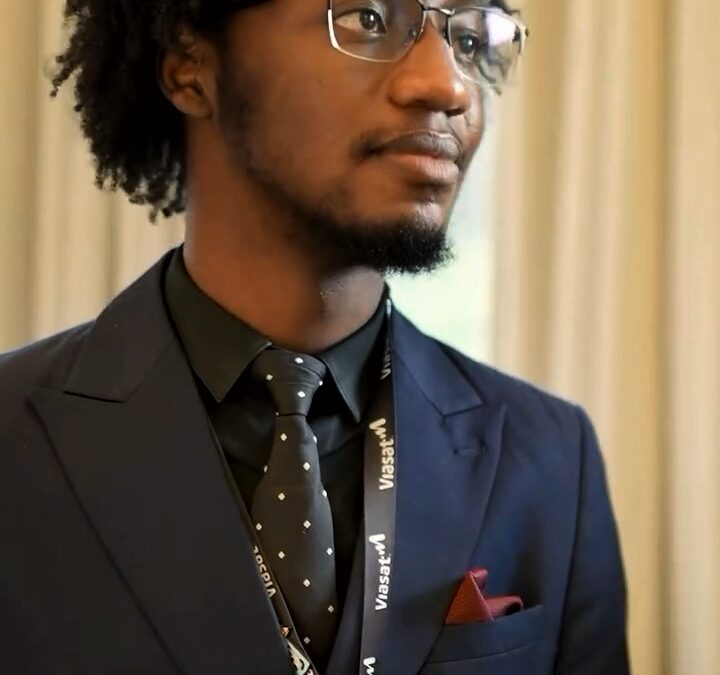
WHEN Cyclone Idai tore through parts of Zimbabwe in 2019, leaving a trail of destruction and claiming hundreds of lives, Mr Tanatswa Manjeya experienced the disaster in a way that has changed his life.
Communities struggled to access assistance, communication networks collapsed, cutting off entire areas from emergency services and exposing the country’s vulnerability when conventional
infrastructure failed.
For Mr Manjeya, the tragedy was deeply personal. He lost his grandfather, an experience that would
later shape his academic interests and inspire him to pursue a technological solution to one of the biggest challenges during natural disasters.
Seven years later, the young Zimbabwean is turning that painful memory into an ambitious technological innovation which, if successfully developed and deployed, could help save lives during future disasters.
Now a final-year Electrical and Electronics Engineering student at Aditya University in India, Mr
Manjeya has developed a satellite-based emergency communication and disaster management concept called Aegis.
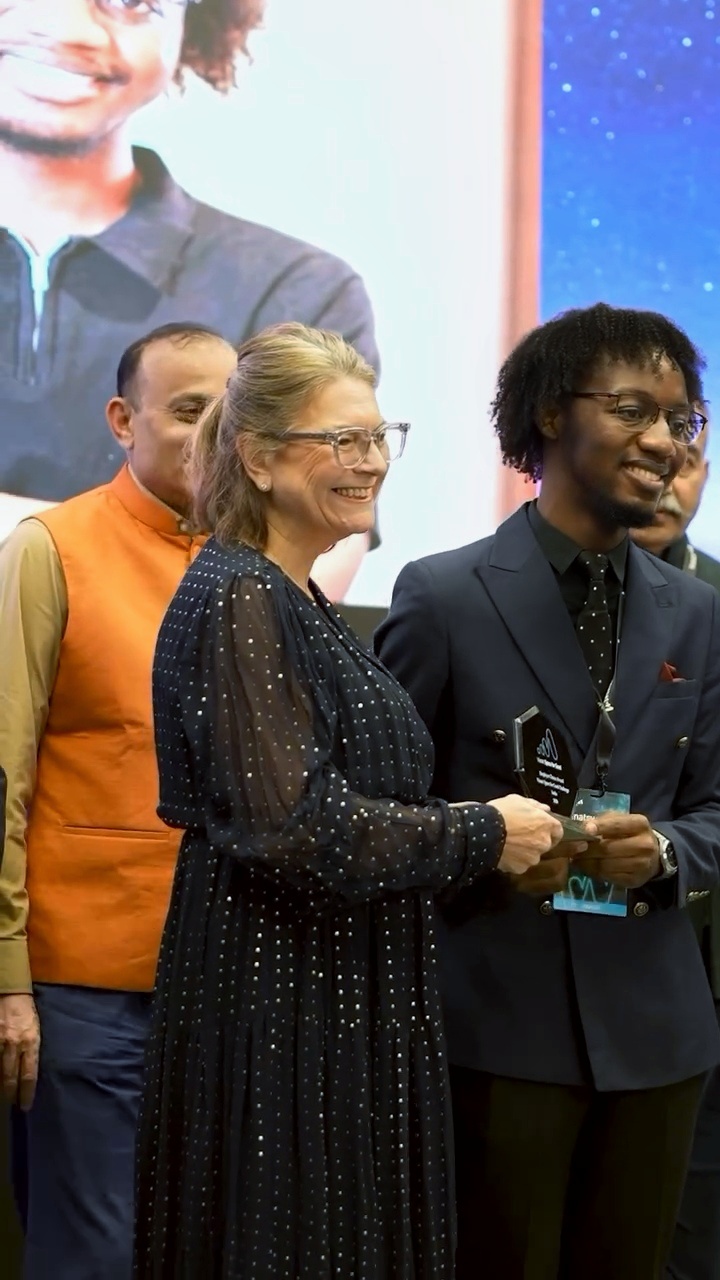
The innovation, which he presented at the Viasat: Space for Good India Challenge last month, seeks to ensure that communities are not left isolated when floods, cyclones and other disasters destroy communication infrastructure.
Mr Manjeya was among six young innovators from universities across India who showcased technology-driven solutions to real-world challenges at the competition.
The finalists presented space-based concepts addressing issues such as space debris, agricultural crop health, disaster warning systems and secure Internet of Things (IoT) frameworks.
Explaining how his innovation works, Mr Manjeya said Aegis is designed to provide emergency communication even when power grids and conventional cellular networks have been destroyed.
“When natural disasters wipe out power grids and cellular infrastructure, Aegis deploys rugged, solar-powered hardware pods (Aegis-PODs) to establish emergency Wi-Fi bubbles, letting stranded citizens send direct SOS messages via Viasat satellites,” he explained in an interview from his base in India.
Beyond restoring communication, the system is designed to function as a regional digital twin, continuously collecting and analysing environmental information such as soil moisture levels and bridge strain.
Using Artificial Intelligence (AI), the technology is intended to help emergency response managers anticipate potential infrastructure failures, including dam and bridge collapses, and identify safer evacuation routes before disasters strike.
This predictive capability could be particularly important in disaster-prone communities where early warnings and timely evacuations can mean the difference between life and death.
Mr Manjeya said Aegis is an end-to-end disaster management architecture built around four main pillars.
The first is the Ground Edge, which involves deploying ruggedised Aegis-PODs and geotechnical sensors at high-risk infrastructure points, including dams and landslide-prone highways. These devices act as on-site, AI-powered monitoring systems.
The second pillar is the Space Link, which uses satellite communication instead of vulnerable cellular towers. The PODs transmit early-warning alerts through L-band satellite links, with
specialised software compressing and encrypting information for faster transmission.
The third component is the AI Cloud, where incoming information is fed into a cloud-based
Hydrodynamic Digital Twin, a three-dimensional simulation system that maps potential flood and other disaster zones.
The final pillar, Last-Mile Delivery, involves distributing evacuation routes and emergency alerts to rescue teams through rugged Aegis-PAD tablets, community shelter hubs and ordinary smartphones.
Asked when he hopes to have the innovation fully operational at industrial scale, Mr Manjeya said the core software architecture and satellite communication loops had already been successfully
validated, forming part of what he presented at the Viasat challenge.
The next stage involves completing the physical hardware engineering of the rugged sensor nodes and tactical tablets before moving to field testing.
“Because I am balancing this intensive R&D with my university studies, my target is to finish building the industrial-grade prototypes over the next year and begin active field testing by the time
I graduate in mid-2027,” he said.
He began his primary education at St David’s Bonda Primary School in Mutasa District, where he spent his first two years between 2010 and 2012, before relocating to Harare.
Mr Manjeya completed his primary education at Blakiston Primary School in 2016 before proceeding to Anderson Adventist High School in Gweru where he studied from 2017 to 2022.
His academic achievements earned him a Presidential Scholarship to pursue a Bachelor of Technology degree in Electrical and Electronics Engineering at Aditya University in India.