Online Reporter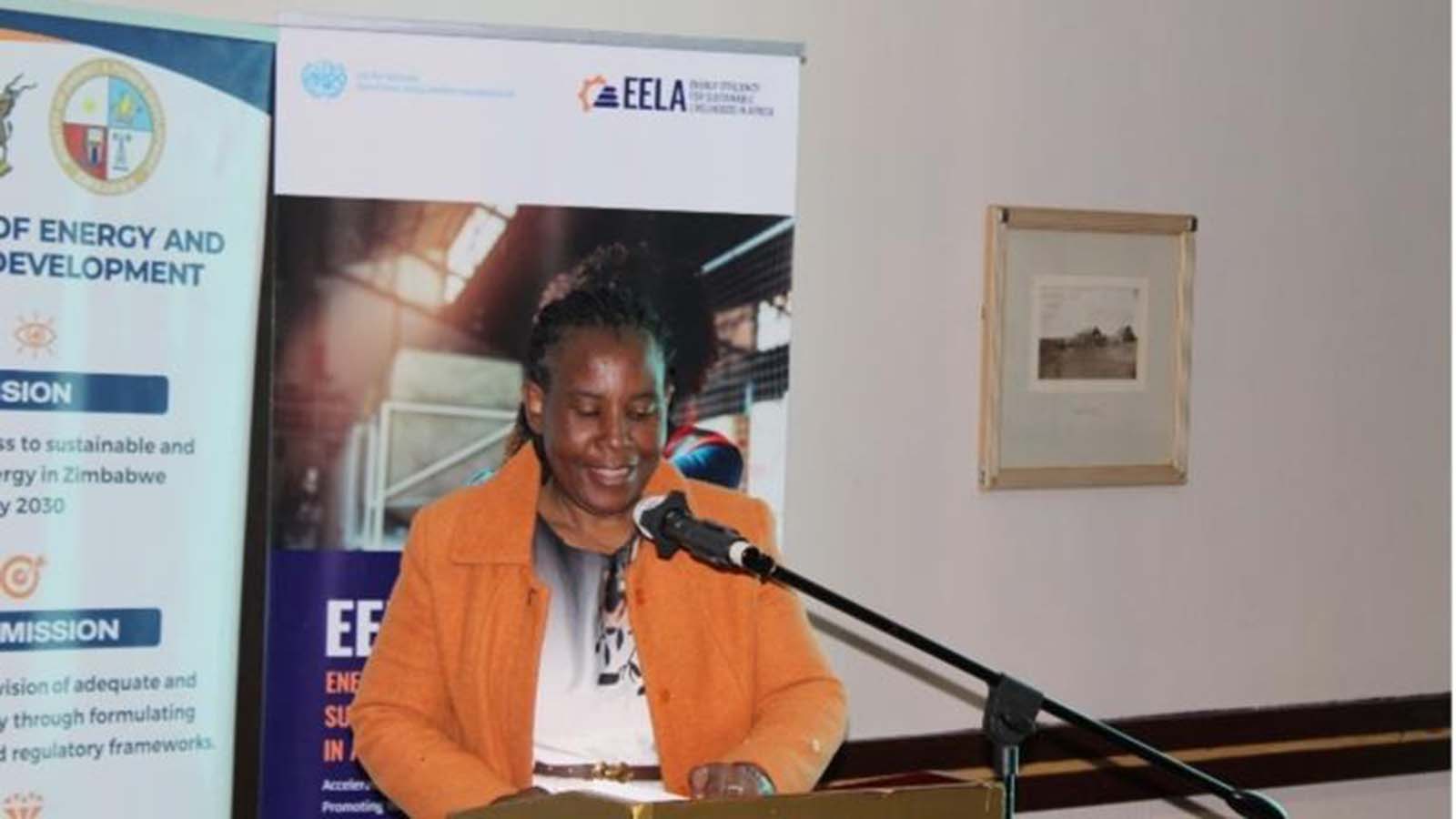
Business Reporter
Zimbabwe’s industrial sector has called for the creation of a permanent national energy efficiency coordination platform, warning that the country “should not start again” following the conclusion of a key international programme.
The Confederation of Zimbabwe Industries (CZI) made the appeal during a forum in Harare marking the close-out of the Zimbabwe Country Window of the Energy Efficiency for Sustainable Livelihoods in Africa (EELA) programme, which ran from December 2024 to 30 June 2026.
Speaking at the Project Closure and Sustainability Forum, convened by the United Nations Industrial Development Organisation (UNIDO) in partnership with CZI, industry representatives framed the sustainability agenda around three imperatives: protecting gains already made in capacity, policy and industry engagement;
institutionalising the coordination system built around the programme; and financing the next phase of investment.
The forum, co-chaired by the Ministry of Energy and Power Development and the Ministry of Industry and Commerce, brought together Government, industry, financial institutions, technical experts and development partners to review achievements and agree a pathway for sustaining impact beyond the current funding window.
Delegates reached a clear consensus that the conclusion of funding should mark the end of a funding phase, not the end of Zimbabwe’s energy-efficiency agenda, emphasising that energy efficiency is a continuous industrial and economic process rather than a finite project.
The programme delivered foundational conditions for accelerated adoption of energy-efficient technologies, including strengthening energy governance and regulatory frameworks, catalysing private-sector investment, and providing Energy Management Systems (EnMS) training to more than 200 participants across Bulawayo,
Gweru and Harare. Of those trained, 124 went on to sit an end-of-course competency assessment.
The business case was reinforced by case study companies. CAFCA Limited reported reducing its effective energy cost from approximately US14 cents to US7 cents per kilowatt-hour through ISO 50001 discipline and targeted investment, while Tobacco Processing Company of Zimbabwe (TPZ) reported cutting power costs by
roughly 50 per cent through energy-management discipline, process optimisation, power-factor correction and solar investment.
CZI said the foundations built under EELA in policy, regulation, technical capacity, market awareness, institutional collaboration and industry engagement now needed to be institutionalised and expanded.
The forum proposed that the programme’s Project Steering Committee should not dissolve but instead evolve into a permanent, long-term Energy Efficiency Coordination Platform. Such a platform would bring Government, industry, technical institutions and development partners together on an ongoing basis to oversee the national energy-efficiency agenda, support implementation of emerging regulation, coordinate investment, and provide an institutional home for monitoring progress.
The forum characterised this shift as moving from project governance to ecosystem governance.
The independent evaluation presented to the forum identified financing as one of the principal constraints separating identified energy-efficiency opportunities from actual investment, citing limited availability of dedicated green-finance products. Recommendations included exploring de-risking mechanisms, such as a revolving financing facility.
The forum also identified completion of the Industry Clean Tech Platform (ICTP), a marketplace mechanism intended to connect industrial energy users with technology providers, technical expertise and financing, as one of the most significant unfinished opportunities.
While the Zimbabwe Country Window has formally concluded, the country remains linked to the wider EELA regional programme, with the Southern African Centre for Renewable Energy and Energy Efficiency confirming regional activities will continue through 2028.