Online Reporter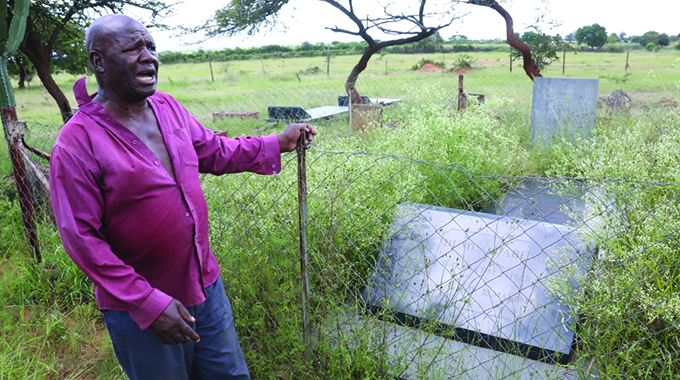
Raymond Jaravaza, [email protected]
THE hills in Ntabazinduna in Umguza District rise silently, cradling a family cemetery where generations of the Dabengwas lie beneath the blue sky.
For years, the only sounds were the singing of birds, whispering wind and the soft murmur of relatives paying their respects.
Now, the silence is punctured by the clang of metal on stone and the mechanical hum of gold detectors sweeping across the earth.
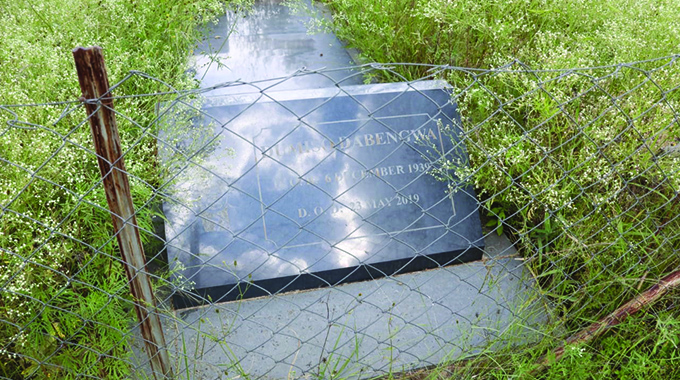
Barely 20 metres from the fence enclosing the grave of the Nationa Hero, Cde Dumiso Dabengwa, illegal gold panners are digging trenches — slicing into the soil in search of nuggets, inching ever closer to a site villagers regard as sacred.
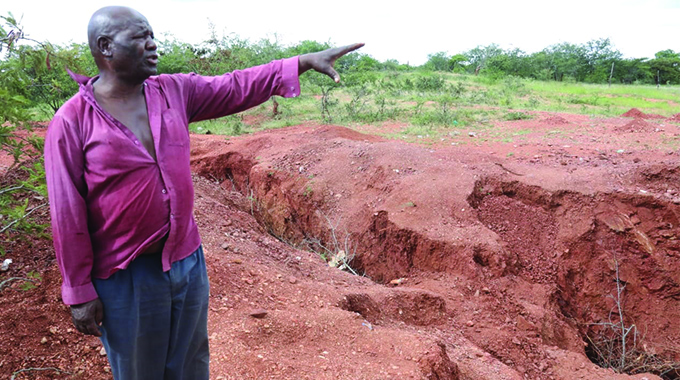
To the community, this is not merely an environmental violation. It is a looming desecration of a shrine that holds a National Hero — a liberation war stalwart who once helped shape the course of Zimbabwe’s history.
Dr Dabengwa, who died on May 23, 2019, at the age of 79 while en route home from India, where he had sought medical treatment, was declared a National Hero by President Mnangagwa in recognition of his role in the liberation struggle and national development.
Known during the war by his nom de guerre “Black Russian” — a nod to his military training in the former Soviet union — he was a senior intelligence figure in Zipra, the armed wing of Zapu. After Independence, he served in several Government portfolios, including as Minister of Home Affairs.
Yet despite his national stature, he chose to be buried not at the National Heroes Acre in Harare but at his family cemetery in Ntabazinduna — among his own people, in the soil that shaped him.There, the national hero rests beside his father, George Mavakatsha Dabengwa, who died in 1972, his mother, Elsie Dabengwa (died October 23, 1977), his wife Zodwa Dabengwa (née Khumalo), born November 6, 1947, died June 15, 2023 and other relatives whose lives form part of the family’s long lineage.
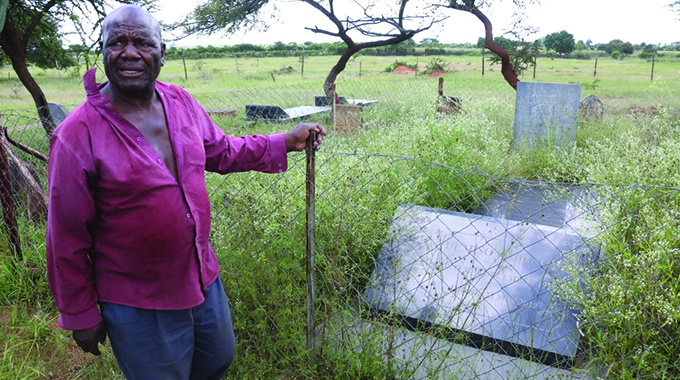
Today, that lineage feels under siege.
Dr Dabengwa’s brother, Mr Collen Zidla Ndlovu, says the illegal mining began about a year-and-a-half ago when groups armed with metal detectors descended on the area.
“The gold panners are on the verge of destroying and tampering with the graves of our relatives who are buried next to where they are digging. My brother is also buried at this community graveyard. We are appealing to the Government to intervene,” he said.
The devices the panners use can detect gold nuggets or deposits beneath the surface. But in the process, they leave behind deep pits and scarred landscapes — often with little regard for cultural or environmental consequences.
Illegal gold panning has become an entrenched problem in parts of Matabeleland North and across Zimbabwe, where the lure of quick earnings has seen mining encroach on grazing land, homesteads and even culturally sensitive sites.
“My forefathers are buried in our graveyard and I will not be silenced about the damage the gold panners are causing in our village,” said Ndlovu.
Another villager, Lazarus Nhliziyo, said fear has gripped the community.
“We are too scared to confront them as they dig near our ancestors’ graves. All we are asking for is Government intervention. We cannot continue pretending that everything is normal when our heritage is under threat,” he said.
Minister of State for Matabeleland North Provincial Affairs and Devolution and Umguza legislator, Richard Moyo said authorities were aware of the situation.
“Government supports and encourages legal mining, but we will not tolerate illegal activities that destroy and disrespect the graves of our villagers and their ancestors. As the Member of Parliament for Umguza, I have engaged the local police,” he said.
“We are in agreement that all criminal elements causing problems in the area must be arrested and face the full wrath of the law.”
For Mrs Mirriam Moyo, whose grandfather is buried at the same cemetery, the damage is not just physical — it is emotional and spiritual.
“What is happening here is painful. These are our ancestors. This place is sacred to us,” she said.
For a man who once operated in the shadows as an intelligence chief during the liberation war, and later stood in the public glare as a Cabinet Minister and nationalist figure, the irony is stark. In death, Dr Dabengwa’s resting place is again at the centre of a battle — this time not political, but moral and cultural.
In life, Dr Dabengwa defended a nation. In death, his resting place now stands at the centre of a different struggle — one between desperation and dignity, between the lure of gold and the sanctity of memory.


 derick.khumalo