


 admin
admin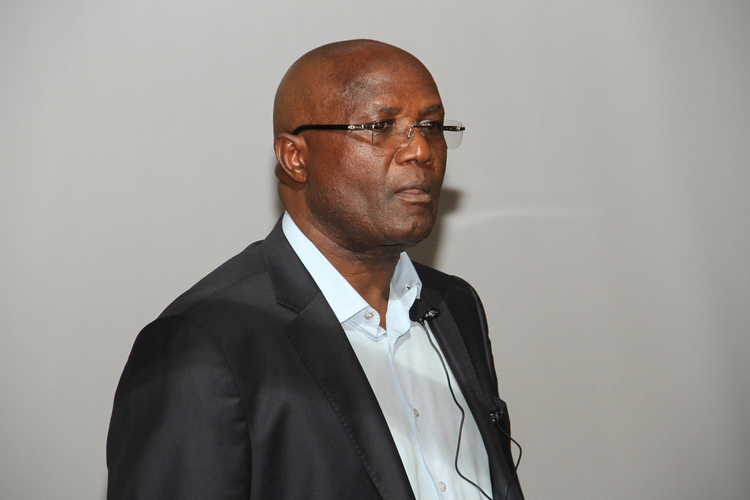
Enacy Mapakame
LISTED diary processing concern Dairibord Holdings Limited has indefinitely suspended its heifer procurement programme on account of the El Nino-induced drought, the worst in 25 years.
Last year the company announced its intention to import 500 heifers as part of a long-term project to boost raw milk production.
Three hundred heifers were imported, and these contribute eight percent of Dairibord’s raw milk intake.
Government estimates suggest that the drought has claimed more than 19 000 cattle countrywide in the last few months.
“We have put it on hold and (the) position will be reviewed in line with the drought situation; Government has announced it’s a drought year. Now, people and animals are going to compete for food.
“We are putting the programme on hold, position will be reviewed in line with the drought situation,” CEO Mr Anthony Mandiwanza said in an interview after the company’s financial results briefing in Harare on March 16.
He said the drought would have a knock-on effect on milk production, with stock feed prices likely to soar.
“There is going to be stock feeds shortage and with it a price pressure. Remember, the animals will compete with humans for food.
‘‘Government is mobilising resources to mitigate the problem, and we hope in the context of that mitigation there will be something for livestock. If the milk goes down, it means our ability to meet the market demand is compromised,” said Mr Mandiwanza.
In the financial year to December 30, 2015, Dairibord’s milk volumes grew to 83,8 million litres from 70,4 million a year earlier, while revenues rose four percent to US$103,4 million from US$99 million.
The group’s raw milk intake dropped two percent to 26,5 million from 26,9 million litres in 2014, due to a 24 percent fall in milk intake for Dairibord Malawi on the back of flooding, a weak domestic economy, foreign currency shortages and a year-on-year inflation rate of 25 percent.
However, in Zimbabwe the group recorded three percent growth in raw milk despite the challenging economic environment.
At national level, milk production grew four percent to 57,5 million litres compared to the 55,5 million litres recorded in 2014, according to the Zimbabwe Association of Dairy Farmers.
Production in January 2016 was 5,52 million litres, five percent higher than a month earlier and 18 percent higher than January 2015.
Dairibord recorded a 56 percent increase in Ebitda to US$8,6 million from US$5,5 million, while operating profit improved by 193 percent to US$3,9 million from US$1,3 million.
Earnings per share improved to USc0,65 from USc0,20 prior year comparative.
The group said it expected 10 percent growth in volumes for financial year 2016, although revenue was expected to remain flat due to a 10 percent decline in prices.
The company plans to spend US$6 million mainly for expansion of production capacity for Pfuko Maheu and on the Chimombe Milk carton product.
Work has started at the Chitungwiza plant for Pfuko expansion, with commissioning expected in the second half of the year.
Dairibord expects operating margins to grow to five percent from four percent in the prior year.
No dividend was declared. Its stock closed Wednesday at USc6,80.


 Online Reporter