admin
admin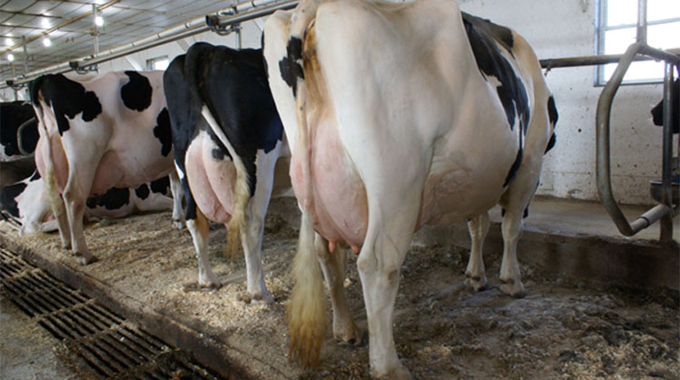
Precious Manomano-Herald Reporter
Nearly 2 000 registered smallholder dairy farmers have received inputs of to grow maize silage and sorghum forage under the Presidential Silage Input Scheme, which is aimed at bolstering milk production to fill the gap between supply and demand.
Presently, that gap is being filled through imports from neighbouring countries, mainly South Africa.
Farmers are being encouraged to invest in sustainable, intensive forage production as it is critical to sustain livestock and minimise over-reliance on commercial feeds. Diary cattle need high-level feed.
Input packages for the Presidential Silage Input Scheme were made up of inputs for a hectare of maize and half a hectare of irrigated star grass.
In an update, the Ministry of Lands, Agriculture, Fisheries, Water and Rural Development said from 1 989 registered smallholder dairy farmers, 1 271 and 478 received maize and sorghum seed.
Statistics also show that area planted is 257,25ha, which is too low for the seed received.
“Input distribution is very slow, and the season is advanced. Most of the farmers who collected inputs have planted. All lab seed has been planted. Half a tonne of velvet bean is still to be planted,” reads the update.
Acting Deputy Director of Veterinary Field Services Dr Reverend Spargo said the programme was one of the interventions introduced by the Government to revitalise the dairy sector.
“It is paying off as significant growth in daily productivity per cow has been noted. The dairy revitalisation programme is pivotal in the push towards the attainment of Vision 2030,” he said.
Milk production increased from 79,6 million litres in 2021 to over 91 million litres last year, as Government continues to provide assistance and other support to the sector. Zimbabwe still needs to import milk to meet the target of 150 million litres.
Milk production has been increasing as more farmers have taken up dairy farming, amid growing support from the Government, while the national herd has been supplemented with imported heifers to accelerate growth from the local breeding stock.
Growth of the dairy sector is slower than that of the beef herd since extra heifers are required. The heifers have to grow and drop their own calf before they become a milking cow.
Livestock plays a fundamental role in addressing food and nutrition security as a source of animal protein.
It also contributes towards ending hunger, achieving food security, improving nutrition, and improving livelihoods.
The Government supported the dairy sector in the national Budget by introducing a 5 percent duty on dairy imports to capacitate the dairy recovery programme.
At the same time, the Budget sets a phased reduction in the quantity of raw cheese and raw milk powder that can be imported each year without normal duties.
Under the Livestock and Recovery Growth Plan, milk production is intended to rise from the present annual production of 79,9 million litres to 150 million litres.
The dairy herd is also expected to rise from 39 980 to 60 000 by 2025.
About US$75 million is required to fully revitalise the sector.



 Online Reporter