Online Reporter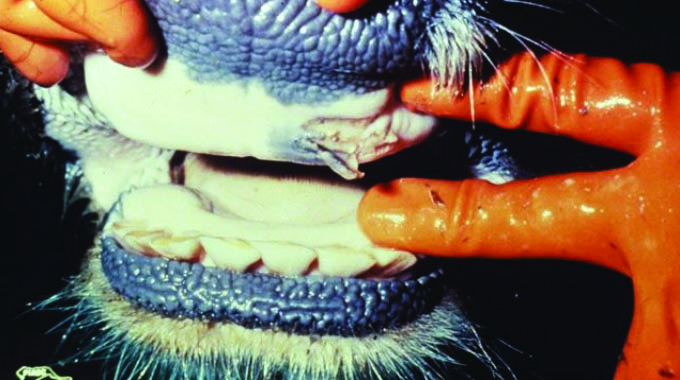
Nomsa Maseko
THE peace of the lush, rural landscape in South Africa’s KwaZulu Natal province disguises the anxiety gripping the region. This is the epicentre of a foot and mouth disease outbreak that, over the past year, has swept through eight of the country’s nine provinces, devastating herds and forcing the culling of cattle to halt its spread. Farmers fear losing their livelihoods entirely as countries suspend imports of South African animal products.
The highly contagious virus, transmitted through direct animal contact or contaminated feed and water, causes painful blisters in the mouths and under the hooves of goats, cows and sheep. It leads to lameness, difficulty feeding, reduced yields and sometimes the death of young animals, though it is not harmful to humans.
The situation has been declared a national disaster. While agriculture forms a relatively small part of South Africa’s economy, it is a key employer in rural communities and an important source of foreign exchange through meat and livestock exports. KwaZulu Natal, the heartland of the dairy industry, is dotted with farms along the green hills lining the Mooi River.
Here, biosecurity measures — including disinfection points at farm entrances, roadblocks and strict movement restrictions — have not always succeeded. The herd at the large commercial farm run by Carol Houston and her husband became infected last month.
“We received a call from our staff that 50 cows were showing signs of mastitis and were hobbling, struggling to walk. We did all we could to keep the disease out and spent roughly US$380 per cow on treatment (including antibiotics),” said Houston.
“My milking herd’s normal output dropped from 14 000 litres of milk per day to 9 000 within days of the outbreak because infected cows eat less and struggled to produce milk.”
Milk production remained at that reduced level for two weeks until the infection cleared from her herd of 2 200 cattle.
Now, as the cows line up for milking, workers examine each animal for symptoms of foot and mouth disease. Under the afternoon sun, with the cows snorting and mooing, the workers clean the teats before attaching the milking equipment, which pumps the milk into large containers. The Government has promised a mass vaccination programme, but it will take time to cover the entire country.
Houston, who has 35 years’ farming experience, blames the Government for failing to contain the outbreak — a sentiment shared by other farmers, including Peter Griffin, whose farm is nearby.
“The problem is it’s a catastrophe that could’ve been avoided,” said the dejected dairy farmer who has been in the business for 44 years. “We should never have got to this stage… the state has failed us.”
In South Africa, foot and mouth is classified as a “controlled animal disease,” meaning the Government is responsible for leading response measures. Agriculture Minister John Steenhuisen has faced heavy criticism but last month announced a long term plan to eliminate the disease within 10 years. In the short term, this includes mass vaccination in the worst affected areas before expanding to the majority of the national herd, estimated at 14 million animals.
However, Houston is sceptical about the delivery timeline.
“We were told we would have the vaccine in January, we haven’t got the vaccine. We were told we would have the vaccine in February, we don’t have vaccine. So the ball gets pushed out, pushed out, pushed out.
It’s very frustrating,” she said.
Any delay poses a threat to small scale cattle farmers like Nompumelelo Ndlovu, who keeps around 20 animals for buying and selling.
“My biggest fear is if the vaccine doesn’t arrive on time, all my cattle will be at risk and that would be the end of my business,” she said.
President Cyril Ramaphosa’s declaration of the outbreak as a national disaster enables the Government to release emergency funds and fast track vaccine imports.
South Africa must import foot and mouth vaccines, having lost its capacity for large scale production more than two decades ago due to lack of investment and the disappearance of technical expertise, according to Steenhuisen’s party, the Democratic Alliance.
While the minister has announced plans to restart domestic production, it will take time before enough vaccines can be manufactured to cover most of the national herd.
A million doses are expected from Argentina, but they must still be distributed — and they fall far short of national needs. Ntuthuko Shezi, head of investment company Livestock Wealth, remains hopeful.
“We are hoping that Government will get this right in vaccinating the entire herd with speed,” he said. “If we could get it right with Covid-19, we surely can with this outbreak.” – BBC