admin
admin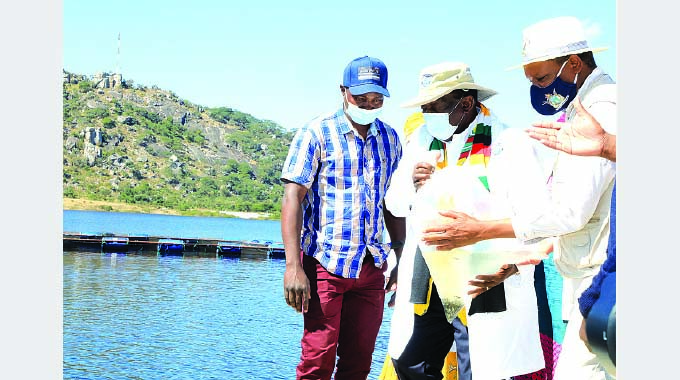
Elton Manguwo
THE GOVERNMENT’S various dam projects across the country are set to spawn the growth of the fish industry in line with the current drive to promote maximum utilisation of natural water bodies, as the country moves to attain Vision 2030.
In an interview yesterday, deputy director Fisheries and Aquaculture Resources Production Department (FARD) Mr Milton Makumbe said the projected fish production from these dams was set to meet and surpass demand by over 40 000 tonnes.
“The target is to restock dams and enable rural communities to exploit the water resources within their vicinity to create a self-sufficient and food surplus economy,” said Mr Makumbe.
FARD, under the Presidential Community Fisheries Scheme, is set stock water bodies in the country under commercial cage culture.
“Under cage culture the programme will utilise existing water bodies for tilapia production using enclosures and when restocking we will make use of sex-reversed Nile tilapia to ensure ecosystem sustainability measures are adhered to,” said Mr Makumbe.
Fifty-one dams have so far been stocked out of the 1 200 by 2025 while an additional 177 dams are needed to ensure the 40 000-tonne target to cover the current deficit is met.
“The dam stocking scheme has the potential to meet and surpass fish demand in the country at the current per capita consumption of 3,2kg.
“This will allow production potential to increase the per capita consumption rate to 13kg in Zimbabwe,” highlighted Mr Makumbe.
The Government is refurbishing four breeding sites in four different regions — Henderson Fisheries Unit, Makoholi, Matopos and Toppick Fish Farm, which are currently being refurbished to decentralise and aid in the production of quality fingerlings.
Henderson with cater to the Mashonaland region, Makoholi-Masvingo region, Matopos and Toppick will cover Matabeleland regions.
“We are on course to stock these dams as there has been an increase in the scope of government hatchery facilities that are set to produce at least one million fingerlings destined for dam stocking and other national fisheries programmes,” said Mr Makumbe.
The Presidential fisheries programme also allows sustainable utilisation of natural water bodies as FARD offers training in sustainable use in line with the programme.
“We have allowed the formation of dam committees, which not only gives the community utilisation but monitored and sustainable utilisation of the resource,” said Mr Makumbe.
Recently, the Government hosted a delegation from the Southern African Development Community (SADC) to discuss Pro-fish blue Programme a regional initiative aimed at promoting sustainable development and economic growth in the fisheries sector.
“The SADC Pro-fish blue Programme is complementary to the dam stocking scheme, which is looking at the development of the cold chain facility in these fish farming communities,” said Mr Makumbe.
The programme aims to deploy US$10, 1 million among seven SADC countries including Zimbabwe and other communities, which are set to benefit from these fish post-harvest measures.



 Online Reporter