daniel chigunwe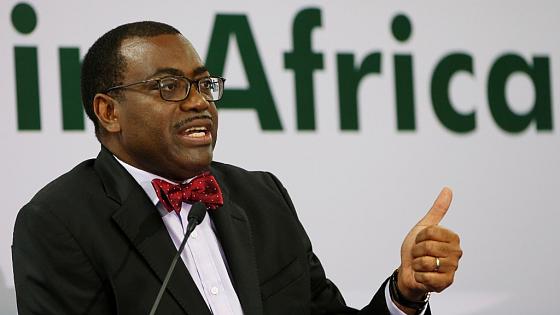
Business Writer
AFRICAN Development Bank (AfDB) group president, Dr Akinwumi Adesina, has called for new ways of project preparation and de-risking of projects to mobilise adequate private sector investment scale for sustainable development.
Speaking to global development financiers attending this year’s Organisation of Petroleum Exporting Countries (OPEC) Fund’s forum in Vienna, Austria on Wednesday, where leaders pledged a strong commitment to remodelling their investments to support green projects at scale, the AfDB president said de-risking development finance was critical in driving the transformation of least developed economies.
“We’ve got where the private sector is. We’ve got US$145 trillion of assets under management (and) by 2026 it’s going to be there . . . but the issue here is that we need new ways of aggregation to prepare the projects, to de-risk the projects, and lower the transaction cost for those deploying capital,” said Adesina.
He cited the Africa Investment Forum initiated by the Bank and its partners, as a leading continental platform that is aggregating bankable projects to reduce fragmentation and make it easier to attract institutional investments.
“It (the Africa Investment Forum) has become today the premier investment platform to do anything on investment in Africa, and in the last four years, we have been able to leverage about US$142 billion of investment interest into energy, water, and sanitation, infrastructure, and transport corridors,” said Adesina.
He added that the AfDB and its partners were also creating opportunities for the private sector to invest in agriculture through special agro-industrial processing zones, which are being established across the continent.
Said the AfDB chief: “We are bringing in private capital into agriculture that will create opportunities for the private sector to go into rural areas close to where the farmers are producing – they can buy food, they can process food, they can package food, they can export food and have a greater competitiveness for various value chains”.
The delegates, representing multilateral development banks and inter-governmental institutions, said business and political leaders must do more to stimulate capital deployment from the private sector.
Muhammad Al Jasser, chairman of the Islamic Development Bank Group, cited the Desert-to-Power flagship renewable energy initiative led by the AfDB as “a great pioneering project.”
He said the Islamic Development Bank is fully committed to financing green projects while balancing it with support for poverty reduction.
Rémy Rioux, chief executive officer of Agence Française de Dévelopment, called for a consensus in redefining development finance.
“We need a new narrative. We need to work on a framework to finance what nobody is financing – the most vulnerable communities,” he said.
“This is our core mandate, and we must be allowed to allocate part of the precious concessional resources to mobilise, to lower emissions, to go the private way.”
Frannie Leautier, expert chair of the Independent Review of Multilateral Development Banks’ Capital Adequacy Frameworks, outlined areas that her committee identified to maximise the impact of their capital.
OPEC Fund director-general Abdulhamid Alkhalifa highlighted the need for development financiers to remodel their operations to attract other resources to close the huge financial gap.



 Online Reporter