admin
admin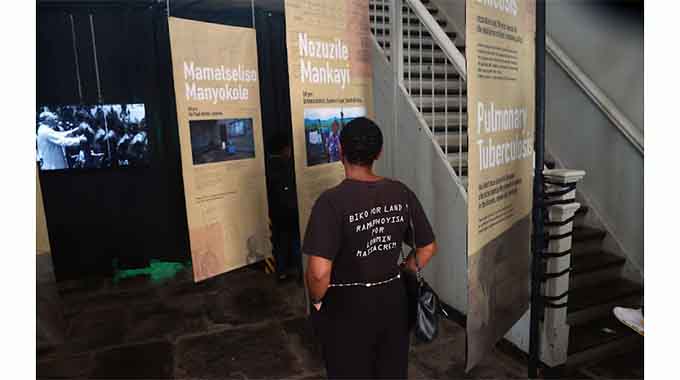
jOHANNESBURG. — Justice for Miners Campaign (JFM) gathered at Constitution Hill (ConHill) in Johannesburg on Tuesday to celebrate Human Rights Day by remembering miners who died due to silicosis and tuberculosis. The commemoration was done through an opening of an exhibition titled Mining Bodies South Africa’s Killing Fields, which looks at the stories of miners who have died because of sicknesses they contracted while working underground.
The exhibition is part of the Human Rights Festival taking place at ConHill until March 27.
The exhibition features multimedia content — videos that relate the story of miners, their lives in the mines and accounts of widows who had to take care of their sick husbands.
Panelists included JFM chairperson Bishop Jo Segola, author Styles Lucas Ledwaba and widow of a miner Nomampondomise Mbabama-Botile and former gold mineworker Bangumzi Balakisi.
Among those stories exhibited is that of Mozambican Adriano Chidebguele, who was retrenched because he suffered from silicosis. He said about his situation: “How could the dust not enter. The air is brought from the surface into mine by pipes. The dust released from blasting goes up and returns down again. The dust is mixed with the air. It is the same air that is pushed into us. The job on the mine has called me to die.”
Chidebguele died in 2018. Mbabama-Botile, whose husband also died in 2018, said she cannot celebrate Human Rights Day while still waiting for her husband’s compensation.
“It was difficult to watch my husband suffering. He was the one who took care of us and it is a struggle now because I have kids to take care of…”
Balakisi said he was retrenched by a Randfontein mine because he was sick. He went home with only R15,000.
“The doctor asked if I got compensated and I said no. He sent the diagnosis document to the mines and a form came back for me to fill.”
That was around 2006. Eventually, he said he received R48,000.
Ledwaba, the author of Broke and Broken: The shameful Legacy of Gold Mining in South Africa, expressed disappointment at how miners’ labour issues were handled.
Ledwaba, who visited the homes of miners in Lesotho and Eastern Cape, said some people have been waiting for compensation for 30 years.
“The issue of miners is painful because we are dealing with people who have been abused for decades. They were brought into mines and dehumanised by living in hostels.
“They are not paid enough to take care of their families despite the dangers that they are exposed to in mines. If you go to mining towns, you will find unmarked graves of people who died in the mines and their families have been waiting for them,” said Ledwaba. — sowetan.



 Online Reporter