admin
admin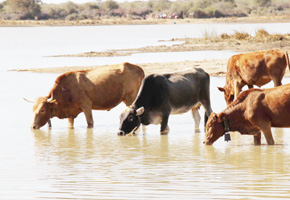
 Chronicle Reporter
THE Government should declare Matabeleland South a livestock disaster area and harness funds to urgently help farmers save their animals from the acute shortage of pastures, farmers said.
The call comes amid fears by villagers across the province that the shortage of pastures could wipe out the entire herd in the region.
In separate interviews this week, farmer organisations and chiefs from the province appealed to the Government to take the matter seriously as it had a long-term impact on the country’s economy.
The farmers also expressed disappointment over delays in releasing money under the $6,5 million loan facility meant to revive the country’s national herd.
Last month, Agribank signed a Memorandum of Understanding with the Cold Storage Company (CSC) to disburse the loans to farmers.
Agricultural experts have also urged farmers to urgently form cooperatives and establish feedlots to save livestock.
“We are lobbying the Government to consider the livestock situation in Matabeleland South and declare the province a disaster zone. The Government must come up with a programme to save livestock in the province,” said Mr Earnest Ndlovu, the chairman of Zimbabwe Commercial Farmers Union (ZCFU) in Matabeleland South.
He said without Government involvement the livestock sector in this region will collapse.
On CSC loans, Mr Ndlovu said farmers were still in the dark as to how the funds can be accessed.
Chief Nyangazonke Ndiweni of Kezi said the only way forward was for farmers to sell their livestock and bank the money.
“We urge farmers to sell some of their livestock and make savings. This makes business sense and is the best way forward given the dire situation in which we are. Ranching is a business and if the situation stabilises farmers can take that money and buy more cattle,” said Chief Ndiweni.
Zimbabwe Farmers Union (ZFU) deputy president Mr Abdul Nyathi said urgent measures should be taken to assist farmers save their livestock.
“I think the first step is to reduce the number of cattle and buy supplementary feed to save the remaining few,” said Mr Nyathi.
He said his organisation was trying to engage agro- dealers to come up with a programme to supply stockfeed to farmers.
Chief Gwebu of Umzingwane appealed to the Government to drill more boreholes in resettlement areas as most villagers were taking their livestock there for grazing.
“We are not only affected by shortage of pastures but water as well. Resettlement areas do not have adequate water sources for livestock. The Government must also allocate farmers reserved places for grazing,” said Chief Gwebu.
“Additional boreholes are also required to water the animals. Ranching is our backbone as a province and without cattle we are all doomed.”
Matabeleland South is one of the country’s major beef producing areas. Consecutive drought years have seen water sources drying up and pastures dwindling in most areas and this has adversely affected livestock production.
Mr Nyathi said farmers should be allowed to take their cattle to areas that still had pastures in liaise with the Veterinary Services Department to curb the spread of diseases.
An expert who is a director of Livestock Zone, a company of consultants on agricultural issues, Dr Mbuso Moyo, is on record urging farmers to form cooperatives to establish feedlots. He also encourages farmers to sell some of their cattle so that they are left with manageable numbers.
Traditional leaders and livestock farmers in Matabeleland South have also urged the Government to extend the grain loan scheme to include livestock feed or provide a $10 million fund to save livestock in the province.
Meanwhile, unscrupulous cattle buyers have reportedly descended on parts of the province and are taking advantage of villagers’ desperation to buy cattle for as little as $100 per beast.
Normally, prices average $400 per animal.
Villagers have also expressed concern that resettled farmers were ripping them off by charging high grazing fees.
Some of them are reportedly demanding a beast or two for grazing 10 cattle.
According to Dr Moyo there are more than 500 000 cattle in Matabeleland South with a conservative total value of about $250 million.



 Online Reporter