admin
admin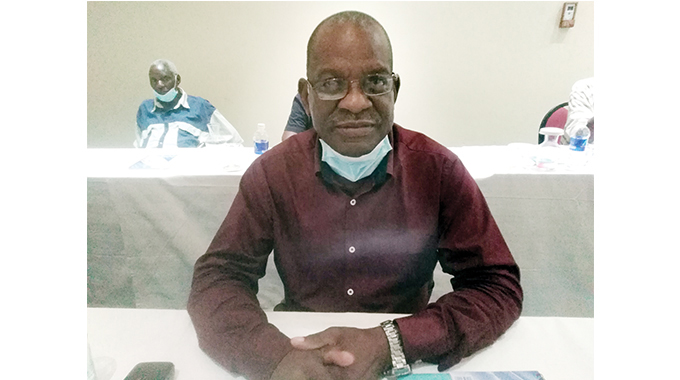
Leonard Ncube-Victoria Falls Bureau
THE 42km second Deka pipeline from the Zambezi River to Hwange Power Station has created and brought clean water for people and livestock in the area under Chief Whange as well as boosting critical cooling water supplies for the giant and extended thermal power station.
Hwange was facing serious water challenges since the district has a few rivers and small weirs that quickly dry up if the previous rainy was poor. Some of the water sources are polluted by effluent from coal mining activities.
Deka River is the worst case and livestock has died after consuming polluted water.
The Zimbabwe Power Company, with help from the Government of India, embarked on duplicating the existing water pipeline from the Zambezi River to Hwange Power Station to ensure that the extension to the power station would have adequate cooling water.
The Exim Bank of India funded the project through a US$48,1 million credit line to ensure the extended Hwange Power Station, Units 7 and 8, had adequate water for boilers and cooling, with an extra supply for the local Deka community.
Work on the pipeline started on October 1, 2021, with President Mnangagwa officiating at the ground-breaking ceremony for the construction of the pipeline in March 2022.
The 962mm pipeline runs parallel to the existing one used by Zesa for water supply to the power station and Hwange community, with three offtakes along the way.
It connects the power station to the Deka High Lift Pump Station on the Zambezi River.
Speaking at the handover ceremony on Monday, Chief Whange said the new water source had given a lifeline to his community.
“The completion of the Deka pipeline has a positive impact on the fulfillment of the country’s power supply concerns, and we are indeed on track towards Vision 2030. We are grateful to the Second Republic under the leadership of President Mnangagwa for implementing transformative projects throughout the country to uplift the livelihoods of all Zimbabweans,” he said.
“The Deka pipeline created employment for locals. I am happy to announce that labour was drawn from the local community.”
Chief Whange challenged other companies operating in the region to emulate contractors of the Deka pipeline project.
“The old ZPC pipeline did not have any water going to my community. This new pipeline has three water points for the local community, which is not enough. We are grateful to ZPC as these three points can go a long way in assisting us in terms of access to water,” he said.
“When the refurbishment of the old pipeline commences, may I appeal to you to consider establishing more water points along the pipeline to help ease water challenges and create a greenbelt in this dry region”.
Chief Whange urged the local community living along the Deka pipeline to guard the facility against vandalism.
Over 300 people were employed during construction. Villagers are expected to open nutritional gardens using the water coming through the pipeline.
Zesa Holdings executive chairman Dr Sydney Gata said the power utility had an unflinching commitment to ensuring that the ideals of the National Development Strategy 1 are meticulously realised through reliable and efficient provision of electricity, hence the completion of the Deka pipeline project is part of the value chain.
He said the provision of potable water to the local community was in line with Zesa’s corporate social responsibility policy.
“We are commissioning a new chapter in our nation’s progress, one that embraces the revolutionary concept of creating shared value. I am glad to notify you that along the pipeline members of the community can access water for their use,” said Dr Gata.
“This development is a testimony that the Zimbabwe Power Company is indeed a responsible corporate citizen. The project also enabled the development of local capacity through training and it created employment opportunities for over 300 people who are mostly locals.”
Dr Gata said the project entailed the construction of a new 42km long 960 mm diameter pipeline complete with an independent cathodic protection system.
The objective was to improve reliability, extend life, and create redundancy for the existing water supply system to Hwange Power Station for sustainable power generation.



 Online Reporter