admin
admin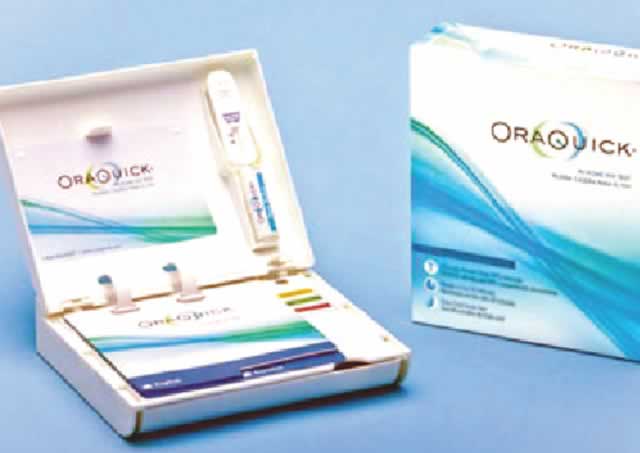

Yoliswa Dube
THEY had to have been the longest two hours anyone has had to wait. The moment one walks in, an instant stare from numerous sets of eyes takes one aback. You freeze at the door, contemplate making a U-turn and forget you had important business to take care of. It is as if the eyes giving the blaring stare see through one’s mind.
The reception area has chairs lined up along the wall – next to each other – facing the entrance. Everyone seated on these chairs sees exactly who walks in, wonders why and probably does an “eye test” to determine whether or not the new “entrant” could be HIV positive or negative.
The eyes follow you to the woman at the reception desk who directs you to someone who will get a $1 payment, check your blood pressure and take down your details. Once that is done you sit on one of the chairs along the wall and the wait begins.
It is at this point that one’s mind begins to race. But lost in these thoughts, seated on one of the chairs and now being the one to judge who has walked in, a woman carried by four other women, probably relatives, arrives. Frail, skin and bones, eyes in socket, struggling to breathe and barely lifting a finger this woman is laid carelessly on the cold floor.
It is at this particular moment at an HIV voluntary counselling and testing centre that it dawns on this reporter, HIV is very real.
While many refuse to acknowledge that HIV is part of our everyday lives and many more avoid HIV testing, it is important to be aware of the dangers of the virus, the magnitude of the HIV/Aids problem and the importance of testing and knowing one’s HIV status.
Statistics show that of the 196,000 who went for tests since last year, only 185,000 collected their results.
To mitigate this the government proposed to introduce HIV self-testing kits in the hope that more people would test for the virus but this suggestion has split opinion.
Though some believe it would decongest voluntary testing and counselling centres, reduce the amount of time spent at the various counselling and testing centres dotted around the country, others believe the counselling aspect of the HIV testing process is critical.
“When someone comes in for HIV counselling and testing, they go through various stages to ensure that they’re ready for the test and the result. We do pre-testing counselling and post-testing counselling which is a very important part of the process,” said a counsellor at a voluntary counselling and testing centre in the city.
“Sometimes people change their minds during the pre-testing counselling session. Others choose not to know the result. They aren’t quite ready to accept the result if it turns out to be positive. An HIV test is a very difficult one to take and some people think not knowing their status is better, so they simply walk out,” she said.
The counsellor said making use of HIV-self testing kits could be problematic owing to the number of people that commit suicide in the country after testing positive to HIV.
“We hear about a lot of people, who find no reason to live after testing positive to HIV, they take their own lives. This is happening even after going through the counselling process, what more when they test themselves at home, with no one close by to assure them that everything is going to be okay with the correct lifestyle and appropriate medication,” she said.
After waiting for over an hour and 30 minutes for the pre-HIV test counselling it is easy to walk out before the test. It is too long a wait for a troubled mind. Eventually, a counsellor escorts one to a private room where they ask a number of questions after which one reflects on their choice to go on with the test.
In a minute the blood sample is taken; no pain – a simple prick on the finger but the following 20 minutes as one waits for the result to come out are yet another struggle. The “what if’s” and the “what next” race in one’s mind until the post-testing counselling session comes with the results’ disclosure.
“Understandably, it takes a lot of courage for one to sit through the entire process to get tested for HIV. It’s a long wait and I find the rationale of HIV self-testing kits. They’re definitely more convenient and save a lot of time as well as reduce the anticipation,” said another counsellor at the centre.
“But I think the government should shelve this idea otherwise we’ll have serious social problems. They should instead focus on establishing more HIV testing and counselling centres and ensure that people don’t have to wait long to get tested,” she said.
The counsellor said the most critical thing is to ensure counselling after one has tested positive to HIV so that the person has an appreciation of what it means and realise that it is not a death sentence.
“The people that walk through our doors everyday are very young, some of them as young as 15. They don’t come for regular checks like our more mature clients but they come because something happened last night or the weekend before. Surely, these need help in the event that they test positive.
“I’ve had people throwing themselves on the floor and crying after testing positive while others threaten to jump out through the window. I really don’t think we’re ready for self-testing. HIV is still a very sensitive issue in Zimbabwe unlike in other countries like Uganda. Stigma and discrimination are still rife,” she said.
The counsellor added: “I’d rather we get more counsellors, open more centres and improve service delivery instead of endorsing HIV self-testing.”
HIV self-testing kits, also known as self-tests, allow people to test themselves for HIV without the aid of a healthcare provider. The kit also allows an individual to test a blood or saliva sample and interpret the result within 20 to 40 minutes. The test requires users to swab their upper and lower gums for the saliva sample. The swab is placed in a solution which allows the test reaction to develop.
There are more than 1,600 health care facilities that are providing free integrated HIV testing and counselling services through ante-natal clinics, opportunistic infections clinics, stand-alone testing and counselling centres, outreach centres, TB and STI clinics.
The Unites States has effectively used HIV self-testing kits (OraQuick) since last year.
OraQuick provides a 24 hour toll free telephone counselling service and helps link people who test positive to a nearby clinic.
Though most African countries have not embraced HIV self-testing kits, in Kenya self-testing for healthcare workers is being implemented.
The director of Aids and TB unit in the Ministry of Health and Child Care Dr Owen Mugurungi said the ministry was undertaking an assessment before the introduction of the HIV self-testing kits.
He said there was a need to run feasibility and acceptability tests before introducing the new product in order to check if people were ready to receive it.


 Online Reporter