

 admin
admin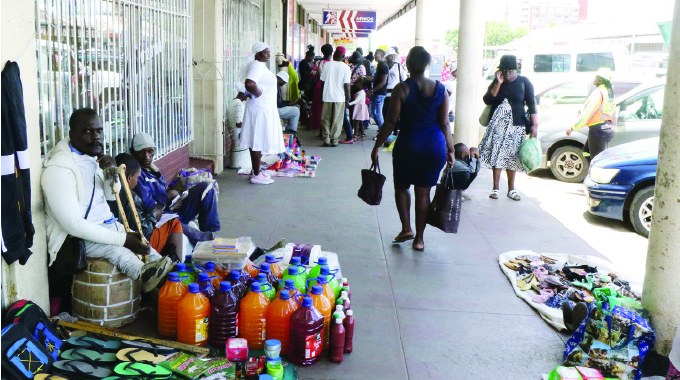
Sikhulekelani Moyo, Features Reporter
THE conflict between established shops and vendors is escalating following the growth of the informal sector which has resulted in Bulawayo getting congested.
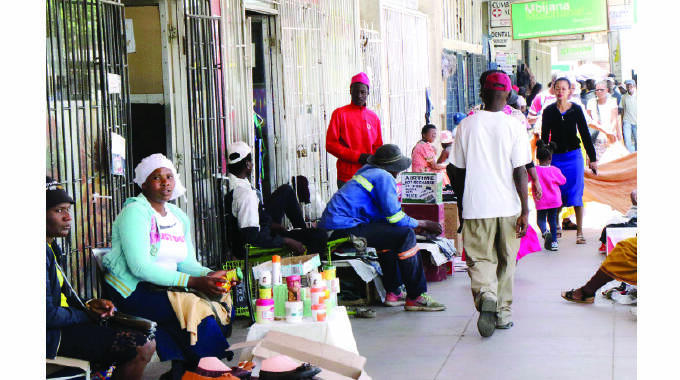
Informal trading has become rife in Bulawayo, which has seen virtually all pavements being blocked as traders compete for clients and display their products such as fruits, vegetables, clothing, and shoes, among others.
The development has created tight competition among vendors and shops as informal traders usually sell their products at cheaper prices, capitalising on the fact that they do not pay taxes, rentals, and other bills as some of their products are smuggled into the country.
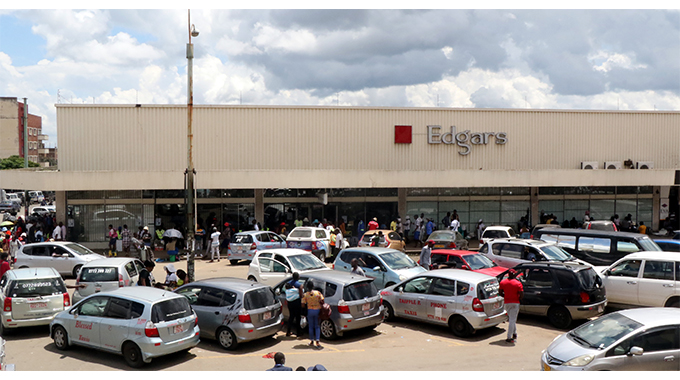
Recently, clothing retailer Edgars Stores closed its shop near Tredgold in Bulawayo attributing the closure to congestion which created an unconducive shopping environment as the shop officials said their businesses target elite people who need a serene shopping environment.
Commenting on the surge of the informal sector, seasoned Bulawayo businessman Mr Mohamed Esat said informal trading provides a livelihood for many people but there is a need for regulation so as to protect established shops.
He said having designated areas for the informal sector will bring the city back to sanity and allow the smooth running of businesses.
“Three years ago, we traded at Leopold Takawira and Lobengula Street. We had a store there that was called Dollar Wholesalers, and business was good until all hell broke loose. City Council allowed vendors to trade in the area without any problem,” said Mr Esat.
“We used to get meat, and fish outside the store, it was a fit all and that affected our business. There was no parking space and we closed because it was no longer conducive for business.
“What Edgars has done, I fully agree with. If it were me, I wouldn’t carry on there too because Edgars is a high-class trading shop where people of a certain calibre would go and buy their goods. Now there is complete havoc there 24 hours a day,” he said.
Organisations that represent vendors are also seeing it fit for their members to have designated places to operate their businesses from.

Regardless of the city having many townships with well-organised market places, vendors move from the townships into the city centre where everything is happening.
Bulawayo Vendors and Traders Association (BVTA) executive director Mr Michael Ndiweni said the exponential growth of the informal sector has had an adverse effect on some established shops where some do business from undesignated sites and this indeed propagates conflicts.
“Our view is that we have been unequivocal that the local authority must designate sites to eliminate such conflicts. Informal traders need to embrace disruptive ideas around decongestion of the central business district, creating new business hubs in townships. There are decent facilities at malls like Nkulumane, Entumbane or Cowdray Park. Entities like banks, big supermarkets, fast food outlets, money transfer agents must be encouraged or incentivised by private property owners working Government to move ‘back’ to these areas,” said Mr Ndiweni.
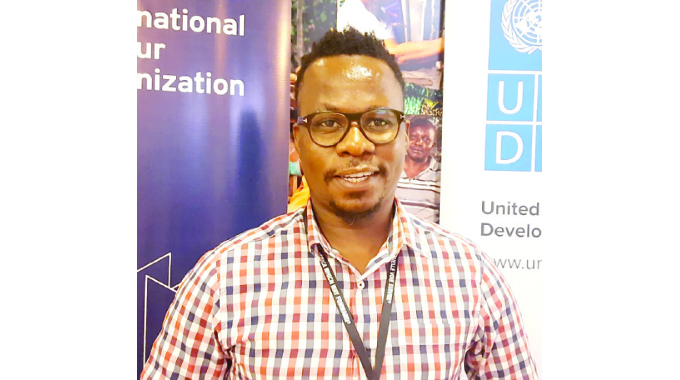
“Informal traders also need not agree to be abused by space barons who appear to foment and encourage some unsuspecting informal traders to trade from undesignated sites through extorting a reportedly US$1 per day promising them protection, creating a mess and conflict in the city.”
The call for big shops and banks to establish businesses in townships will enhance activity in those areas thereby encouraging vendors to trade in their respective areas instead of the city centre.
The Government in partnership with private players is also working on the provision of decent workspace to small and medium enterprises, a development which is also meant to decongest city centres as well as promote growth in the economy through revenue collection.
SMEs contribute significantly to the economy as they have managed to create much of the needed employment in the country.
Government continues to encourage that this sector be supported.
Economist and financial market expert Mr George Nhepera said while it is a delicate exercise to balance the needs of both the informal and formal sectors from a Government perspective, the formal sector must be supported in its quest to offer goods and services at designated places of their choice, without being forced to close as is now the case with the Edgars branch.
“Let’s take a leaf from countries like South Africa where the formal sector is vibrant and offers employment opportunities to more than 60 percent of the working class in their economy. The informal sector is only a small industry relative to the formal sector and this has led the country to a privileged status of being a developed country, the only such nation in Africa and member of the G20,” he said.
“It’s high time the policymakers thought of crafting a law, specifically for the informal sector, so that its operations and activities are guided by some reference to laws and directives.”

Soon after the closure of the Edgars outlet, the company’s operations manager Mr Thulani Ncube had this to say, “We have officially closed the branch, we won’t be using that place anymore because there is now an influx of illegal forex traders and vendors outside the store and it was no longer aligning with the expectations of our brand.”
“Edgars is an upmarket brand, so our customers are people who would love shopping convenience in terms of parking space and ambiance outside and inside the shop and minimal interactions when doing their shopping.”
Mr Ncube said Edgars always upgrades their facilities from time to time to meet customer expectations but noted that there are some factors they cannot control.
“So, we are opening a new branch soon, work is already underway at a new site that we will advise in due course,” he said.
Asked about the effects of the influx of second-hand clothes in the market, Mr Ncube said there is a need for regulations of the informal sector for the sake of protecting established businesses that pay duty and tax to the Government. -@SikhulekelaniM1


 Blessing Chizhande
 Online Reporter