

 admin
admin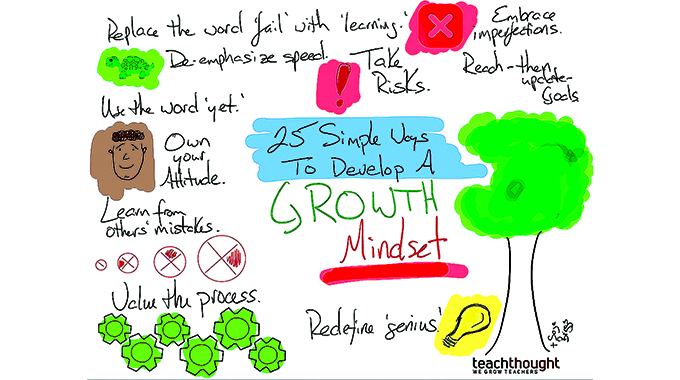
Arthur Marara
How you think is very important. This is the starting point for all success and failures in life. Thousands of years earlier, one of Israel’s kings Solomon warned, “Be careful how you think, your life is shaped by your thoughts.” [Proverbs 4:23 – GNT]. Your mindset is very important, and that’s why in other translations Solomon says, “Guard your heart above all else”. The heart in this case refers to your mind. You need to be very careful what you allow yourself to think because eventually it becomes your mindset.
In a fast-changing and disruptive business environment, you need to develop a Growth Mindset.
This will not be the first time that you hear the term “Growth Mindset”. You also by now know the difference between fixed mindset (which posits that ability is set in stone) and growth mindset (which is posits that ability is malleable).
The question that arises is how do you actually develop a growth mindset? What is it that you need to do in order to develop the growth mindset.
What are the sorts of behaviours and habits that we should be encouraging? These are some of the questions that we will discuss in the this week’s article and perhaps continue on it in the coming week.
What Is A Growth Mindset?
The most common knowledge around growth mindset remains its difference from a fixed mindset. But what people really want to know now is how to develop a growth mindset. The growth mindset concept was originally developed by Stanford Psychologist Carol Dweck. She introduced the idea to the public in her book Mindset: The New Psychology of Success. Dweck demonstrated how people (students, in particular) can be divided into two groups. The division being those who have a growth mindset and those who have a fixed mindset.
Carol Dweck stated that teaching people that their brain can change is a good starting point. She however warned against praising a child’s natural ability or intelligence, as this could lead to a fixed mindset. In the several studies conducted in young children, it was found that praising intelligence can lead to them giving up quickly after experiencing failure, a reduction in enjoyment, and even viewing effort as a something only needed by less able people.
The growth mindset entails a belief that skill and intelligence are something that people can develop. People with a growth mindset believe that while people have inherent qualities and traits, success comes from constant personal development. On the other hand, people with fixed mindset believe that talent and intelligence are something you either have or you don’t.
The thinking that flows from a fixed mindset is that some people are good at certain activities, and others excel in different areas. There is no belief that practice, failure, and strategy development are key to developing talent or intelligence.
Dweck discusses that those who do develop a high degree of talent are more often people with a growth mindset. The research has further demonstrated that people with growth mindsets experience greater success and skill development. A growth mindset goes beyond just positive thinking. Growth mindset is about believing in the potential for development and that learning a new skill comes from practice and perseverance.
Growth Mindset demands more than just effort
The usual thinking is that Growth Mindset requires you to just put in effort. In her research Dweck noticed that, as growth mindsets are embraced by the leader and educator alike, many seem to believe that it all comes down to effort. She further observed that some teachers seem to believe that they can improve a student’s achievement by telling them to try harder. This according to her is a ‘false growth mindset.’
Effort is important, however, a student’s attitude is much more important toward learning a new thing and their perspective on failure as a part of the learning process.
Growth Mindset makes positive results possible
Positive results can come from a growth mindset and working toward a goal. This will not be easy and automatic but the growth mindset creates the conditions for the attainment of positive results. The belief and understanding that positive improvement is possible is a key ingredient for success. In order to achieve their goals the people with a growth mindset believe in their contribution towards the attainment of the goals. In particular they believe that in order to achieve goals they must:
View failure as a part of learning – I once did an article in this column called, “Failure is an option”.
Put in the time – You get results from the things that you dedicate your time and focus on.
Embrace the challenge – You cannot be successful if you shy away in the face of a challenge.
Develop new strategies to overcome each challenge – new thinking gives birth to new possibilities. New challenges require new approached If you want to elicit positive results you need to embrace this way of thinking. A growth mindset will not grow on its own it requires you to put in the effort, time and practice.
Differences between Growth and Fixed Mindset
So what is the difference between Growth Mindset and Fixed Mindset. I will close with this and we continue this conversation next week with a focus on how to actually develop he mindset. In the table shown, I have shared some key differences between the two types of mindsets. Take time to study and share with the team that you work with. There is usually a talk of a company having a “Growth Mindset”, but in truth this is not possible especially if you do not take time to actually help each other work on the individual mindsets. People come from diverse backgrounds and have their own ways of thinking. This does not automatically translate to Growth Mindset. Work on developing growth mindset at an individual level, and also help your team members to do the same. This will have a significant effect on the results that you get as an organisation.
Growth Mindset
Fixed Mindset
Embraces challenges
Avoids challenges
Perseveres in spite of failure
Gives in when they come up against hardship
Believes that people can increase their intelligence or skills
Believes that intelligence and skills are something you’re born with and can’t develop
Is inspired and motivated by the success of others
Is threatened by the success of others
Wants to learn
Believes they know everything already
Accepts and embraces criticism
Ignores or dismisses criticism
To be continued…
Arthur Marara is a corporate law attorney, keynote speaker, corporate and personal branding speaker commanding the stage with his delightful humour, raw energy, and wealth of life experiences. He is a financial wellness expert and is passionate about addressing the issues of wellness, strategy and personal and professional development. Arthur is the author of “Toys for Adults” a thought provoking book on entrepreneurship, and “No one is Coming” a book that seeks to equip leaders to take charge. Send your feedback to [email protected] or Visit his website www.arthurmarara.com or contact him on WhatsApp: +263780055152.



 Online Reporter