Online Reporter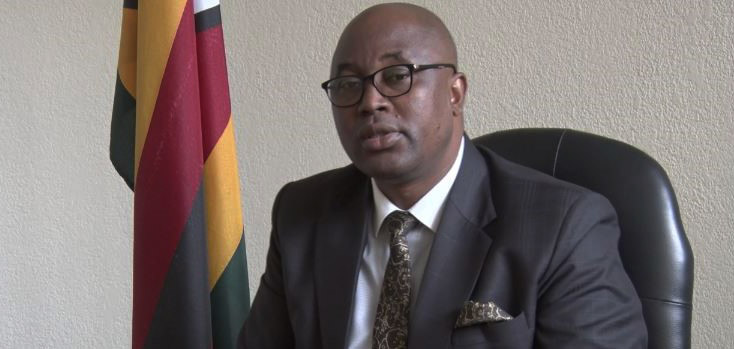
Ray Bande
Senior Reporter
SENIOR officials from ministries, departments, and agencies (MDAs) from Central Government and local authorities in Manicaland convened at Africa University in Mutare for a two-and-a-half-day workshop to equip them with necessary skills, knowledge, and abilities to comprehend and implement the Devolution and Decentralisation Policy.
Devolution and decentralisation reforms, as outlined in the Constitution of Zimbabwe (2013), Devolution and Decentralisation Policy (2020), National Development Strategy (NDS1), and Vision 2030 – are crucial to the country’s ambition to become an upper middle-income economy by 2030.
A devolved multilevel governance system is expected to foster unity, transparency, accountability, responsiveness, sound service delivery, value for money, and equitable development.
However, research on the subject in Zimbabwe has revealed that, despite their popularity in policy circles, devolution and decentralisation reforms are often misconstrued.
Implementers of these policies have also identified gaps in understanding the reforms and their impact on policy implementation.
Against this backdrop, the Office of the President and Cabinet, Manicaland, commissioned Africa University to develop and implement a Devolution and Decentralisation Training Workshop.
The workshop seeks to build capacity and equip senior Government officials across Government ministries and agencies with fundamental knowledge on devolution, thereby enhancing their understanding and implementation of the policy.
In an interview on the sidelines of the workshop, Permanent Secretary for Presidential Affairs in the Office of the President and Cabinet, Engineer Tafadzwa Muguti, expressed satisfaction with Manicaland’s pioneering efforts in devolution and decentralisation.
“We are delighted that Manicaland has become the first province to undertake a research and academically oriented workshop on devolution and decentralisation, aimed at unpacking the constitutional provisions that establish the three tiers of governance,” said Engineer Muguti, further emphasising that devolution is an inevitable aspect of the country’s development trajectory.
“His Excellency (President Mnangagwa), through the Constitution, envisions fiscal and developmental planning being undertaken at the subnational level. This approach will ensure that communities are not left behind or marginalised,” he said.
Engineer Muguti highlighted the importance of revitalising and reorienting Village Development Committees (VIDCOs) and Ward Development Committees (WADCOs) at the grassroots level, as stipulated in the country’s laws.
“Each province must plan its development path in accordance with its unique natural endowments. Manicaland, for instance, boasts an abundance of tourism attractions, and must therefore tailor its developmental planning to maximise these assets,” said Engineer Muguti, expressing enthusiasm about Africa University’s forthcoming certification programme on devolution, which will be launched in collaboration with the Government through the Ministry of Local Government and Public Works.
“We are thrilled that devolution is now driving development at the subnational level,” he said.
In a separate interview, Minister of State for Manicaland Affairs and Devolution, Advocate Misheck Mugadza, highlighted the significance of devolution in empowering provinces to take charge of their development.
“Provinces can now initiate projects without constantly referring to Central Government, which is a significant step forward,” he said.
Minister Mugadza emphasised the importance of the training workshop, which brought together representatives from MDAs and other stakeholders.
“This training programme is crucial in enhancing our understanding of the devolution and decentralisation process, and we are excited to see our MDAs and stakeholders gathered here to gain valuable insights,” he said, outlining the numerous benefits the province has derived from devolution.
“Manicaland has made significant strides through the devolution and decentralisation agenda. We have witnessed the construction of several clinics, infrastructure development, including the recent refurbishment of our airport, and the construction of roads across the province,” he said.
Minister Mugadza has personally commissioned 37 projects, with many more commissioned by the Presidium or other stakeholders.
“In a single year, we commissioned 51 projects, and as we speak, we have accomplished over 30 projects this year. Notably, three-quarters of these projects were made possible through devolution funds received from Central Government,” he said.