Sukulwenkosi Dube-Matutu [email protected]
MAJOR infrastructure development is continuing at Phakama Primary School in Gwanda District, with an administration block under construction and new classroom furniture procured through the Government’s devolution fund programme.
The latest developments build on the successful completion of two classroom blocks, which have enabled the newly commissioned school to begin operating and accommodating Early Childhood Development (ECD) A and B learners.
Phakama Primary School, commissioned earlier this year, is an annex of Jahunda Primary School and is expected to play a key role in easing congestion at Jahunda, Senondo and St Christopher’s primary schools, whose enrolments have far exceeded their intended capacities.
Jahunda Primary School has an enrolment of 1 865 pupils, while Senondo Primary has 1 708 and St Christopher’s Primary has 1 160.
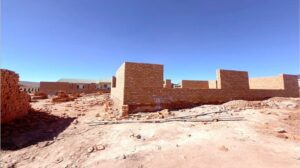
Initial devolution funds were used to revive the long-stalled project by financing construction of the first classroom block.
A second classroom block was started using devolution funds before being completed with council resources.
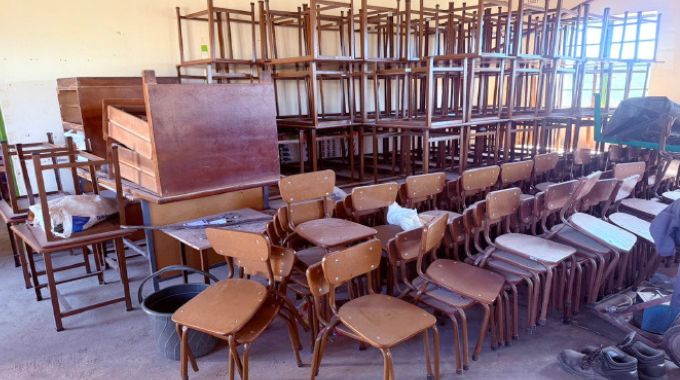
Furniture for the second block has now been purchased, while construction of the administration block is progressing.
Gwanda mayor, Alderman Thulani Moyo, said infrastructure development and job creation remained central to the local authority’s development agenda as the provincial capital.
“We received ZWG$4,1 million in April and our target was to further develop Phakama Primary School. We are working on the administration block and we have managed to purchase furniture for the second classroom block.
“Under minimum service delivery standards, we are into infrastructure development and construction of schools and clinics.
The minimum service delivery standards require a minimum walking distance of less than three to five kilometres for primary school learners,” he said.
Alderman Moyo said once major works at Phakama Primary School are completed, council will shift its attention to the Spitzkop area where another primary school is planned.
He said once the administration block is completed and commissioned, the school will be handed over to the School
Development Committee to spearhead further development.
Alderman Moyo said construction of additional schools remained critical as Gwanda’s existing schools were struggling to cope with rising enrolment.
“We thank Government for releasing devolution funds which have helped us to further develop Phakama Primary School. The devolution funds have also helped us to undergo other development projects such as the purchase of earth-moving equipment.
“If we receive more devolution funds, we can show that we can fully utilise the money to ensure improved service delivery. As we receive and utilise devolution funds, we make it a point to consult key stakeholders such as the residents,” he said.
The establishment of Phakama Primary School in the Garikai/Hlalani Kuhle area has brought relief to residents who had long complained about inadequate educational infrastructure in the rapidly growing suburb.
A resident, Mrs Nompumelelo Khumalo, welcomed the continued development of the school, saying the community was optimistic it would soon cater for learners up to Grade Seven.
“We are glad to see the school being developed further thanks to the devolution fund and council. This project hasn’t become a white elephant, but it has continued to develop at a steady pace. Government is really fulfilling its promise of spearheading development right across the nation,” she said.
The school project traces its origins to a community initiative launched in 2020, when residents mobilised resources to kick-start construction.
Households in the ward contributed US$1 each towards the purchase of building materials used to construct the slab for the first classroom block before Gwanda Municipality intervened using devolution funds to continue construction and procure furniture.
Alderman Moyo said construction of new schools remained one of the key targets under the council’s five-year strategic plan.
“One of our priorities is to construct more schools to reduce the teacher-pupil ratio because if the ratio is too high, learning outcomes and examination results are affected,” he said.