Online Reporter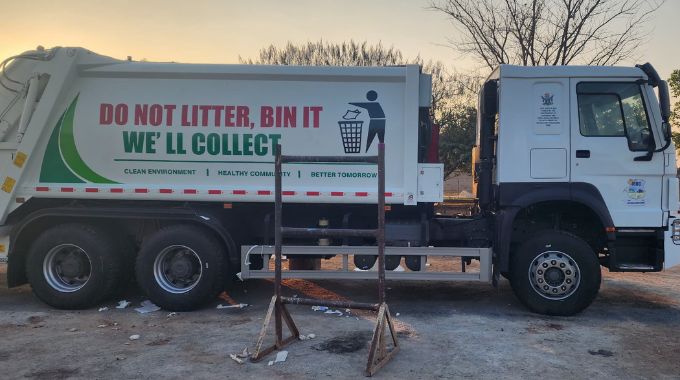
Sukulwenkosi Dube-Matutu [email protected]
RATE payers in Matabeleland South Province are set to see improved refuse collection and road maintenance as devolution funds have enabled local authorities to acquire critical equipment and strengthen their capacity to deliver essential services.
At Insiza Rural District Council, a US$122 000 refuse compactor purchased through devolution funds is expected to transform refuse collection in Filabusi and nearby rural service centres, while freeing other council machinery for road construction and maintenance.
The development comes as Government continues to channel resources to local authorities to build their operational capacity and help them meet minimum service delivery standards by 2030.
Insiza RDC chief executive officer, Mr Shepherd Tshuma, said the refuse compactor would enable council to provide more efficient refuse collection services in Filabusi Townboard and surrounding areas, including Skuta, Nkankezi and Amazon along the highways.
“We managed to buy a refuse compactor using devolution funds at a cost of US$122 000. We have been using a tractor and dumper trailer to collect refuse in Filabusi Townboard area, which was making the process of re-fuse collection very slow and inefficient.
“We have been failing to collect from all households, businesses and institutions within a week,” he said.
Mr Tshuma said the shortage of suitable equipment had forced council to deploy tipper trucks to supplement the tractor, taking machinery away from other critical services.
“We ended up using tipper trucks to supplement the tractor but that also meant foregoing other services like roads rehabilitation.
“The coming in of the refuse compactor will ease all these problems and ensure that we deploy our machinery where they will efficiently and effectively deliver services to the public. We will now release the tractor and trucks to roads structures construction,” he said.
The impact of the equipment investment is also being felt at Gwanda Rural District Council, which purchased a tipper truck at a cost of US$89 183 using Zimbabwe National Road Administration (Zinara) funds.
Council chief executive officer, Mr Ranganai Sibanda, said the additional truck would strengthen the local authority’s road maintenance and construction capacity.
He said the truck would be used for spot gravelling during motorised grading of roads, in-house gravelling and transportation of aggregates for construction works.
Mr Sibanda said the equipment would also support the mobilisation and delivery of local resources and mate-rials for community- and ward-initiated projects.
“The tipper truck is the second one that we have purchased which will help improve efficiency. We were using a tractor to support the tipper truck that we had as there was a gap. This development is a major boost as we strive to achieve minimum service delivery standards,” he said.
In Beitbridge, the Municipality has also purchased three service utility vehicles as local authorities across the province continue to strengthen their equipment base.
Minister of State for Matabeleland South Provincial Affairs and Devolution, Albert Nguluvhe, said the procurement of equipment demonstrated the practical impact of Government support to local authorities.
He said the investments were aligned with the Second Republic’s drive to improve service delivery and achieve Vision 2030.
“Procurement of this equipment is speaking to the President’s clarion call for uncompromised service delivery. Councils are in the driving seat as champions for ensuring that minimum service standards delivery comes to life. Procuring this equipment also speaks to Vision 2030,” he said.
“President Mnangagwa has called for improved service delivery in towns through improved roads, improved sewer and water reticulation as well as improved refuse collection.
“In order to capacitate local authorities Government through Zinara and the devolution programme is releasing funds to local authorities to purchase earth moving equipment such as tippers, graders, rollers among others,” he said.
Government has set minimum service delivery standards which urban and rural local authorities are expected to meet by 2030, when the country targets upper-middle-income status.
The Minimum Service Delivery Standards Indicators for Local Authorities (Amendment) Regulations, 2026 (No. 1) establish legally enforceable minimum service delivery standards for both urban and rural local authorities.
The framework provides mechanisms for monitoring performance, strengthening accountability, enhancing transparency and promoting good governance.
The standards cover key areas including water supply, sanitation, solid waste management, roads and public lighting, public health, environmental management, housing and community services, as well as corporate governance.
Local authorities are also required to prioritise service delivery expenditure over administrative costs, with a recommended expenditure ratio of 70:30 in favour of service delivery.
The implementation of the framework is expected to improve service delivery outcomes, expand residents’ access to essential services and promote prudent utilisation of public resources.
Compliance will be monitored and evaluated by the responsible Ministry, with non-compliant local authorities liable to corrective and disciplinary measures in accordance with applicable laws and regulations.
For councils such as Insiza and Gwanda, the equipment acquisitions demonstrate how funding directed towards local authorities can translate into practical improvements in their ability to serve communities.
The broader objective is to ensure that local authorities have the machinery, resources and operational capacity required to deliver essential services efficiently, while ensuring that ratepayers derive value from public re-sources and supporting the country’s drive towards an upper-middle-income economy by 2030.
—@DubeMatutu