Sukulwenkosi Dube-Matutu Mat-South Bureau Chief
DEVOLUTION funding is strengthening local authorities’ capacity to deliver essential services, with Insiza Rural District Council acquiring a refuse compactor to improve waste management and support the drive towards clean, smart and investment-ready communities.
The investment responds to President Mnangagwa’s call for uncompromised service delivery, translating public resources into equipment that addresses everyday community needs while advancing the national target of achieving an upper-middle-income economy by 2030.
Minister of State for Matabeleland South Provincial Affairs and Devolution, Albert Nguluvhe, has said local authorities must complement Government’s investment in service delivery by prioritising refuse collection, maintaining clean settlements and enforcing by-laws that promote smart towns.
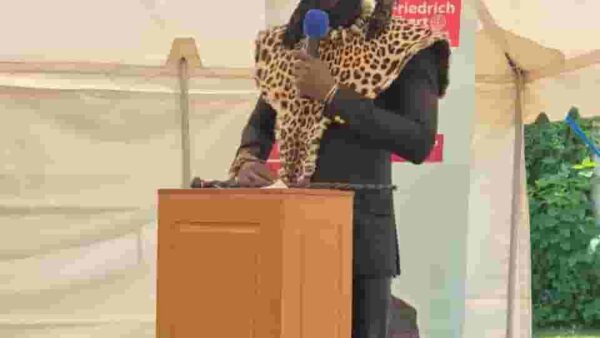
Speaking recently during the commissioning of the refuse compactor purchased by Insiza Rural District Council using devolution funds, Minister Nguluvhe said some local authorities were lagging behind in waste management and enforcement of by-laws, slowing progress towards a clean and smart province.
“Procurement of such equipment is speaking to the President’s clarion call for uncompromised service delivery. Councils are in the driving seat as champions for ensuring that minimum service delivery standards come to life. Procuring this equipment also speaks to Vision 2030,” he said.
“President Mnangagwa has called for improved service delivery in towns through improved roads, improved sewer and water reticulation as well as improved refuse collection. In order to capacitate local authorities Government through Zinara and the devolution programme is releasing funds to local authorities to purchase earth moving equipment such as refuse compactors, tippers, graders and rollers among others.”
The acquisition is particularly significant for Insiza RDC, which has faced operational challenges in refuse management across the Filabusi Town Board area.
Council previously relied on a single tractor and dumper trailer, a system that became increasingly inadequate as the town expanded. Filabusi’s population grew from 3 500 in 2012 to more than 11 000 in 2022 and is projected to surpass 25 000 by 2040 thereby increasing pressure on waste collection services.
The new equipment is expected to strengthen council’s capacity to respond to growing demand, improve refuse collection and support a cleaner environment as the town expands.
Minister Nguluvhe commended Insiza RDC for prioritising the purchase while urging other local authorities to invest in service delivery and enforce existing by-laws.
He said clean and presentable towns and rural centres depended on councils taking the lead in maintaining public spaces, a responsibility that would also influence residents’ attitudes towards cleanliness and attract investment.
“His Excellency President Emmerson Mnangagwa’s vision of a smart and clean country is inline with transforming Zimbabwe into a prosperous, upper-middle-income economy by 2030, anchored on environmental stewardship, modernisation and civic responsibility,” said Minister Nguluvhe.
He said the President has come up with various strategies to promote cleanliness such as the national clean-up programme.
“Under Vision 2030 environmental management is linked directly with the broader national goals such as sustainable urban planning, better waste-to-energy conversion, improved public health and digital or technological innovation,” said Minister Nguluvhe.
The investment comes as Government strengthens accountability among local authorities through enforcement of minimum service delivery standards designed to ensure that residents receive value for their money.
The standards cover essential services, including water supply, sanitation, solid waste management, roads and public lighting, public health, environmental management, housing, community services and corporate governance.
Local authorities are required to prioritise service delivery expenditure over administrative costs, with a recommended expenditure ratio of 70:30 in favour of service delivery.
Compliance will be monitored and evaluated by the Ministry, with non-compliant local authorities liable to corrective and disciplinary measures in accordance with applicable laws and regulations.
The framework is expected to improve access to essential services and promote prudent use of public resources, reinforcing Government’s drive to modernise communities and achieve Vision 2030.
-@DubeMatutu