Chronicle Editor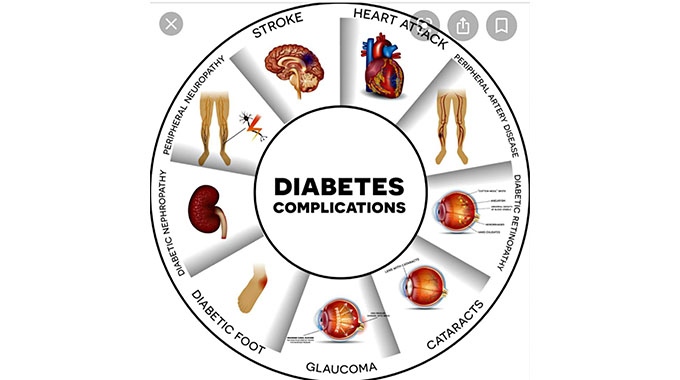
Dr Tatenda Simango
I hope I find you well and in good health.
Covid-19 in diabetic patients presents a challenge to both the patient and the doctor in treatment. The complications are higher with patients who are suffering from chronic conditions particularly hypertension, chronic kidney disease and obesity. We shall look at diabetes considering Covid-19 and raise awareness as to the current research findings.
There is not enough data to show whether people with diabetes are more likely to get Covid-19 than the general population. The problem people with diabetes face is primarily a problem of worse outcomes, not greater chance of contracting the virus.
The risk of getting very sick from Covid-19 is likely to be lower if your diabetes is well-managed. When people with diabetes do not manage their diabetes well and experience fluctuating blood sugars, they are generally at risk for several diabetes-related complications. Having heart disease or other complications in addition to diabetes could worsen the chance of getting seriously ill from Covid-19, like other viral infections, because your body’s ability to fight off an infection is compromised.
There appears to be two reasons for this. First, the immune system is compromised, making it harder to fight the virus and likely leading to a longer recovery period. Secondly, the virus may thrive in an environment of elevated blood glucose.
For people living with diabetes, it is important to take precautions to avoid the virus if possible. The recommendations that are being widely issued to the public are doubly important for people living with diabetes and anyone in close contact with people living with diabetes.
Telemedicine should be encouraged when possible to avoid unnecessary routine clinical visits and prevent person-to-person transmission.
Wash hands thoroughly and regularly.
Try to avoid touching your face before you have washed and dried your hands.
Clean and disinfect any objects and surfaces that are touched frequently.
When you cough or sneeze, cover your mouth and nose with a tissue or use the crook of your arm if you do not have a tissue at hand (dispose of the tissue appropriately after use).
Try to avoid contact with anyone showing symptoms of respiratory illness such as coughing.
Think whether you can make changes that will help protect yourself or loved ones. For example, can you avoid unnecessary business travel? Can you avoid large gatherings? Can you avoid public transport?
If you are ill with flu-like symptoms, stay at home.
Frequent self-monitoring of blood-glucose is necessary especially when insulin is used with careful adjustment of the insulin dose. A target glucose range of 7.8-10.0mmol/L is recommended for both critically ill patients and non-critically ill patients.
If you do show flu-like symptoms (raised temperature, cough, difficulty breathing, new confusion or inability to arouse), it is important to consult a healthcare professional. If you are coughing up phlegm, this may indicate an infection so you should seek medical support and treatment immediately.
Any infection is going to raise your glucose levels and increase your need for fluids, so make sure you can access a sufficient supply of water.
Make sure you have a good supply of the diabetes medications you need. Think what you would need if you had to quarantine yourself for a few weeks.
Make sure you have access to enough food.
Do not share food, glasses, towels, tools etc.
Make sure you will be able to correct the situation if your blood glucose drops suddenly.
If you live alone, make sure someone you can rely on knows you have diabetes as you may require assistance if you get ill.
Keep a regular schedule, avoiding overwork and have a good night’s sleep.
Healthy nutrition is an essential component of diabetes management. It is therefore important for people with diabetes to eat a varied and balanced diet to keep their blood glucose levels stable and enhance their immune system. It is recommended to:
1) Give priority to foods with a low glycaemic index (eg vegetables, whole wheat pasta/noodles)
2) Avoid excessive consumption of fried foods
3) Limit consumption of foods high in sugar, carbohydrates, and fat
4) Choose lean proteins (for example fish, meat, eggs, milk, beans after fully cooked)
5) Eat green, leafy vegetables
6) Eat fruits in two or three servings
In the Coronado study, the SARS-Cov-2 was seen to negatively affect the production of insulin and destroyed the cells that produce it. This may trigger someone who has glucose intolerance to tip into true hyperglycaemia (diabetic mellitus). In line with this view, new-onset diabetes has been reported in patients with Covid-19 being treated in hospital.
Insulin treatment has been recommended in patients with diabetes with severe Covid-19. If sugars are well controlled and one has mild symptoms, then oral drugs may be continued. Use of other medications must be guided by the physician as hydroxychloroquine can cause hypoglycaemia when used with insulin or sulfonylureas. Conversely, antiviral drugs such as lopinavir and ritonavir could lead to hyperglycaemia and worsen glycaemic control. Steroids used to ease respiratory symptoms worsen glycaemic control causing high sugar levels.
Dr Tatenda Simango can be contacted on [email protected] or follow him on Facebook@ 9th Avenue Surgery



 Online Reporter