

 admin
admin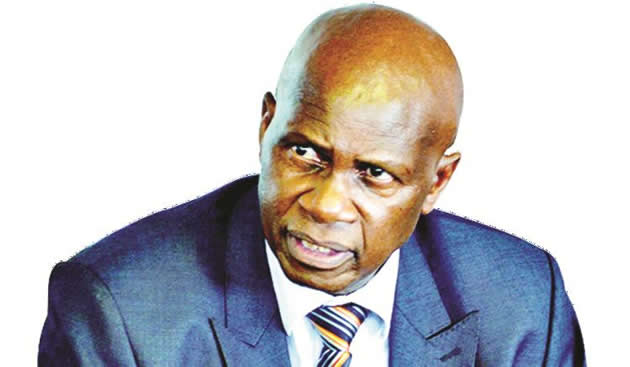
Oliver Kazunga, Senior Business Reporter
DIASPORA remittances are projected to drop by 17 percent this year to $780 million driven by the appreciation of the United States dollar against other source currencies, Treasury has said.
In 2015 Zimbabwe’s Diaspora remittances closed the year at $935 million.
In the 2017 national budget he presented last Thursday, Finance and Economic Development Minister Patrick Chinamasa said: “In 2016, the financial system anticipates formal remittance receipts of $780 million, a 17 percent decline from $935 million recorded in 2015, in part reflecting the impact of the appreciation of the US dollar against the other source currencies, particularly the South African rand.”
The minister said the trend necessitated a further easing of transactions so as to allow faster and less costly transfers by Diasporans and also to allow for accessible opportunities for our non-residents to undertake domestic investments and participate in business ventures of their choice.
He indicated that next year, Diaspora remittances were projected to end the year with a slight improvement at $785,3 million.
Following the adoption of a multicurrency system in February 2009, Diaspora remittances have become the second largest source of the country’s liquidity, constituting about 30 percent of total external inflows.
In 2009, Diaspora remittances were at $300,7 million before jumping to $361,1 million the following year.
In 2011, Diaspora inflows shot to $570,3 million while in 2012 the remittances maintained the positive growth trajectory to close the year at $646,3 million.
The positive growth trend continued in 2013 closing the year at $764 million while in 2014 it amounted to $837 million before shooting to $935 million last year.
The Government forecasts the anticipated decline in Diaspora remittances beyond 2016 would exert pressure on the country’s Balance of Payments (BoPs).
As part of mitigatory measures, the Government is working on crafting a National Diaspora Policy whose implementation should be expedited to provide an enabling framework that promotes the flow of the funds through the formal financial system.
Minister Chinamasa has noted that since the adoption of the multicurrency system the private sector offshore external loans have been an integral source of liquidity in the economy.
The loans have been largely utilised for working capital and capitalisation.
Presenting the budget, the Finance Minister said: “The current huge savings-investment gap requires that the country establish a highly competitive environment to attract external savings through external capital inflows comprising foreign direct investment, portfolio and other offshore loans.
“Capital inflows are expected to reach $692.4 million in 2016, against $1.2 billion recorded in 2015.”
Given the declining trends and the low levels of foreign capital inflows, he said it was imperative that the country continues to expedite the re-engagement process with the international financial institutions.
“Furthermore, it is critical to increase the impetus on the implementation of the on-going ease of doing business reforms as well as ensuring policy clarity, in order to boost investor confidence,” he said.
@okazunga



 Online Reporter