Online Reporter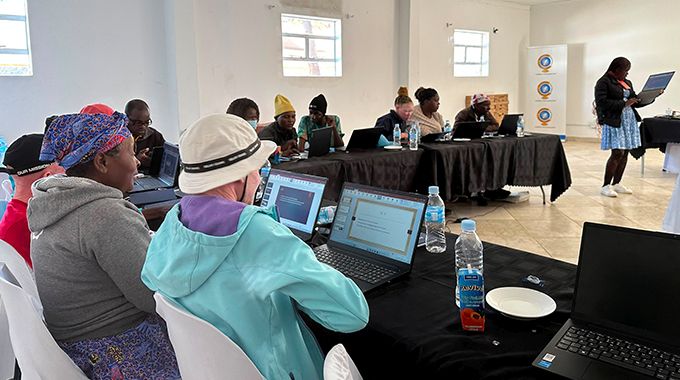
Sukulwenkosi Dube-Matutu, [email protected]
THE drive to empower persons with disabilities (PWDs) and ensure their inclusion is gaining traction, with PWDs from Matabeleland South having been equipped with digital skills as part of efforts to ensure digital inclusion in line with Government’s policy leaving no one and no place behind.
Twenty-nine participants drawn from various districts in the province last week underwent a four-day basic digital skills training in Beitbridge under a programme organised by the Postal and Telecommunications Regulatory Authority of Zimbabwe in collaboration with the Internet Society Zimbabwe Chapter and the Nkomwa Foundation Trust.
The training provided a platform for PWDs to use computers for the first time. It was tailor-made to ensure that each participant could interact with a computer despite their form of disability. The programme forms part of an ongoing digital empowerment initiative targeting PWDs across the country.
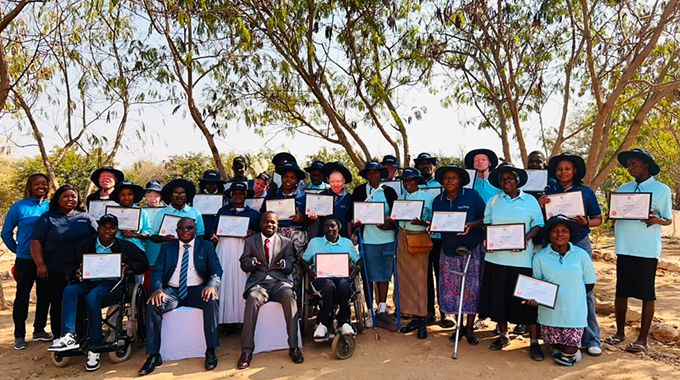
Speaking during a graduation ceremony to mark the end of the training on Friday, POTRAZ Universal Services Fund deputy director, Mr Raxon Tichafa Mujuru, said the organisation remains committed to empowering communities, particularly in marginalised areas, in order to bridge the digital divide and create equal opportunities.
Mr Mujuru said the 29 participants who trained in Beitbridge are part of a much larger national programme being implemented by POTRAZ to promote the digital inclusion of persons with disabilities.
He said 769 PWDs have so far been trained in basic and advanced ICT skills, drawn from 22 beneficiary institutions across the country and that this year alone, 131 PWDs have received ICT skills training.
“This workshop is not simply about learning how to operate a computer or navigate the internet. It is about empowerment, independence, inclusion and participation. In today’s digital society, limited access to information and communication technologies can create new forms of exclusion. Persons who do not possess basic digital skills may find it increasingly difficult to participate fully in economic and social activities,” he said.
The official said digital skills are now essential for accessing education, employment, entrepreneurship, financial services, government services, health information and social networks.
Mr Mujuru said training alone is not enough and must be supported by access to equipment and connectivity.
He said POTRAZ has disbursed 857 computers to 94 beneficiary institutions serving PWDs to create sustainable points of access.
The authority, he added, was also supporting internet connectivity for institutions across Zimbabwe, including special schools, rehabilitation centres, vocational training centres, children’s homes and organisations representing PWDs.
“This integrated approach, which combines training, equipment and connectivity, is important because meaningful digital inclusion requires more than simply introducing people to technology. It requires an enabling environment in which participants can continue to learn, communicate, innovate and access online opportunities after the formal training programme has ended,” he said.
Nkomwa Foundation Trust director, Dr Pick Nkomwa, said PWDs are among the groups worst affected by digital exclusion and that capacity-building initiatives help to close the gap in access, skills and opportunities.
He said investing in digital skills for PWDs is an investment in human potential that equips individuals to participate fully in education, employment, entrepreneurship, governance and community life.
“Equipping persons with disabilities with digital skills is essential for promoting inclusion, independence and equal participation in today’s digital society. As governments, businesses and services increasingly move online, digital literacy has become a fundamental skill rather than a luxury,” said Dr Nkomwa.
He commended POTRAZ for mainstreaming disability issues in its activities, saying the initiative reflects the national commitment to digital transformation under Vision 2030 and the principle of leaving no one and no place behind.
One of the participants, Ms Tracy Moyo, said she was glad the training was tailor-made to accommodate all participants.
She said digital knowledge is one area where PWDs are still lagging due to various barriers and that such programmes help to cover the gap.
“This is a critical way of empowering us as PWDs. I can use this digital knowledge to improve my life and support my family. I will now be able to have access to opportunities and contribute meaningfully to the development of my community,” she said.