

 Online Reporter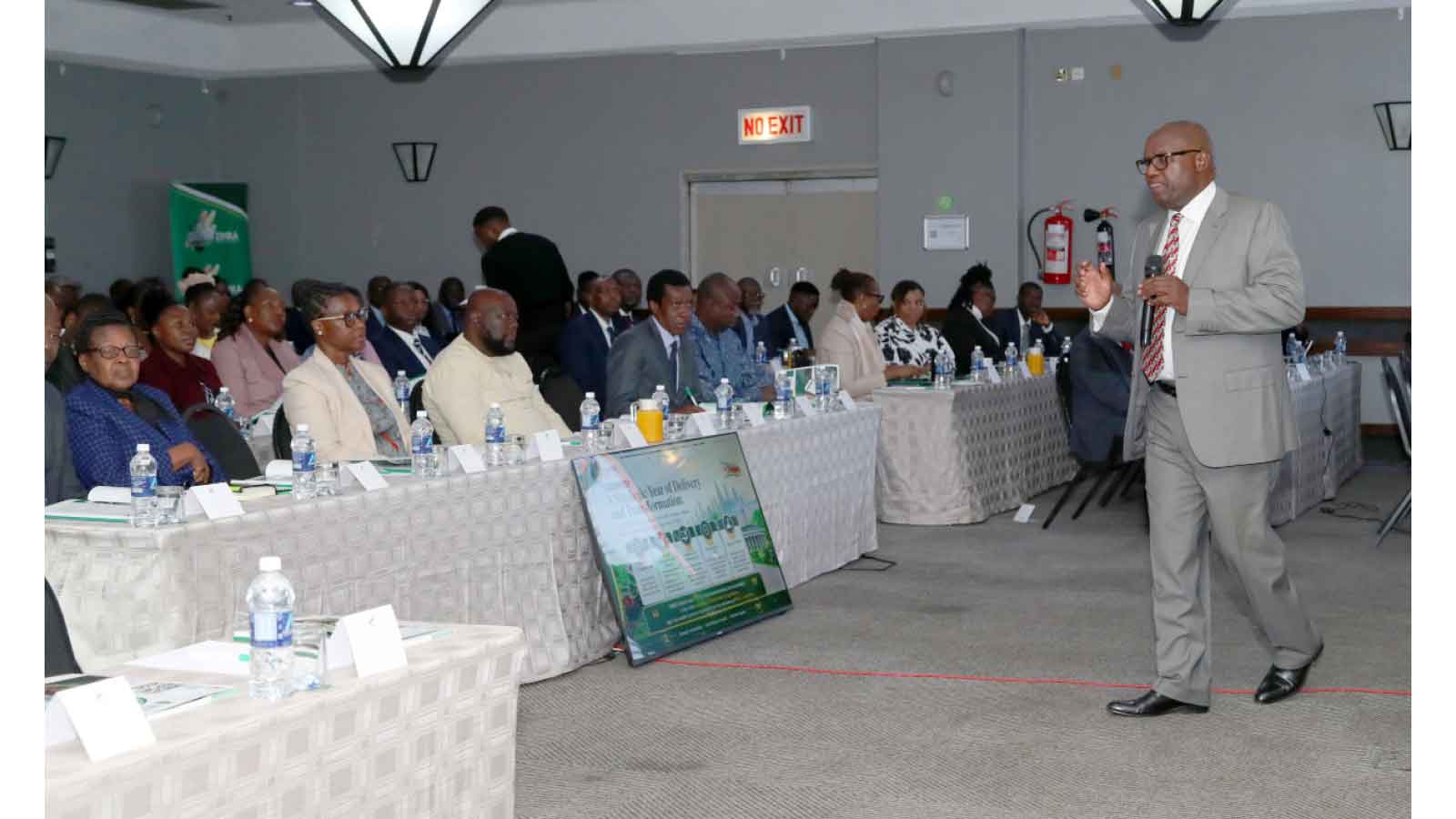
Tapiwanashe Mangwiro-Senior Business Reporter
DOMESTIC resource mobilisation will be the cornerstone of Zimbabwe’s next phase of economic development, with the Zimbabwe Revenue Authority expected to deepen tax compliance, broaden the tax base and harness technology to support the implementation of National Development Strategy 2.
In a speech read on his behalf by Mrs Grace Gonzo, director, revenue and tax policy in the ministry, at ZIMRA’s ninth Annual General Meeting yesterday, Finance, Economic Development and Investment Promotion Minister Professor Mthuli Ncube said domestic resource mobilisation remained central to fiscal sovereignty and sustainable economic growth.
The meeting was held under the theme “Advancing Domestic Resource Mobilisation through Excellence and Voluntary Compliance.”
Minister Ncube said the Treasury’s ability to finance infrastructure, public services and social protection programmes depended largely on efficient revenue collection.
“For the Government, domestic resource mobilisation remains central to fiscal sovereignty, macroeconomic stability and sustainable development. It is through revenue that we finance public services, infrastructure, social protection and national programmes while reducing dependence on unsustainable forms of financing,” he said.
His remarks came as ZIMRA reported a strong performance for 2025, collecting gross revenue of ZiG243,5 billion, nearly double the ZiG123,4 billion collected in 2024.
According to ZIMRA’s 2025 Annual Report, the tax authority surpassed its annual revenue target by 16,36 percent, with net collections reaching ZiG224,8 billion against a budget of ZiG193,2 billion.
Over the five-year strategic cycle, revenue collections have grown from the equivalent of US$4,56 billion in 2021 to US$7,65 billion in 2025, representing cumulative growth of almost 68 per cent.
ZIMRA board chairman Mr Anthony Mandiwanza said the achievement marked the culmination of a successful five-year transformation programme aligned to NDS1 (2020-2025).
“The year under review represents both a period of accountability for 2025 and a significant milestone in ZIMRA’s five-year transformation journey,” he said.
Mr Mandiwanza noted that a relatively stable operating environment, characterised by contained inflation and sustained economic growth, had created favourable conditions for revenue mobilisation.
“These conditions supported business activity and provided a more predictable environment for revenue mobilisation and tax administration,” he said.
He said the authority had made significant progress in modernising tax administration and trade facilitation through technology-driven reforms.
Among the major milestones were the rollout of the Tax and Revenue Management System (TaRMS), the Fiscalisation Data Management System, the Zimbabwe Electronic Single Window, border scanners, drone surveillance systems, command centres and queue management systems.
“These initiatives significantly enhanced transparency, efficiency and taxpayer experience, paving the way for smarter data-driven administration,” Mr Mandiwanza said.
The board chairman also highlighted the attainment of ISO 9001:2015 certification during 2025, describing it as a major milestone in strengthening governance, service delivery and institutional excellence.
The certification, he said, confirmed that ZIMRA’s systems and processes now met internationally recognised quality management standards.
Commissioner General Ms Regina Chinamasa said the authority’s strong performance reflected both an improved operating environment and deliberate investments in digital transformation.
“The positive performance reflects an improved operating environment and implementation of strategic initiatives aimed at enhancing collections,” she said.
“ZIMRA is leveraging digital technology for strategic planning and project management, notably through the Tax and Revenue Management System, Contact Centre, Fiscalisation Data Management System and the Zimbabwe Electronic Single Window platforms.”
Ms Chinamasa noted that indirect taxes remained the dominant source of revenue, contributing 58,63 percent of total collections, while direct taxes accounted for 41,37 percent.
VAT, PAYE, Excise Duty and Corporate Income Tax contributed nearly 73 per cent of total revenue collected during the year.
Despite the strong performance, both Government and ZIMRA acknowledged that significant challenges remain, particularly in bringing Zimbabwe’s vast informal economy into the tax net.
According to the annual report, the informal sector now accounts for 76,1 percent of economic activity following the rebasing of Zimbabwe’s gross domestic product from US$35,2 billion to US$44,4 billion.
Minister Ncube said the informal and digital economies represented both a challenge and an opportunity for domestic resource mobilisation.
“The digital economy is reshaping commerce. Electronic transactions, mobile payments, digital platforms, cross-border services and new business models require a revenue administration system that is agile, data-driven and technically capable.”
He warned that tax evasion, smuggling, illicit financial flows and under-declaration continued to undermine revenue collection and create unfair competition for compliant businesses.
“These practices undermine compliant businesses, weaken public finances and deprive citizens of essential services and opportunities,” he said.
Looking ahead, the Government and ZIMRA expressed confidence that the authority would play an even bigger role under NDS2, which seeks to accelerate economic transformation between 2026 and 2030.
Mr Mandiwanza said ZIMRA had set an ambitious revenue target of US$9,2 billion equivalent for 2026, being pursued through expanded audits, sector-specific interventions, taxpayer education and formalisation of the informal sector.
Ms Chinamasa said a stable macroeconomic environment, ease-of-doing-business reforms and enhanced revenue administration systems positioned the authority for another strong year.
“Against this favourable macroeconomic backdrop, ZIMRA is well positioned to exceed the projected revenue target of US$9,2 billion in 2026,” she said.



