

 Online Reporter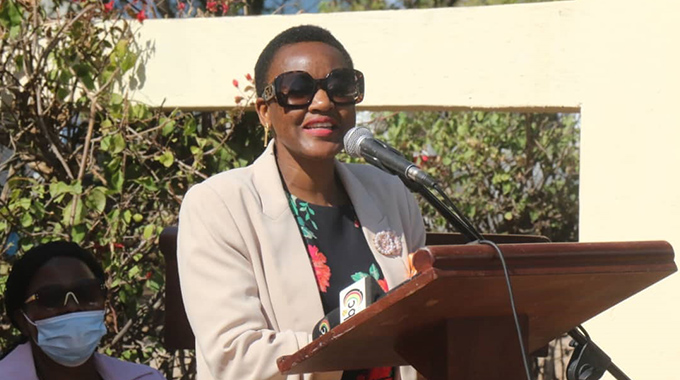
Muchaneta Chimuka
THE GOVERNMENT, through the Ministry of Primary and Secondary Education and its partners, on Tuesday launched the Menstrual Health Management Networking Platform in Harare with the thrust of reaching out to 1.6 million vulnerable girls with the much-deserved menstrual dignity kits.
Speaking during the launch of the programme in Harare, Primary and Secondary Education Deputy Minister Angeline Gata saluted the shared responsibility among several partners, who included the Education Coalition of Zimbabwe (ECOZ), Care Zimbabwe, UNICEF and Ecobank, among others.
“This is a powerful platform for partnership and shared responsibility, ensuring that menstrual dignity becomes a lived reality for every girl and woman in our country. We are aiming to reach out to 1.6 million girls in schools and to make sure that the girl child doesn’t miss her education due to lack of dignity kits. We want the girl child to participate meaningfully in her education and sports without limitations, hence there is need to invest in innovative ways that can make reusable sanitary pads because they are cheap and can last longer than disposable ones,” she said.
She said, the Government of Zimbabwe is fully committed to advancing menstrual health in line with Section 4(a) of the Education Act, which was amended in 2019.
“The Ministry is mandated to provide sanitary wear and adequate menstrual facilities in all schools. This legal framework recognises that menstrual health is central to the academic success, confidence and well-being of the girl child. Under the National Strategy 2, sanitary wear is a key performance indicator within the Social Development, Gender and Social Protection Pillar, with a target of reaching 1.6 million beneficiaries by 2026. This reflects our broader vision of building an inclusive society through investments in education, health, water, sanitation and hygiene services,” she said.
Deputy Minister Gata said many learners still face period poverty and some girls continue to miss school, with some resorting to using unsafe alternatives which expose them to health risks and limit their potential.
“Since 2019, the Government has responded to this need by establishing a dedicated budget line for the procurement and distribution of sanitary wear to vulnerable learners, especially in rural and disadvantaged primary and secondary schools. We are also guided by the Statutory Instrument 13 of 2025, Policy Circular Number 1 of 2020 and the School Health Policy of 2018, which promote transparency, sustainability and accountability through School Menstrual Health Committees,” she said.
She saluted the First Lady Dr Auxillia Mnangagwa for the nationwide initiatives which continue to restore dignity and hope to the girl child in line with the principle of leaving no one and no place behind.
Charlene Ambali, the assistant country director – Programmes at Care Zimbabwe, said through collective efforts, no learners will miss out on education due to a lack of sanitary ware.
Mr Mike Dengwani, the senior executive in the Managing Director’s Office at Ecobank said they are delighted to financially and morally support the initiative.
“We have partnered with Care Zimbabwe in providing 2 350 small buckets with dignity kits for girls in schools. The buckets contain pieces of soap, a towel, sanitary ware, pants and they can also use the budget for washing their reusable sanitary ware. We will continue to support learners in all ways and right now we have opted to empower them through the provision of sewing machines in schools so that they don’t become donor dependent,” he said.
Most of the sanitary kits are set to benefit vulnerable girls in schools in Manicaland Province.



