Online Reporter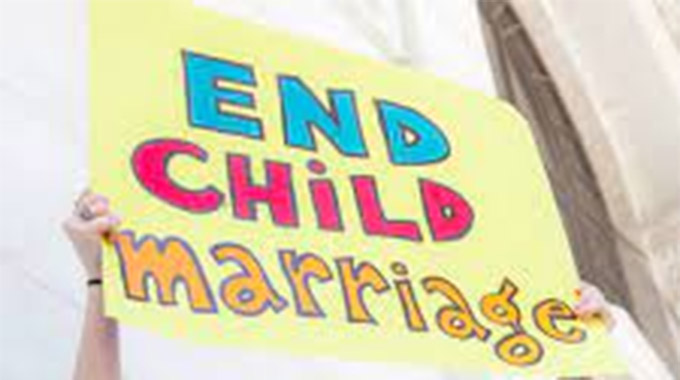
Disability Issues
Dr Christine Peta
THE fight against child marriage remains urgent.
Yet hidden within this struggle is a group often overlooked: girls with disabilities. For them, child marriage is not only a violation of rights but also a magnification of vulnerability, stripping away opportunities for education, health and dignity.
Child marriage is widely recognised as a harmful practice that undermines development goals.
When disability is added to the equation, the risks multiply.
Some families push girls with disabilities into early unions, often due to the perception that marriage is the only “solution” to escape what they regard as the burden of care.
Raising girls with disabilities comes with stigma and extra costs — assistive devices, specialised education and healthcare, among other needs.
Families facing economic hardship sometimes see early marriage as a way to reduce financial responsibility.
Yet the reality is stark: Such marriages often lead to cycles of abuse, neglect and exclusion.
Parents may also fear that if they wait until their daughter with disabilities reaches adulthood, disability will make her “unmarriageable”.
They seek to capitalise on her young age, rushing her into unions that strip away education, health and dignity.
These practices undervalue the worth of girls with disabilities, exposing them to lifelong disadvantage. On the other hand, some men exploit girls with disabilities, seeing them as “easy targets”.
Isolated by stigma, lacking community protection and often silenced, these girls are vulnerable to coercion.
Some men may enter marriages with girls with disabilities to sexually experiment, exploit and abuse them under the guise of love. This is not tradition — it is exploitation, a serious violation of rights. The health consequences are severe.
Early pregnancy places girls at risk of complications and for those with disabilities, access to maternal healthcare is often limited.
The intersection of disability and child marriage creates barriers to sexual and reproductive health services, leaving many without the support they need.
Education is another casualty.
Girls with disabilities already face challenges in accessing schools due to lack of infrastructure, assistive devices or inclusive teaching.
Marriage cuts short their education entirely, denying them the chance to acquire skills and independence, perpetuating poverty and exclusion.
The United Nations Convention on the Rights of Persons with Disabilities (UNCRPD) makes clear that persons with disabilities have the right to marry and found a family on equal terms. But this must be a choice, not coercion, and only at appropriate ages.
Ending child marriage must include a disability lens.
Programmes that provide economic support to families, inclusive education and community dialogue are essential.
Innovation hubs and industrial parks linked to universities are beginning to incubate projects that empower young women with disabilities through entrepreneurship and skills training, offering alternatives to early marriage.
Globally, the One Health framework and ecological responsibility remind us that social practices like child marriage are not isolated — they affect health systems, communities and sustainable development.
Addressing child marriage among girls with disabilities is, therefore, not only a human rights issue but also a public health and ecological responsibility.
Stories of resilience shine through.
In rural Zimbabwe, a deaf young woman resisted pressure to marry at 15. With Government support, she completed secondary school and now trains others in sign language.
Her story illustrates that when barriers are removed, disability is not a limitation but a source of strength.
Ending child marriage for girls with disabilities in Zimbabwe is advancing — Government enforcement of laws, community education, disability-inclusive policies and global solidarity are making progress. The focus is on ensuring that every girl, regardless of ability, has the right to childhood, education and choice.
As Zimbabwe advances towards its development priorities and contributes to continental and global frameworks, the message is clear: Child marriage and disability cannot be ignored.
Protecting these girls is not charity — it is justice, inclusion and investment in the nation’s future.
Dr Christine Peta is a disability, public health, policy, international development and research expert. She can be contacted on: devel [email protected]