admin
admin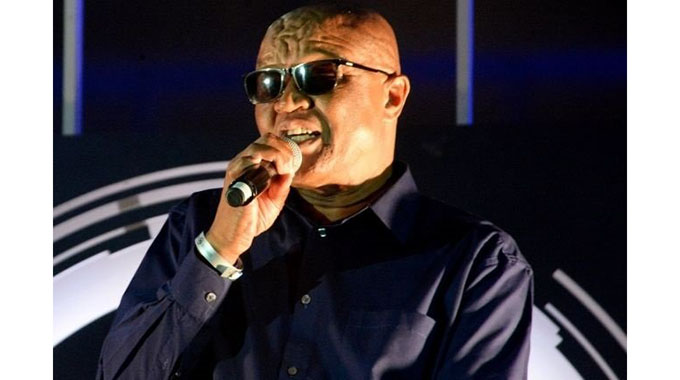
South African musician Steve Kekana, who died last week, was a trailblazing recording artist and performer during the soul/disco era.
He was also a go-getter in other fields at a time when the odds were stacked against black people, who were not expected to achieve anything beyond being hewers of wood and drawers of water.
He was one of the dominant figures on the local and international scene in the 1980s and went on to become a pioneering voice of talk radio and a top legal eagle in the 1990s.
In the 80s, he founded and managed a football club named Steve Bees and later taught law at a university.
Remarkable achievements for someone who lost his eyesight in early childhood.
“I believe I am a musician by nature,” Kekana once said. “It is something that was ordained by God. But I have always wanted to be a lawyer. I was only 14 when an elder brother, Joseph Malatji, enrolled for a law degree at Turfloop University in 1972. That really cemented my resolve to become a lawyer like him.”
Born in Bolahlakgomo village in the Zebediela/Moletlane district, Kekana lost his eyesight at the age of five after suffering from glaucoma, an eye condition that causes gradual loss of eyesight.
He became a pupil at Siloe School for the Blind at Chuenespoort, Polokwane, where he proved to be academically gifted as well as musically talented.
Like his American idol and namesake, Stevie Wonder, he was a child prodigy and found inspiration in the success of other visually impaired musicians such as Babsy Mlangeni, Jimmy Mojapelo, Koloi Lebona, Munich Sibiya and John Mothopeng — all of them members of The All Rounders and versatile artists individually and collectively.
From these remarkable artists he learnt that blindness was a state of mind than a disability.
After completing matric in 1976, his mother, a single parent of five children, didn’t have funds to put him through university to pursue law studies.
In 1977, Steve and the late blind disco singer Lazarus Kgagudi formed an amateur vocal harmony group, The Hunters, in Driekop, Burgersfort.
Then he met renowned talent scout EMI’s Tom Vuma, who took him to Johannesburg where he recorded his first album, Mumsy (EMI, 1978).
It became an instant best-seller, earning him the 1979 and 1980 SABC Black Music Awards for best male vocalist.
His first English album, Don’t Stop the Music (1981), is a documentary film soundtrack of the same name in which he starred alongside the incomparable and irrepressible radio personality Cocky ”Two-Bull” Tlhotlhalemaje and modern dance international champion Godfrey Raseroka.
The success of Don’t Stop the Music — which contained hits like Raising My Family and Shine On (Brightly) — saw Kekana touring Scandinavian countries in 1982.
Also in 1981 chart-toppers like Iphupho (Zulu), Mandla (Zulu) and Abuti Thabiso (Sotho) earned Kekana Radio Zulu’s top male vocalist and runner-up in the same category on Radio Sesotho and Radio Setswana.
In a country whose politics were defined by race and laws of racial segregation, the state-run SABC forbade black musicians from recording songs in English and Afrikaans — languages reserved for the so-called superior race.
Kekana was one of the few black artists at the time who dared buck the system’s unjust dictates. Not only did he record in English, Kekana also dared to sing with a white woman, an act that was seriously frowned on by the apartheid establishment. — Sowetan


 Online Reporter