

 admin
admin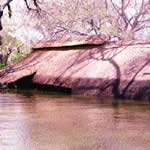
property.
The impact of the floods on her livelihood was severe and she was substantially overwhelmed by the crisis.
Numerous other locals suffered similar losses. They were all left sitting high and dry, wondering how they were going to cope with hunger and poverty unleashed by the floods.
“Disasters happen in our area all the times,” says Chadereka from Chadereka Village about 260km north of Harare. “We need to find ways of mitigating the disasters in out area. Learning and sharing information is critical for us as locals.”
Muzarabani is in the Mashonaland Central province and is found in the floodplains of the Zambezi River with Lake Kariba upstream and Lake Cabora Bassa downstream at the confluence of Msengezi and Zambezi rivers.
The Muzarabani area suffers from disasters triggered by weather-related hazards such as drought, floods and epidemics such as cholera and malaria.
The Chadereka area, some 60km north of Muzarabani Business Centre, is usually the worst affected area because it is located right at the confluence of rivers.
It is affected by the backflow from Lake Cabora Bassa and inflows from Zambezi River and also when Kariba Dam floodgates are opened.
The 2000 and 2007 flood events presented a number of key lessons not only on how to respond to an emergency better, but also on how necessary it is for local communities to have the necessary disaster education and skills to be in a position of readiness in case of a new round of disaster.
Magreti Chadereka and scores of other villagers have been engaged in different ways by NGOs, the government and other academic institutions such as the Bindura University of Education Science (BUSE) in disaster education and training programmes.
The 2000 and 2007 floods and cyclones tested the Muzarabani community and the Government on how to respond efficiently to emergency situations.
This crisis exposed institutional weaknesses and limited capacity both at local community and national levels.
When the floods ravaged Zimbabwe there were no clear programmes or plans for responding to the emergency – including preparedness, evacuation and response.
Existing plans did not take account of an event of such magnitude nor the type of impacts that resulted.
Analysts say a main argument presented was that communities also did not anticipate an event of such magnitude, inhibiting appropriate responses, particularly to early warning.
Since then, local communities in Muzarabani now have their own early-warning mechanisms and emergency response structures that utilize local knowledge and available resources.
“A number of women have received training on early warning systems and can now ably inform locals whenever there is an extreme weather event such as drought, floods and cyclones,” Chadereka says. “People have warmed up to these local action groups and despite limited resources, we are at least better informed about disasters.”
BUSE will soon introduce Disaster and Development studies which will see students undertaking research in the Muzarabani area to help increase resilience of local communities to the prevailing hazards through education.
“We want to raise the risk perception of students and local communities by the introduction of Disaster Risk Reduction (DRR) studies here at this university,” says Desmond Manatsa, the chairman of the Geography Department at BUSE and project leader for the Disaster Education and Community Resilience in Zimbabwe.
“Education is effective for realising the importance of implementing measures. Community plays the essential role for promoting students’ actual actions for disaster reduction. Future disaster education in universities should be active learning for students. Continuous community involvement is the most important factor for disaster education.”
BUSE held a workshop recently on mainstreaming disaster risk reduction into the BUSE curriculum. The workshop drew participants from local and overseas universities in the UK and Bangladesh.
“I’m glad BUSE has introduced the DRR. We want DRR literate graduates in Zimbabwe and it is encouraging that BUSE is the pacesetter in all this,” said Meliqiniso Sibanda, principal administration officer for training at the Department of Civil Protection.
She said it was critical for the country to integrate prevention, relief assistance and rehabilitation data into long-term risk reduction programmes and training.
“We have not managed to get on top of all the disasters and there is growing pressure to come up with something new in terms of response. As academics we should do more research to come up with workable initiatives that can enhance community resilience,” said Dr Andrew Collins, of the Disaster and Development Centre, Northumbria University.
Dr Collins, Dr Bernard Manyena, UK-based Zimbabwean who teaches at Northumbria University, and Hafizul Hasan, a senior lecturer at Brac University in Bangladesh, are partnering BUSE in the development of disaster and development studies.
“DRR stems from a more proactive and preventative perspective of disaster, embraces awareness of disaster reduction as a development concern. It has become a more in- depth and realistic subject as we better understand the complexity of risk,” said Dr Collins.
He said DRR is increasingly becoming more institutionalized through the United Nations Strategy on Disaster Reduction (UNSDR), governments and multilateral institutions globally.
Said Dr Manyena: “Resilience building has been limited to emergency institutions and services and some businesses. To date we have ignored the people. Resilience building is a bottom-up process and we need to engage local communities to build effective disaster response mechanism.
“Without grassroots involvement and education we cannot succeed.”
Manatsa said “Education and awareness raising are critical in enhancing community resilience to disasters. We need to learn more about how communities are coping with natural disasters.
“Local communities are a strategic spring of knowledge for academics and students to learn from.”
He said the new degree programme would help to enhance students’ awareness and promote actual action for disaster reduction.
“Communities are seeking strategic directions for managing risks, hazards and threats. Recent national and man-made disasters have highlighted the need for greater community co-ordination and inter-agency collaboration to ensure rapid response in all emergency situations,” said Manatsa. “As academics we also have a role to play in all this. Exchange of information and community practices play key roles in the execution of these activities.”
Zimbabwe is part to the Hyogo Framework of Action which seeks to introduce a culture of safety through making DRR a national and local priority, improving risk information and early warning, using knowledge innovation and education to build resilience and strengthen disaster preparedness for effective response at all levels.
“We can’t stop an earthquake from happening but we must try and predict and reduce susceptibility of humans by managing risks and through targeted interventions,” said Dr Collins.
“A lot of traditional knowledge on disaster management needs to be tapped. We need to discover this and promote its use.”
Disaster reduction engagement is critical and academics believe that it must be integrated with local realities, for which the users of this education understand to help inform decision-makers and respond to the changing contexts.
“If you build the knowledge then you are able to assess the risk and to do early warning.” Collins said. “DRR is not a panacea but a tool that can be used to minimise risks.”
For Magreti Chadereka and other locals in Muzarabani, it would probably help them to understand the nature of the hazard and how they can reduce vulnerability and enhance their resilience.



 Online Reporter