Online Reporter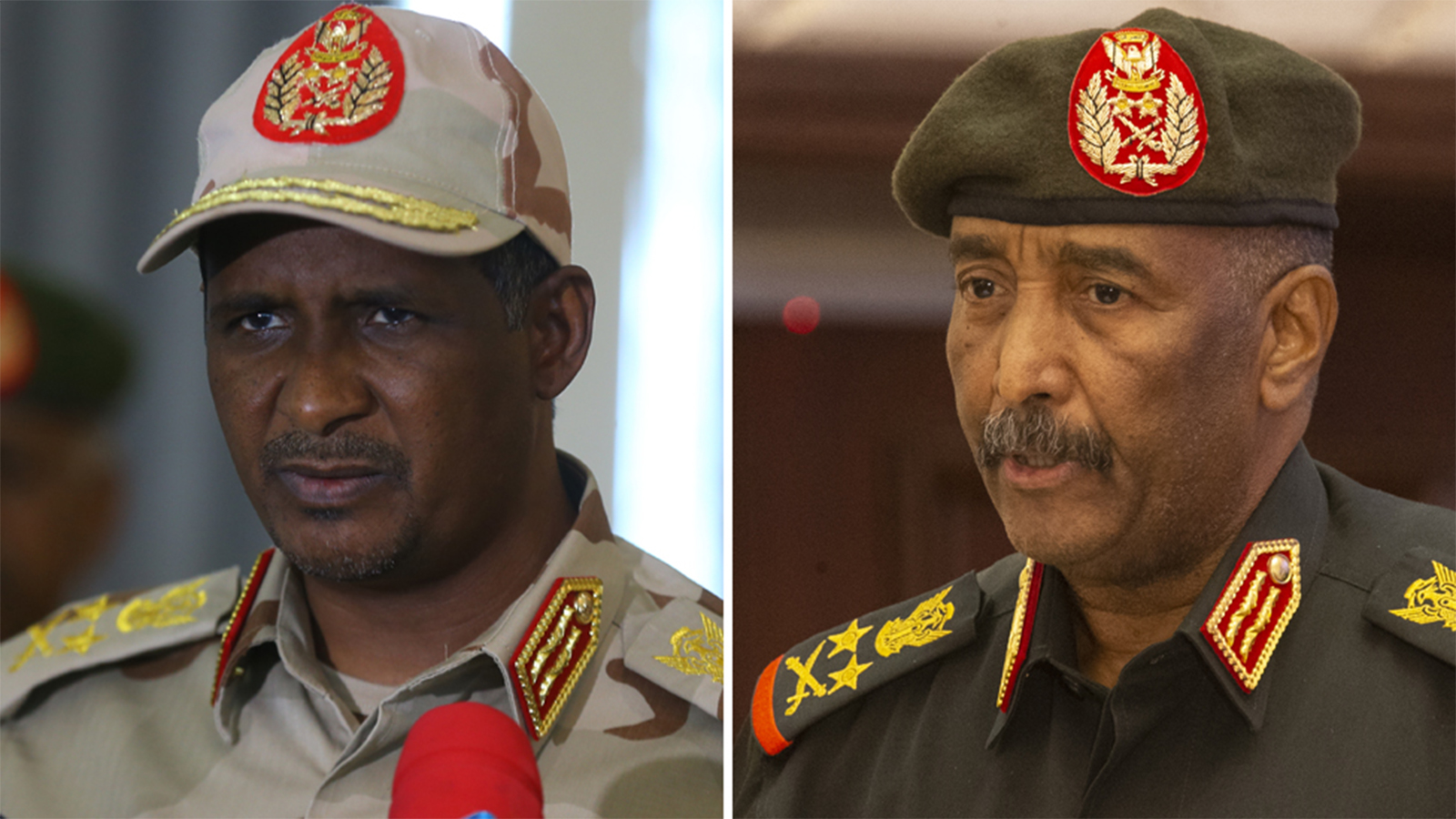
Tafadzwa Mhasho and Mirirai Tongowashe
Sudan has become one of Africa’s most distressing examples of displacement without borders.
Since the outbreak of civil war in April 2023 between the Sudanese Armed Forces (SAF) and the Rapid Support Forces (RSF), more than 10 million people have been forced to flee their homes.
Nearly half have crossed into neighbouring countries such as Chad, South Sudan, and Egypt, while millions more remain displaced within Sudan, caught between bombs, famine, and fear.
More-so, Sudan’s crisis clearly shows how complicated it is for people to face into displacement in their own country, revealing important lessons that extend beyond its borders.
Displaced populations, from conflict-affected areas like South Kordofan and Darfur, have been forced to flee due to this ongoing conflict.
Inasmuch as this is a local conflict, countries like Chad, South Sudan, and Egypt are forced to accommodate the displaced. Kenneth Mokgathle, in his perception, states that ‘African leaders have a duty to end Sudanese conflict.’
This problem does not then affect Sudan; therefore, the lesson here is for countries to work together and help Sudan stabilise again.
It may be merely impossible as they do not have power over the state, but they can recognise and accommodate the displaced in their countries, playing a vital role in recovery and stabilising them to lessen their burden.
Something of interest, one of the key lessons from Sudan is the critical significance of inclusive governance. The marginalised areas deeply affected by displacement include Darfur, the Blue Nile, and South Kordofan.
In these hot spot areas, the Arab led government in Khartoum allegedly infringes on non-Arabic groups. These groups suffer the most while they are the least included in policy-making and important discussions. Efforts have been made in Sudan, such as the Juba Agreement of October 2020, and the civil society.
These help in engaging tribes, religions, and communities, aiming to promote representation and proper dialogue. However, this has been hindered by the ongoing conflict.
Therefore, including the minority will help in planning processes and governance as it fosters a sense of belonging, agency, and ownership of their future. Inclusive governance will likely contribute to a sense of oneness and positive social cohesion.
In the sense of oneness, there is also a need to understand and consider the non-Arabic groups to avoid conflict among those regions.
Another lesson to address from Sudan’s crisis from NGO’s is that there is need for humanitarian assistance and temporary development integration the situation in Sudan clearly shows the necessity for human assistance with long-term strategies immediately relief efforts such as food and medical support a crucial in addressing the important needs particularly in those affected areas though it is difficult to enforce sustainable development such as education job creation and infrastructure the assistance is vital as it may provide temporary relief.
Countries like Colombia and Lebanon have since adopted this, and it has been sustaining them for the time being.
Thus, if Sudan adopts this humanitarian assistance, it may offer temporary assistance during the ongoing crisis.
What began as a power struggle between rival generals, Abdel Fattah al-Burhan and Mohammed Hamdan Dagalo, has descended into a humanitarian catastrophe.
Entire neighbourhood’s in Khartoum and Darfur have been reduced to rubble, hospitals destroyed, and families torn apart.
The United Nations now ranks Sudan as the world’s largest displacement crisis, yet the global response remains painfully slow.
Beyond headlines, the war exposes a deeper moral failure on the continent. Africa has the legal tools to respond, notably the Kampala Convention (2009), which commits governments to protect internally displaced persons, yet political will remains absent.
The African union (AU) and IGAD have led peace talks, but their diplomacy has lacked urgency and enforcement. As scholar Mahmood Mamdani observes, Africa’s conflicts persist because they are treated as routine political disputes rather than moral emergencies.
Displacement cannot be managed by one country alone. Millions of refugees crossing into Chad, Egypt, and South Sudan place enormous pressure on host communities, from food and housing to health and education.
This underscores the need for regional cooperation through bodies like IGAD and the African Union, ensuring coordinated policies, shared resources, and legal frameworks that protect both displaced people and host communities.
Additionally, Sudan’s displacement should remind Africa that borders cannot contain human suffering. The movement of millions across frontiers demands collective responsibility. Host nations need sustained humanitarian support, while regional bodies must move beyond statements and create real mechanisms for protection, integration, and accountability.
If Africa truly believes in Ubuntu, “I am because we are,” then compassion must cross borders as freely as those forced to flee. The silence surrounding Sudan’s displaced is not just a humanitarian lapse; it is a betrayal of the continent’s conscience.
The lesson from Sudan is urgent and universal: when one nation collapses into chaos, all of Africa feels the tremor. The time for moral solidarity, not indifference, is now.
Mirirai Tongowashe is currently a second-year student at Africa University, specializing in International Relations and Diplomacy. Her academic focus includes an in-depth analysis of Sudan’s unending war, exploring the complex political, social, and economic factors at play.
She is passionate about understanding global dynamics and contributing to peace and stability in conflict-affected regions. [email protected]
Tafadzwa Mhasho is a second-year student at Africa University, pursuing a Bachelor’s degree in International Relations. Passionate about global affairs, peace-building, and humanitarian diplomacy, she focuses her studies on how international cooperation can address challenges such as displacement and development in Africa.
Both students are part of a new generation of young scholars committed to shaping inclusive and sustainable policies across the continent.