

 Chronicle Editor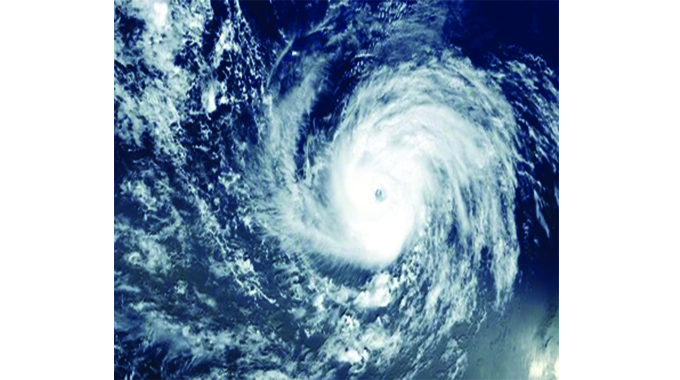
Lungelo Ndhlovu
Early warning systems are essential to reducing disaster risk, and scientists have long known that if people had access to accurate weather data, cyclones and other natural disasters would not have such negative effects on their properties, even death.
According to Mr Ronald Tirivavi, project manager for Welthungerhilfe (WHH), much has changed in Zimbabwe in terms of early warning systems since tropical storms such as Cyclone Idai, which caught people off guard in March 2019, affecting 270 000 people.
For instance, Mr Tirivavi said his organisation ran WhatsApp groups expressly for their project (Strengthening Community Led Disaster Response) intervention after the Meteorological Department Services (MSD) gave out information on Cyclone Freddy.
“The information was being channelled through those committees to the communities especially the areas that could be affected mostly, especially Chimanimani, Chipinge, part of Buhera, the Manicaland belt.
“On WhatsApp groups, there were reports on rainfall amounts received, reports on damages met daily to the Ward Civil Protection Committee then to the District Civil Protect Committee. So, there was a response team at district level and also at ward level. Once people got those reports, they would usually dispatch a team to do some assessments on the ground,” he said.
Mr Tirivavi said Cyclone Idai had resulted in stronger committees in Chimanimani than in other districts that did not face the effects of cyclones before.

“We are seeing stronger committee co-ordination in Chimanimani compared to other districts, which could be related to the fact that the communities in Chimanimani have seen the effects of a cyclone and they really understand when a message is sent in terms of what to do, which shows some improvement in how we appreciate the early warning system,” he added.
He also noted that not only has there been an increase in message acceptance, but also in message action.
“We are seeing an improvement in how individuals are putting those messages into action, such as during Tropical Freddy, we had families that had previously relocated from low-lying areas to higher land prior to the tropical storm, indicating that now people understood the messages.”
Mr Lovemore Chisema, Chiredzi District Development Co-ordinator acknowledged his district fared poorly in earlier disasters such as Cyclone Eline in 2000 where six lives were lost but fared significantly better in the most recent Cyclone Freddy due to elaborate safety measures designed to protect lives and property and avoid a repetition of the severe losses suffered in similar, past disasters.
Despite Cyclone Freddy destroying 100 homes, according to Mr Chisema, Chiredzi district’s early warning systems prevented fatalities. He also indicated that Chiredzi District is a low-lying territory with a high risk of flooding if it receives a lot of rain.
“Fortunately, Cyclone Freddy was reduced to a tropical storm and never became as catastrophic as had been predicted.
Continuous rain, high gusts, and light showers pummelled Chiredzi for 3 to 4 days. It wasn’t too bad except for one night when severe winds swept across the district, affecting the sugar-cane farm at Hippo Valley,” he explained.
According to Mr Chisema, there has been progress since district-level Civil Protection Unit committees are comprised of everyone, including Government heads of ministries, the private sector and parastatals.
“We can now actually monitor the storm from its origins and the time frames where we are likely to be affected by the cyclone, giving us the opportunity to prepare systems so that we are not caught off guard. As a result, our early warning systems are greatly improving. We now have the chance to run educational initiatives to inform our communities,” he said.
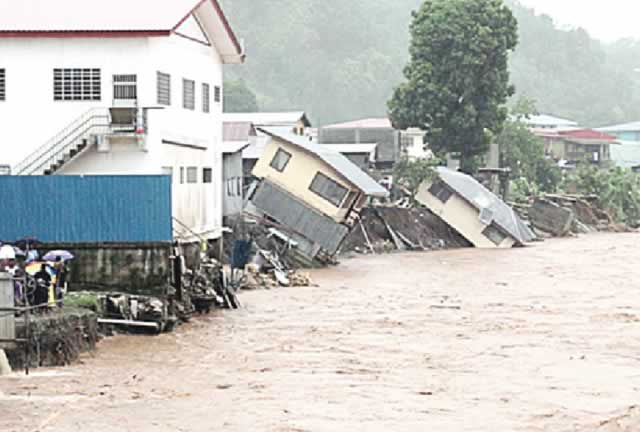
Mr Chisema said after the early warning systems were triggered, “We quickly got down to the business of awareness campaigns to ensure that our communities were aware of the impending Cyclone Freddy. This was also aided by the community radio station and local journalists, as well as social media, to ensure that people are informed of what is about to happen. “The message was packaged in a way that contained actions that the communities should take. As a result, individuals were prepared to shift from low to higher ground in order to be safe,” he said.
Mr Nathan Nkomo, chief director of the Civil Protection Unit, noted that cyclones have occurred since 1966 as a result of climate change, however they were not as severe as they are now.
“In Zimbabwe, we first felt the consequences of cyclones in the early 2000s. We have greatly improved in terms of emergency warning preparedness as a country, for example, when compared to Chimanimani Cyclone Idai. We have evacuation centres that were identified in Chimanimani, which are safe areas.
“We are so happy that our slogan for ‘Early Warning, Early Action’ was also put in motion for our level of preparedness given that the Meteorological Department had even done an impact-based forecasting and the areas likely to be hit by Freddy. They activated mostly in the 6 provinces out of the 10 provinces. But knowing that we were dealing with a natural phenomenon, it doesn’t know the boundaries of Harare, it also spills into Mashonaland West,” he said.
“We also activated traditional hot spots areas like Hurungwe, we activated all those areas. But you find out that of the 37 districts in those six provinces we also managed to replenish their financial resources. We also managed to pre-position available food and non-food items,” he said.
Mr Nkomo added, “When the news of Cyclone Freddy spread, it was largely beneficial in certain cases. The banks and a sectoral approach, like education, both responded. More than 4,5 million students’ welfare was considered by the education sector.
When a calamity is imminent, we are quite concerned about the education sector. Mining is another sector that is prone to floods because some mining is done in rivers and along canals, so the odds of having them flooded in water are very high, and we made it a point to target the mining and agricultural sectors. We were delighted to see FBC Bank of Zimbabwe sending out some messages in the financial services sector.”


 Blessing Chizhande
 Online Reporter