Vusumuzi Dube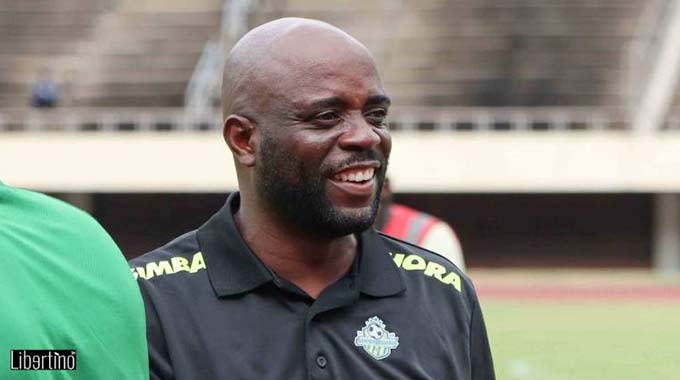
Fungai Muderere, Zimpapers Sports Hub
THERE’S a certain look you see in a former footballer who has crossed over into coaching, the first time he realises the job isn’t about him anymore.
As a player, your body is your argument. You can win a room with one sprint, one tackle, one pass threaded through traffic. You don’t need a long speech if you can do the thing everyone else is struggling to do.
But coaching is a different kind of pressure. It’s quieter, slower and sometimes cruel in the way it tests you. The whistle blows and suddenly your legs are useless. Your greatest weapon, the one that carried you through stadium noise and dressing room politics, can’t rescue you. All you have left is your mind, your voice and your ability to make other men believe. That’s why the debate refuses to die, not in Zimbabwe, not anywhere football is watched with emotion. Do great athletes make good coaches? Or is the game, once you step outside the white lines, a completely different language?
It’s an argument that keeps returning because the evidence is always mixed. You can point to one legend who has become a master tactician, a calm builder of teams, a man who can shape a season with patience. Then you can point to another, equally gifted in his playing days, who looks lost on the touchline, trapped between his reputation and the reality of a job that demands a different kind of excellence.
In Zimbabwean football, the list of former stars who have taken the coaching route is long and still growing. Johannes Ngodzo, Takesure Chiragwi, Ian Bakala, Norman Mapeza, Joey Antipas, Tonderayi Ndiraya, Fortune “Fokoza” Ncube, Energy Murambadoro, Joel “Dubai” Luphahla, Kelvin Kaindu, Tembo Chuma, Daniel Vheremu. More recently, Guide Goddard and Ben Nyaunzvi have joined the stream.
Some arrived with big names and immediate respect. Others had to fight for every inch of credibility, even with medals and memories behind them. But all of them stepped into the same truth. Coaching doesn’t care what you used to be. It only asks what you can build now.
And that is where the question becomes sharper, more uncomfortable. Is playing experience enough? Should a professional career, on its own, be treated like a licence to lead? Or is it just a head start, useful but incomplete, like knowing the road but not knowing how to drive the bus?
Former Highlanders and Shabanie Mine attacker Collin Nyambiya believes the obsession with star power can mislead people into thinking coaching is automatic.
“The practice of hiring former sports stars to be coaches isn’t exclusive to football alone but is practiced in other sports,” Nyambiya said, choosing his words carefully, like a man who has seen the difference up close.
“While we are not discounting the idea of hiring a retired athlete to coach, it is important to note that playing differs from coaching, much as studying differs from teaching.
“To be a coach doesn’t necessarily require an individual to be a great athlete, rather, coaching involves instincts and the type of charismatic presence that boosts the confidence level of players. Most importantly, it is all about knowing how to win games and not just having the athletic ability to score games yourself.”
It’s the kind of comparison that lands because it’s simple and it’s true. Plenty of people remember what it felt like to be a student. Not all of them can stand in front of a class and teach. Not all of them can manage personalities, spot weaknesses, build discipline and still make learning feel possible. Football is no different.
A player’s world is intense but narrow. Training. Travel. Matchday. Recovery. Repeat. Your focus is personal, even when you’re part of a collective. You live inside the moment, inside your role, inside your own form. Coaching stretches everything wider. Now you must see the whole pitch, the whole squad, the whole season. You must carry the burden of every mistake, including the ones you didn’t make. You must prepare for opponents you haven’t met yet. You must plan for injuries, suspensions, fatigue, pressure from fans, pressure from executives, pressure from the table that never stops moving. Bulawayo Christian League Football administrator and player Timothy Mandizadza says playing experience can help, but only up to a point.
“Having playing experience gives players a good opportunity to learn about more sports-specific technical knowledge from their coaches,” Mandizadza said.
“However, these experiences provide only a partial view of coaching and not the entire extent and depth of the role of the coach. Having previous playing experience doesn’t guarantee a stellar coaching career.
“Coaching requires more brain work in planning, preparation, patience and having an in-depth analytical mind at all times. This may be the reason why retired players who switch to coaching positions often struggle as they are more used to using physical strength rather than mental.”
It’s a blunt observation, but it carries the truth that many retired athletes discover too late. Playing can be instinctive. Coaching cannot. Coaching punishes laziness of thought. It exposes shallow preparation.
It demands repetition, structure and the kind of emotional control that doesn’t come naturally to men who spent their careers thriving on adrenaline. The romantic version of the ex-star coach is easy to sell.
He knows the game. He has been there. He understands pressure. He can “speak the language” of the dressing room. He can demand standards because he lived them. Players will listen because of what he achieved.
And yes, that part matters. A respected former player can walk into a club and immediately command attention. He can connect with fans because the fans already carry him in their memory. He can understand the culture of a team because he once wore the badge. He can motivate players with stories that aren’t borrowed, they are lived. But respect is not the same as leadership. Fame is not the same as clarity. And football, at its highest level, is not run on nostalgia. It’s run on decisions.
Zimbabwe Futsal National League president Philani Banda says the competitive fire that made some footballers great can also make them difficult coaches.
“While football greats are competitive, they are notoriously impatient and sometimes difficult to work with,” Banda said.
Some football greats, he adds, have over the years turned into bad mentors.
“Just because a footballer excelled in the sport does not mean that he can coach without getting more qualifications and experience, in the same way, being good as a student at school does not mean a student can become a great teacher without gaining a teaching degree and engaging in professional development.
“I believe to become a successful coach, it is important to be an open communicator, foster strong relationships with and within the team and possess organisational skills. These skills could be learnt whether or not you have previous playing experience.”
There’s something important in that word, mentor. Because coaching isn’t just tactics. It’s people. It’s dealing with a young winger who is talented but distracted. It’s protecting a goalkeeper whose confidence has been shattered by one mistake. It’s managing a captain who thinks he knows better than everyone else. It’s balancing discipline and empathy, authority and trust.
Sometimes the greatest players struggle to coach because they can’t accept that others won’t reach their level. They forget what it felt like to be ordinary. They forget that not every defender can read the game like they did, not every striker can finish with the same calm. They see mistakes and feel insulted by them. Their frustration becomes a fog that fills the training ground.
A good coach must teach. He must simplify. He must repeat. He must break the game into pieces that can be learned, then rebuild it into something that can win. That’s why coaching is not a reward for a good playing career. It’s a profession. It has its own demands, its own study, its own scars. It requires planning, preparation, communication and the ability to manage emotions, including your own. It requires patience when the crowd is impatient. It requires clarity when the dressing room is noisy. It requires humility when you are losing and control when you are winning.
So do great athletes make good coaches?
Sometimes, yes. Their experience can be a powerful foundation. They can bring authority, technical insight and a deep understanding of what it takes to compete. But the best ones do not rely on their past.
They learn the craft. They grow into it. They accept that coaching is not an extension of playing, it is a new life with new rules.
And that’s the part that should settle the debate.
Playing experience can open the door. It can give you a head start. It can even buy you time. But it doesn’t guarantee anything. Coaching success is built in the quiet hours, in the planning, in the conversations, in the discipline to keep learning long after the cheers have faded.
In the end, football doesn’t care who you were. It only cares what your team becomes under you.


 Online Reporter