

 admin
admin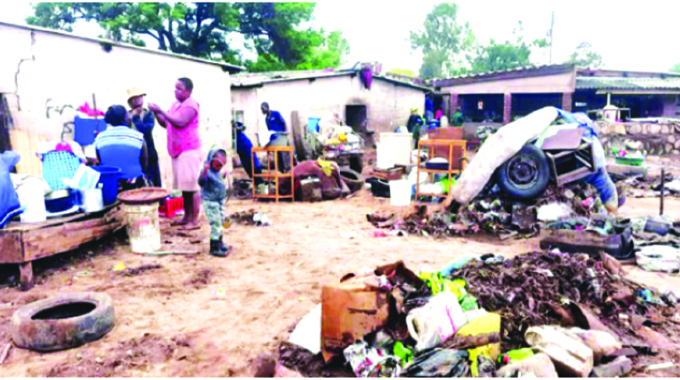
Yeukai Karengezeka Herald Correspondent
Massive destruction from the devastating flash floods that hit Beitbridge on the southern border with South Africa and Kadoma in the central part of the country recently are another reminder about the urgency to bolster flood resilience in Zimbabwe.
At the start of the 2022 -2023 summer rains, more than 250 families were affected by flash floods that hit Beitbridge town while some 78 Kadoma families were also affected when flash floods ravaged the town recently, causing destruction of property and other infrastructure.
There has been a growing number of flash flood tragedies in the country in recent years.
In the 2021/22 rainy season, goods and property running into thousands of dollars was destroyed when flash floods swept through Gweru and other surrounding environs.
In the flood-prone Mashonaland Central low-lying areas such as Muzarabani and Mbire hailstorms, wind and floods damaged roads, buildings and crops.
Floods are now a perennial problem and the number of affected towns, cities and other localities is increasing in the country.
Blocked storm water drains remain the number one cause of flooding followed by the use of low quality building materials, largely emanating from poor enforcement of by-laws by local authorities.
Lives have been lost in some flash flood cases while homes and roads have been destroyed pushing up costs of rehabilitation for local authorities.
Flash floods are especially hazardous and can occur without warning during heavy rains.
Local authorities are now facing regular criticisms for poor maintenance of drain infrastructure that is not being performed regularly or sufficiently.
Weather services can predict heavy rainfall and flash flooding to provide early warnings to residents and local authorities.
But, are people and local authorities paying particular attention to these alerts?
The answer is no.
Local authorities and their residents are less likely to react to general warnings, which is why flooding often catches them unaware and unprepared.
The dissemination of early flood warnings to the general public has improved in recent years through various social media platforms, but it seems local authorities remain unprepared to respond to emergencies that come with flash floods.
The recent spate of flash floods that hit Zimbabwe when world leaders were meeting on the climate crisis at COP27 in Egypt, all highlight the urgent need to help local authorities and communities on the frontlines of the climate crisis adapt, expand solutions that address loss and damage incurred during climate-related disasters.
There is also a need to invest in climate action in these fragile local authority environments.
The impact of recent flash floods in the country raises important questions about the need to mainstream Disaster Risk and Reduction (DRR) strategies to save lives and property.
Beitbridge District Civil Protection Unit’s chairperson, Mrs Sikhangezile Mafu, set up a technical team led by Beitbridge Municipality to look into the immediate needs of those affected.
Miss Deidre Matshudula, who operates a hair salon and a beauty parlour, said most of her stock had been soaked in water while some were washed away.
She said the council should work on the drainage system in the area before the onset of the rainy season rather than play a game of catching up.
“This is very sad considering that I had just stocked some hair salon items this week.
“Most of the electrical gadgets we use here have been damaged by the water. The effect is too much,” said Miss Matshudula.
According to Mr Panashe Takundwa, who owns a computer repair and accessories shop near the bus terminus, the damage to his shop cost him thousands of rands.
“I am distraught. All my equipment was submerged in the water when I reported for duty this morning,” he said.
A distraught Mr Charles Ndou, who is in the business of fixing electrical appliances such as television sets and radios, appealed to the locals to work on a permanent solution which includes setting up storm water drains around the suburb.
Most towns and cities are being affected by flash floods and unfortunately these incidents are happening when local authorities are not prepared at all.
Local authorities are failing to even craft budgets specifically meant to deal with disasters when they occur unexpectedly.
In Chitungwiza too, every year flash floods damage homes and property in wetland areas.
Last year, flash floods occurred in Unit M,N,A, Zengeza 4 and Manyame, leaving a trail of disaster with hundreds of families affected after their homes and property were destroyed. Some homes built on wetlands were flooded to window level.
In an interview, Chitungwiza residents have expressed fear of facing another flash flood.
“We are very scared we may face flash floods again. Last year most of my property was destroyed at home. My worry is that our local authority has not started clearing drains as yet,” said Mr Tinashe Mudera from Unit N.
Harare Residents Trust director Mr Precious Shumba said they were concerned by the negligence of the local authority in terms of preparing for the rainy season.
Residents fear to encounter the same hazards as the drainage clearance exercise is not being done professionally.
“The major fear is that flooding may occur due to blocked drains. The on-going drainage clearance exercise shows that the whole project is not being supervised by experts.
“The workers are taking out the garbage and sand blocking the drainages and heaping them less than a metre from the cleared drainage,” he said.
Other people who walk on top of the heaped garbage and sand push all the waste back into the drains, meaning nothing will change.
Mr Shumba bemoaned lack of engagement by the local authority in its programmes.
“The major challenge is the dearth of leadership in council. Communication is erratic. They unfortunately regard residents as passive recipients of council information. Citizen participation is critical for enhanced development of the city,” he said.
Commenting on the matter, the Government said local authorities were failing to mobilise resources for disaster risk preparedness.
Although some local authorities have DRR others rely on district action plans as they are part and parcel of a district system.
However, many local authorities struggle on Disaster Risk Reduction Programme (DRRP) financing because their budgets do not provide for disaster risk management (DRM) funding.
This makes most local authorities unprepared for natural disasters.
Department of Civil Protection Unit deputy director Mr Farai Hokonyo said all local authorities must make frantic efforts to improve on DRM financing and to have a localised Multi Hazards Contingency Plan.
“Local authorities must come up with a model for financing their disaster risk reduction plans,” he said. “The model has to be chiefly funded by the councils and then Government, partners and private players will augment on the fund which councils would have mobilised themselves.”
Mr Hokonyo urged councils to even enter into joint funding schemes such as building a partnership between two or more councils which can then pull resources together to address common hazards.
Mr Hokonya implored local authorities, especially urban councils to embark on massive drain clearing to avoid flooding induced by malfunctioning drainage systems.
Blocked storm water drains are a major problem in almost all urban areas as people continue to drop litter recklessly in the streets.
Litter is a major cause of the flooding and people have a responsibility to avoid dropping litter everywhere.
Given the rapid pace of population growth and climate risks in these areas, the need to build resilience in most local authorities is now more urgent than ever.
What then should be the policy response?
Any solutions for frequent flood events in Zimbabwe lies in embracing well – designed adaptation and mitigation strategies that involve a range of stakeholders.
A Harare-based disaster risk expert said there is a need for local authorities to collaborate across sectors, ensure effective land — use planning, invest in critical infrastructure and promote the adoption of nature — based solutions.
He also said intensifying the level of flood awareness was very critical to save lives, property and infrastructure.
“The intensification of public information campaigns on flood risk in print, electronic media and through community-based organisations would encourage a culture of participation in flood preparedness, mitigation and recovery among citizens,” he said at a meeting on disaster risk reduction for local authorities.
The implementation of various policy recommendations on DRRP is critical to help build towns, cities, growth points and other habitats in smart, resilient and sustainable environments, he noted.



 Online Reporter