admin
admin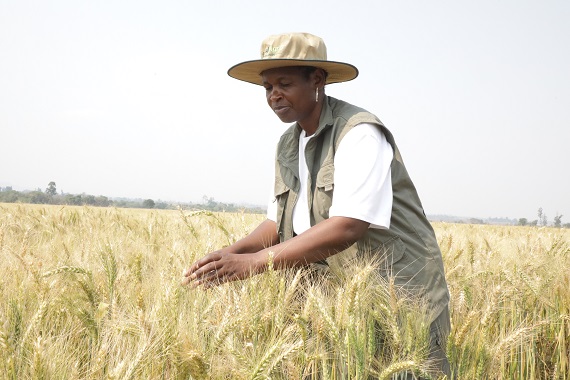
Agriculture Reporter
WOMEN have become a crucial constituency in national development with their numerical advantage over men enabling them to contribute significantly to agricultural production and ultimately food security, as the country moves to achieve economic growth.
Manager at Satchel Farm Mrs Junior Makiwa Chisoko said this during a wheat field day at their farm in Glendale, Mazowe, last Friday.
Mrs Chisoko said women’s numerical superiority made them a crucial constituency in national development, while they are also key in ensuring the realisation of key tenets under the National Development Strategy 1 (NDS 1) and Vision 2030.
In an interview on the sidelines of the field day, Mrs Chisoko observed that it was crucial for women farmers to enhance their contribution by having the guts to approach banks for loans to fund their operations.
She urged women to go and apply for loans from AFC Leasing Company to enable them to fully participate in agriculture and score maximum returns.
Women must also have the courage to start projects that generate quick returns especially during off-season periods.
“I planted green mealies end of July and this is about three hectares. We are expecting to start selling our maize in the first week of December. Our maize is in good condition and we are getting irrigation water from nearby
Nyamavanga Dam,” she said.
She hinted that they had to contend with a fall armyworm outbreak at some point but had managed to contain it. The pest is infamous for its ability to ruin yields.
“The major setback we faced was the fall armyworm but we managed to overcome it through spraying three times using different pesticides to avoid a build-up of resistance towards one pesticide,” explained Mrs Chisoko.
She urged farmers to plant irrigated mealies soon after harvesting in April and May saying that would enable them to ensure food security, as well as get incomes throughout the year to reduce poverty.
Another farmer at Craigengower Farm, still in Mazowe District, Mrs Ester Makwara also chipped in saying farming had improved her standards of living as a woman.
“Farming has changed my living standards. With farming, I am capable of paying school fees for my children, as well as feed them after selling produce like maize, soya beans and potatoes. I can afford all the basic things I need from proceeds I get from selling produce,” explained Mrs Makwara.
She encouraged women to be involved in farming saying it was the pillar as well as backbone of Zimbabwe’s economy.
Programmes such as Pfumvudza for SHE, where more than one million women farmers were trained so that they can contribute to the economic development of the nation under the Government’s Climate-Proofed Presidential Inputs Programme are worth joining, she added.
Young women are also targeted in programmes such as Agriculture Innovation Hubs, which have been initiated in all the country’s eight rural provinces to ensure that they are trained and equipped with practical skills for agriculture.



 Online Reporter