admin
admin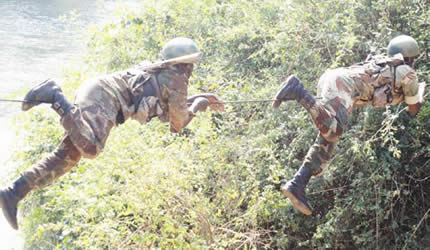
their life someday in real life and not with some kind of graphics.
I enjoyed watching films such as “Siege Firebase of Gloria”, “We Were Soldiers”, “Saving Private Ryan”, “Rules of Engagement”, “Thin Red Line” and “Tour of Duty”. In all these movies I always wondered how the soldiers would survive such conditions and I usually debated with myself on which profession to choose, a soldier or a journalist.
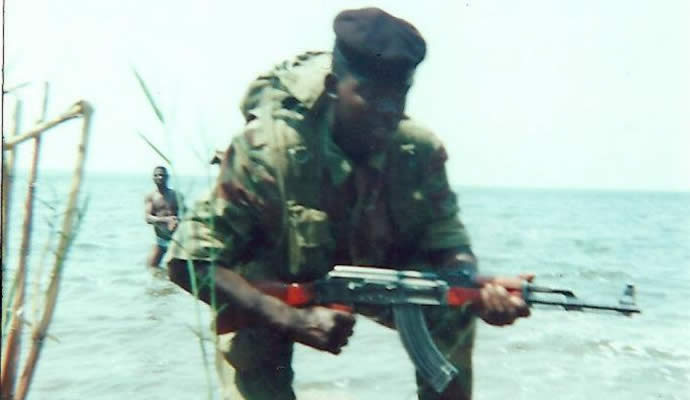 I recall my childhood days when our mother would tell us we were travelling to Mutare for shopping with her from our rural home deep down in Honde Valley. My brothers and I would hardly sleep the night before the journey thinking mum was going to sneak out and leave us behind. The feeling of travelling to Mutare by bus was just overwhelming.
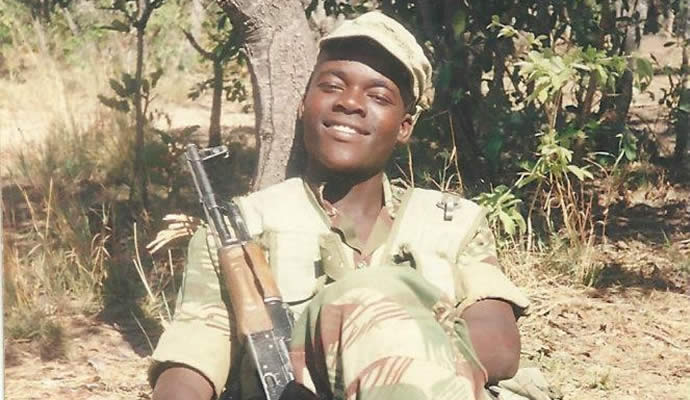 My maiden journey on a plane was naturally supposed to be the best moment of my life but it never was. I failed to stomach what was to confront us as a team and how I was going to cope as an individual in the Democratic Republic of Congo war. We used to hear stories of nasty things but it just needed one to be there to say credible things. The one-and-half-hour flight seemed like a 20-minute journey.
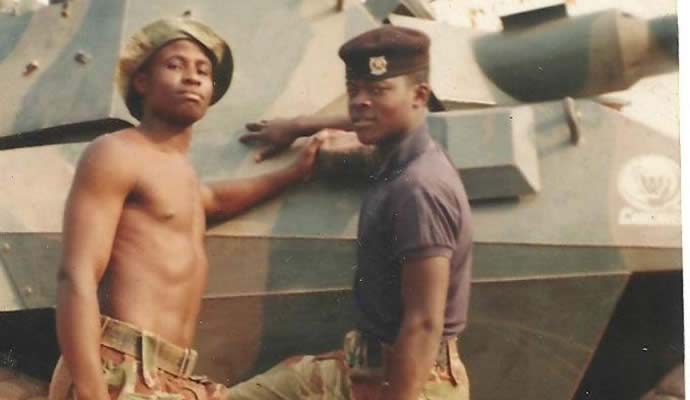 It was on January 2, 2000 just a day before my 20th birthday when we landed at Lubumbashi Airport. Heavily loaded with our weapons and heavy bags and like a sheep headed for the slaughterhouse I tried to put on a brave face to ease the tension which was in me.
“Welcome comrades, we are glad you have come to relieve us. We have been here for a year and some a year and five months. Due to the pressure of work, our families no longer believe we are still alive. We are so glad you have joined us.”
These were the first words we heard from fellow troops who were there before us as we alighted from the plane. They were excited because they were going to use the same plane in a few minutes to go back to Zimbabwe.
We loaded our luggage into the military Jeeps that were waiting to ferry us to the frontline, which was a week’s journey away. The tarred road only took us 10 kilometres out of town when we encountered a muddy and slippery road. The convoy would stop now and again to pull one or more of the Jeeps that would have sunk in the muddy road.
It took us a whole day and a night to reach the port of Kasenga where we would take a boat known as “Batour” by the Congolese people to Pweto. We rested for two days at Kasenga while we were acclimatising and learning Swahili spoken in that part of the country and the frontline where we were headed.
We then boarded the boat mixed with the civilians and started navigating in Lake Mweru. It took us three days and nights non-stop to reach Pweto. The boat journey was full of life, funny and amazing things. The Congolese would go about their life as if we were absent.
They were so comfortable and felt secure in our presence. We ended up mingling and exchanging cooking utensils and sharing their charcoal on the boat.
We literally forgot we were going for war. Upon arrival at Pweto we got into other Jeeps heading for the frontline which was called Kapondo. The journey took us a whole night and a full day as we navigated through the muddy and slippery roads again. Luckily we had powerful vehicles otherwise we would have been stuck.
As we went farther and farther into the Congo forests, the civilian population started to dwindle until we could see them no more. We only had five seasoned and battle-tested soldiers who were escorting us to the frontline while the 15 of us were straight from the pot (from training).
The relaxation on their faces gave me the assurance that we were in safe hands. Silently, I remembered a statement which was said in the film “Rules of Engagement” that a second lieutenant who was new in Vietnam would only last 16 minutes before he died. I thought to myself that I was better because I had survived a week.
I always read about thick forests found in the DRC in Geography books while I was still in high school. The farther we went, the thicker the forests became. We were nervous as we were getting closer and closer to enemy territory. We finally arrived at the base where three successive battles had failed to dislodge the battle-hardened Zimbabwean troops. We were quickly shown around the base and disappeared into our positions since we were in full view of the rebels who occupied a hill just a kilometre away from our hill. A plain valley only separated us.
I personally could not believe the place was going to be our new home and only God knew for how long. It was around 4pm and soon it was going to be night and I wondered how we were going to sleep that night let alone stay there for months.
The following three nights I was sleeping with my combat gear on, in full uniform from head to toe in case of a surprise attack but three months passed by and I started feeling at home. We were literally neighbours with the rebels as they went on with their chores and we did the same. We constantly saw them cooking their food or cutting firewood.
On a happy day, one rebel would emerge and shout “Jambo yako rafiki” or “Habari rafiki”, a Swahili greeting meaning “How are you friend?”
It was funny to hear an enemy calling another a friend let alone greeting. I usually listened to him and we ended up responding whenever he greeted us because we were somehow friends in arms though on opposing sides. Personally, we had nothing against each other, it was just duty for us.
On a bad day another rebel or the same who used to greet us (because we never noticed the difference), would wake up hurling abusive words in Swahili at us. Maybe it was because of battle frustration, hunger or anger that caused him to do so and we often laughed at him.
On April 20, 2000 after four months of our stay at Kapondo, around 6am we woke up to the sound of bombs thundering our positions. I thought my ears were deceiving me and asked my friend, Clemence Mukena, whether he heard the same and he said yes.
I was confused, anxious, excited, and afraid, my mind was spinning! I just had so much to think about in a few seconds. It was going to be my first battle and probably my last.
Unfortunately, with war there is no rehearsal. We dragged our weapons and combat gear and got into the trenches ready for the fight.
In no time the valley was blazing with bullets and there was no one to cry to even if I wanted to. I recall telling my friend: “Comrade, the real job we came here for has begun.”
We started returning the bombs, gunfire and grenades and the day went by. Around 6pm after a full day of fighting, things calmed down and that is when we realised that we had not eaten anything since morning. Hunger was the least of our priorities. Instead, we used the chance to replenish our ammunition stocks.
I never slept that night. All I could hear and see was what had transpired that day. I had just turned 20 years 4 months of age that night. Just like my comrades who were new to the game, I wondered what the next day would be for us. I was somehow glad that Zimbabwe had defended that hill for the fourth time and I was proud to be part of that courageous team.
To our surprise, the next day was calm, there was total silence even birds were nowhere in sight. Our friend from the rebels’ side who used to greet and shout at us then broke the silence two days after that battle but that was the last time we ever heard from him, we believe he was transferred.
Normalcy returned to our base after three days. We stayed there for 11 months while I patiently waited for my turn to return home for only a two-week break. Each time colleagues would return to Zimbabwe I would send them to my relatives to get goodies, walkman batteries and the latest gospel, rhumba and country audio cassettes. The walkman radios kept us going. We would play Pastor Charles Charamba’s then latest album “Vhuserere” and Baba Manyeruke’s greatest hits, Don Williams and Allain Kounkou.
Pastor Charamba’s “John 3 verse 16” cassette with songs like “Mhinduro Iripo” helped in keeping my hope that someday wewould return home safely. I also listened to Sipho Makhabane and Leornard Zhakata.
It was in DRC that I learned how to play chess, it is a time-consuming game which suited the plenty of time we had. We would spend some days doing nothing just waiting to defend our positions while peace talks went on in Zambia.
I recall receiving my first two letters from home, they were from my aunt and my cousin. I really cherished those letters, I would read them over and over for months each time I missed home. By then I did not have a girlfriend so family members were the only people who constantly wrote me. They were always worried if we were safe.
It would take three to five months before we could receive another batch of letters from home. Usually when food supplies came there was always a bag full of letters and if I did not receive a letter I would be sad for days.
We ended up sharing letters with my friend Clemence Mukena if he received his, he would give me to read and if I received and he did not, I would also give him mine to read. The feeling was just great after reading such letters, one would feel relieved just to hear what is happening back home. We were soldiers thus we were family.
We always laughed with colleagues – Munyaradzi Shepherd Chawarura, Patrick Chiripanyanga and our medical attendant Stephen Mushayavanhu at an event that happened at the base before our arrival where a soldier failed to wake up because he was sharing a sleeping bag with a snake which had crawled in during the night.
It was said other soldiers heard a whistling sound trying to bring out the words “Ndapindwa nenyoka”. This went on for hours until a colleague decided to check out what was happening.
Upon arrival he saw a snake in his sleeping bag and when it saw him it coiled itself back into the sleeping bag. It worsened things because that comrade went berserk, he was later rescued after a colleague unzipped his sleeping bag to let the snake disappear into the grass.
Each time I woke up late I would jokingly whistle “Ndapindwa nenyoka” and my colleagues would rush to my tent thinking it was true. Life was great at the frontline and I sometimes miss those days.
My turn to go home came after 11 months in November 2000. That day I behaved like that young John who used to fail to sleep after being promised a trip to Mutare by his mother.
For the first time I was looking forward to the trip back to Lubumbashi and the flight to Zimbabwe. I was full of joy! I remember spending the night bidding farewell to my comrades promising to bring them all they wanted from home which I never did.
I really enjoyed my second flight coming home. It was around 8pm when we landed at Manyame Air- force Base and it was great admiring bright lights of Harare from above as we descended.


 Online Reporter