admin
admin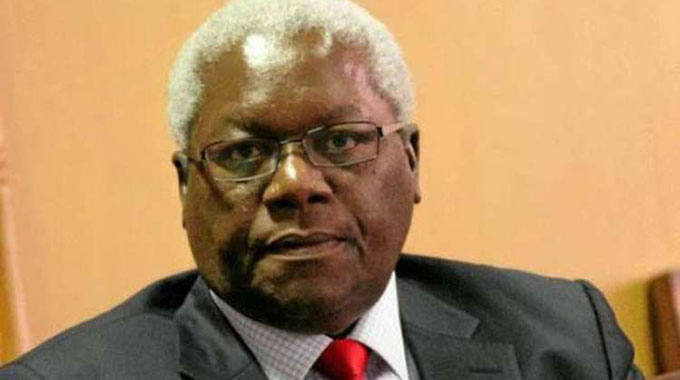
Sikhumbuzo Moyo in BULAWAYO
THE Ministry of Local Government, Public Works awarded contracts worth close to US$500 000 to three companies for various construction works ahead of the 2014 African Union Sports Council Region Five Under-20 Youth Games despite the companies failing to meet mandatory tender requirements.
The ministry was then under the leadership of Ignatius Chombo.
Mike Dzimati, the Ministry’s quantity surveying director, awarded a US$214 923,50 contract to Olimas Engineering to install a heating system at Bulawayo swimming pool even though the company did not meet stipulated tender requirements as per the adjudication sheet.
Olimas Engineering failed to provide details of ongoing similar projects, qualifications and history of litigation.
The company failed to meet set deadlines and at the time of the Games, the heating system was non-functional.
A site visit on May 17, 2017, three years later by auditors, Deloitte, who carried out a forensic audit of the Games, revealed the heating system was still not functional.
Olimas Engineering were, however, paid US$257 202,75 after variation orders of US$346 771,88 were issued to their original contract.
Nextchir Construction, who got a US$94 645 tender for civil works at Bulawayo Athletic Club, Hillside Teachers’ College and White City Stadium, did not provide their company profile, lacked minimum required technical qualifications and did not comply with the tender format by altering the original Bill of Quantities format and attaching their own preliminaries and Generals.
Another company, Asphalt Products, got a US$123 257,46 contract for refurbishment works at White City and Luveve despite failing to meet mandatory requirements by not providing a company profile, not confirming bid validity period and not providing historical financial records.
The auditors also noted that another company, Drawcard Enterprises, that was contracted to lay tartan track at White City Stadium in a deal that originally was US$1 179 993,49 before going up to US$3 251 775,56, failed to take ground level measures requiring a need for additional topsoil at an added cost of US$1 163 199,62.
“Based on our observations, the quality of workmanship at numerous locations was not commensurate with the expenditure incurred,” the auditors said.
“Games sites are still incomplete and have not been officially handed over to the Ministry of Local Government and Public Works, as such, they have not been maintained since the completion of the Games.
“The intended beneficiaries of the Games have not benefited from the purchase and non-installation of numerous equipment such as the three heavy duty standby generators that have remained non-operational since delivery, the geysers at White City Stadium and the boreholes at Hillside Teachers’ College as well as the water heating systems at Bulawayo Swimming Pool.”
A number of local companies, and other individuals, remain unpaid for their services, six years since the Games were held with high hopes that their coming to Bulawayo would help boost the City industries.
The audit revealed that members of the Local Organising Committee approved payments of various services of over US$2 million without any requisitions while over US$131 000 remains unaccountable. Officials also told the auditors the Games’ asset register disappeared, which made it difficult for the auditors to quantify their total value of assets purchased for the Games.
The audit also revealed US$372 922,80 was paid out as direct allowances with US$254 444,67 being paid out as travel and subsistence for the officials.
The auditors were not favoured with a list of officials who were entitled to such allowances, neither were they given a list of people who were accommodated at Cresta Hospitality, Zaks Place and School of Hospitality and Tourism on the LOC account.
The accommodation bill incurred in the three places amounted to US$338 608,78.


 Online Reporter