

 admin
admin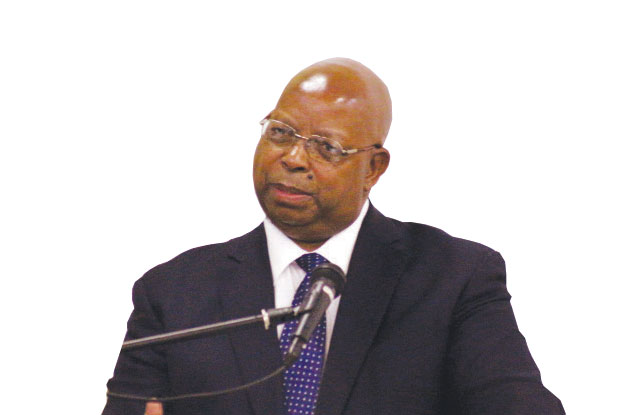
TRANSFORMING the economy through domestic resource mobilisation should be the main focus of the 2017 budget if last week’s Parliamentary consultative seminar in Bulawayo is anything to go by. Below, Speaker of Parliament Advocate Jacob Mudenda shares his views on the issue.
Despite spirited efforts to re-engage multi-lateral financial institutions with a view to clearing Zimbabwe’s arrears and in turn access international credit lines, it looks increasingly unlikely that Zimbabwe will receive any meaningful external budget.
This is inspite of the commendable strides that Zimbabwe had registered in implementing the Staff Monitored Programme with the International Monetary Fund (IMF), which ended in December 2015 whose strategic thrust was aimed at clearing IMF arrears.
We have not had any external budgetary support for over a decade now. Undoubtedly, therefore, domestic resource mobilisation is the only sustainable option towards total economic freedom. Additionally, this ensures that as leaders, we are accountable to our own citizens and tax payers rather than to donors as is the case in most financially and externally dependent countries.
The Parliamentary committee presentations should, therefore, anchor on domestic resource mobilisation that will guarantee a secured budget of not less than $6 billion so that Treasury can come up with a $10 billion budget.
Consequently, our current wage bill should drop to 45 percent (from the current estimated 90 percent) of the total budget.
It is possible. That is the tenure of the New Partnership for Africa’s Development (Nepad), which eloquently emphasises the need for Africa to strengthen domestic resource mobilisation in the wake of dwindling foreign aid and unfeasible lending conditionalities.
This principle was affirmed by the Addis Ababa Action Agenda of 2015, which underscored the centrality of national policy ownership to achieve Sustainable Development Goals.
The implementation of the Africa Union’s Agenda 2063, thus hinges on Africa’s ability to mobilise adequate domestic resources. Let us take a leaf from the Asian success stories where development was largely underpinned by domestic resource mobilisation.
Chinese and Indian development was buoyed by very high levels of domestic resource mobilisation, which complemented their accelerated integration into the global economy and the two countries have recorded phenomenal economic growth. These countries have moved away from reliance on international financial institutions for investment and other resources.
Fortified by these success stories, nothing can stop our country from following such growth trajectories, as we have shown so much resilience by braving illegal sanctions for nearly two decades. Parliament should enact legislation that strengthens domestic resource mobilisation and ensures effective use of indigenous resources.
Zimbabwe has clearly set out nationally defined domestic targets and timelines to achieve socio-economic development largely propelled by the judicious exploitation of the country’s abundant human and natural resources as enunciated in the Zim-Asset economic blue-print.
President Mugabe has also re-affirmed this broader macro-economic development agenda aimed at stimulating economic growth and creating employment in his 10-point plan presented to the August House 14 months ago.
It is about time that Parliament takes the lead in fostering a paradigm shift from decrying inadequate budgetary allocations without proffering concrete suggestions on how the country can boost revenue inflows.
It is high time Parliament metamorphosed from useless rhetoric on the need to reduce recurrent expenditure without proffering practical suggestions on how this can be achieved.
As you may be aware, revenue mobilisation efforts are being hampered by structural factors such as low per capita income, large informal sector, sophisticated tax evasion and avoidance techniques, large peasant agriculture and struggling manufacturing sector.
Raising adequate domestic resources to stimulate productivity and nurture an inclusive and resilient economy requires supporting legislation and that is where we come in as Parliament.
It is urgent and imperative that we come up with legislative proposals to: incentivise productivity, harness the contribution of the informal sector into mainstream economy, incentivise and attract domestic investors, promote value addition and beneficiation of our mineral resources and other agro-resources, tighten loose ends in tax legislation, improve the ease doing businesses and stem the growing tide of corruption and the attendant leakage of domestic resources in the form of capital flight.
Extracted from a speech delivered by Advocate Jacob Mudenda during the pre-budget consulation seminar held in Bulawayo last week.


 Bongani Ndlovu
 Online Reporter