admin
admin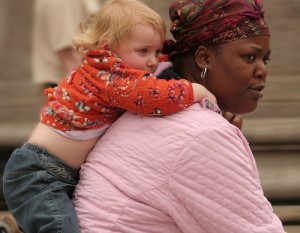

Gender Vaidah Mashangwa
DOMESTIC workers largely remain invisible in a world where they are critical to the functioning of national economies. They provide care to millions of the sick, the elderly, children and the disabled while making sure that families function. Generally they look after millions of dependents as their breadwinners go to work.
Women have more limited employment opportunities compared to men. While most people aspire for upward mobility, men have a better chance than women to be entrepreneurs, independent professionals and to own big businesses. For most women it is also difficult to secure financing to start-up businesses due to issues of collateral. As a result, women globally are likely to be trapped in poverty and are unable to rise out of their low-income status.
One other important factor is that education plays a critical role in social mobility. While both men and women have the same opportunity to education, occupational mobility has also been common among males. Across the globe, therefore, most women are employed as domestic workers.
While domestic workers have largely remained invisible, they have always been critical to the functioning of national economies according to the UN Women. They also enable professional women to take part in the labour force.
On a day to day basis domestic workers cook, clean, wash clothes, sweep, iron, help children with homework, feed and look after babies and young children yet their labour is rarely appreciated even by those around them. At times they even assume the role of the mother/wife when the woman of the house is away making sure that the husband’s clothes are washed and ironed to the satisfaction of all involved. Domestic workers virtually keep households and families running and most families can hardly do without their assistance. Above all, most of them do not sleep until everyone else has retired to bed. As if this is not enough, some women leave the total management of the home and children to the domestic worker.
There is the assumption across the world that domestic workers can do anything for so little and as a result most of them remain vulnerable to abuse and exploitation. The fact that in many countries domestic workers are excluded from National Labour Laws makes them vulnerable to ill-treatment.
The Labour Act is the principal law governing the right to work and it guarantees the right to work under equitable and satisfactory conditions. In 2013, the first International Labour Organisation (ILO) Convention on Domestic Workers came into force and it is envisaged that it will be a huge driver to change the manner in which the domestic workers are treated. The Labour Act itself has specifically incorporated provisions of the ILO Conventions that have been signed by Zimbabwe. The Labour Act also applies to the domestic workers.
According to the Republic of Zimbabwe Combined Report under the African Charter on Human and People’s Rights, the practical challenges faced by domestic workers are difficult to deal with since they are mistreated in the privacy of homes of their employers and they rarely meet with other fellow domestic workers to air their grievances.
According to the report, their plight includes low wages below those legally prescribed, long working hours and lack of benefits such as pension (for some who work continuously for more than 10 to 15 years) and maternity leave. On the other hand, most domestic workers prefer to remain quiet due to the fear of losing their jobs and some are reluctant to speak out preferring to maintain their good working relationships with their employers.
Their low salaries reinforce the stigmatisation of domestic workers and also perpetuate women’s low economic status. For those working women who prefer to juggle house work and paid employment, they find it cumbersome to do both efficiently and effectively as men are slowly embracing the domestic division of labour. When men work in the home it is usually to do with special tasks such as repair of water leaks and electrical faults, watering the garden and cleaning the car. Working mothers usually overwork in the early hours of the morning and late in the evening after work.
According to the book, ‘Sociology’, women still spend nearly three hours a day on average on housework excluding shopping and caring for children compared to an hour 40 minutes by men. Once children and shopping is included the gap becomes more pronounced.
According to the Sadc Gender Protocol 2013 Barometer Zimbabwe, in 2011 there were 14.5 percent unemployed women compared to 6.6 percent men. By then 59 percent of the women in the labour force were in communal farming.
Education was highlighted in the 2013 Barometer too as one of the impediments to women’s paid employment. The completion rates of women and girls at secondary school and tertiary institutions are much lower than those of men and boys. As a result women end up in lower paid and unskilled jobs that limit their economic and job opportunities.
For most women without primary education or with some primary education and some with partly secondary school or completed secondary but with no five O- levels, they have no choice but to become domestic workers. The economic blueprint Zim-Asset provides for increasing economic opportunities and employment for women and other vulnerable groups as well as increasing inequalities in education in conformity with the blueprint’s indigenisation, empowerment and employment creation thrust.
In both developing and developed countries the labour market is continually failing to absorb more and more workers into decent employment. There was an estimated 202 million women and men who were out of work by 2013 globally. With such high figures of unemployed people, it means that domestic workers will continue to work and take care of families in Zimbabwe or elsewhere.
In order to reduce the women’s workload and thereby also reducing the burden of work on domestic workers, governments ought to invest in basic infrastructure and services such as water and sanitation, health facilities and also expand child-care services in line with the needs of working women.
Apart from that, other governments have introduced the paternity leave in line with the maternity leave so that fathers also take care of the babies and young children. In 1974 Sweden was the first country in the world to grant parental leave as a family entitlement that both parents could share. In the following 15 years, Denmark, Finland, Iceland and Norway followed suit.
However, most nations are still pessimistic about paternity leave as it does not automatically translate to shared responsibility between men and women during that period. Other people do not support the idea as they feel that most men might still spend the leave drinking and going out.
Other countries are of the opinion that paternity leave may increase men’s longer-term willingness to assume child-care responsibilities within the home.
Vaidah Mashangwa is Bulawayo Provincial Development Officer Ministry of Women Affairs Gender and Community Development. She can be contacted on 0772111592 email [email protected]



 Online Reporter