

 Online Reporter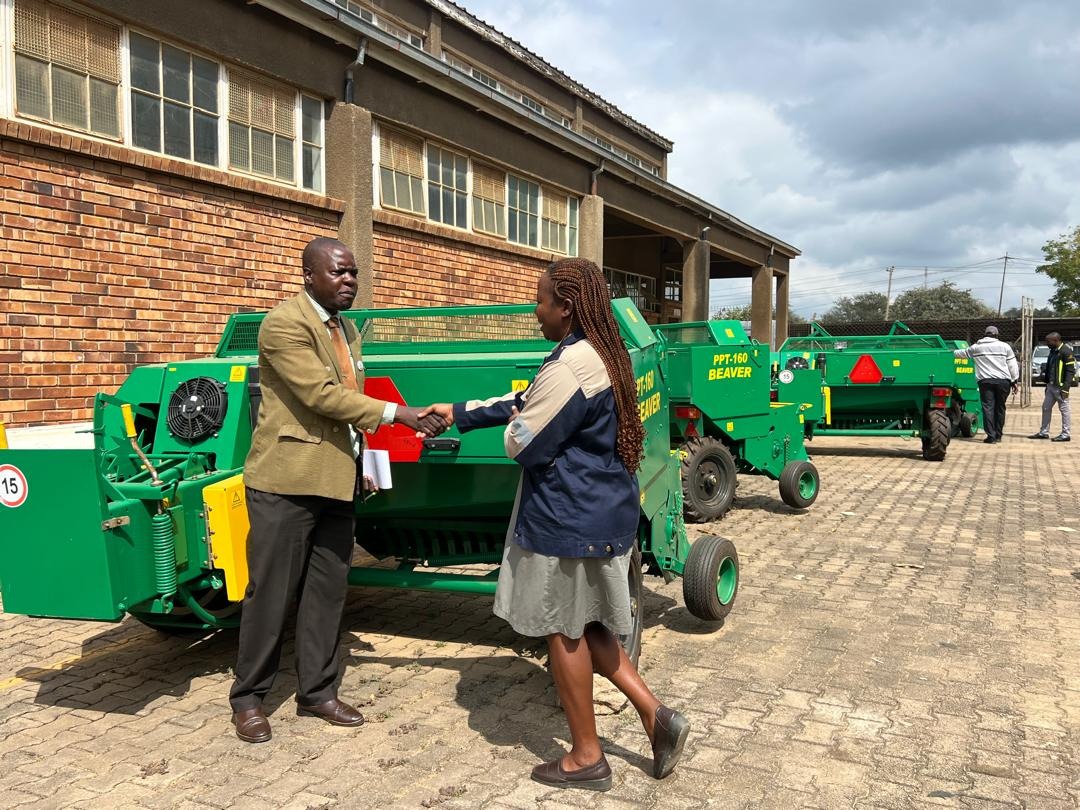
Thupeyo Muleya, [email protected]
LIVESTOCK farmers in Beitbridge and across Matabeleland South are being urged to change the way they manage their grazing land, with a strong call to stop burning grass and start preserving it for future use.
The Agricultural Advisory and Rural Development Services (AARDS) says the practice of burning grass, which is common in many farming areas, is doing more harm than good. Instead of clearing land, it is destroying a vital resource that could help farmers survive the harsh dry season.
Every year, large areas of grazing land are lost to veld fires. What many farmers may not fully realise is that this same grass could be collected, dried, and stored as hay — a lifesaver when natural grazing becomes scarce.
The message from agricultural experts is simple: the grass that is burnt today is the feed that will be desperately needed tomorrow.
Beitbridge livestock specialist Ms Cecilia Chakanyuka said farmers must begin to think ahead if they want to protect their animals and their incomes.
“Burning grass is killing our future feed. The farmers need to plan ahead. The grass you burn today is the hay you will cry for in October when your animals are thin and markets are low.”
Her warning comes at a time when many farmers in the region rely heavily on livestock for their livelihoods. In Beitbridge and much of Matabeleland South, cattle, goats and sheep are not just animals
— they are a key source of food, income and security for families.
From small household herds to larger commercial operations, livestock provide meat, milk and draught power, and are often sold to meet urgent financial needs such as school fees or medical expenses.
However, keeping animals in good condition throughout the year is a major challenge. The rainy season provides plenty of grazing, but once the dry season sets in, the situation changes quickly. Grass dries up, loses its nutritional value, and becomes insufficient for proper feeding.
Without additional feed, animals lose weight, become weak, and are more likely to fall sick. Farmers are then forced into difficult decisions, often selling their livestock at very low prices simply because the animals are no longer in good condition.
To address this problem, the Government, working together with its partners, has stepped up efforts to train farmers to treat livestock production as a business rather than just a traditional activity. These training programmes focus on planning, feed management, and simple methods that farmers can use to secure feed for the dry months.
One of the main points being emphasised is the importance of producing and storing alternative stock feeds.
According to Ms Chakanyuka, farmers have several practical options that they can start using immediately.
One option is to grow fodder crops such as sorghum, lablab and velvet beans during the rainy season.
These crops grow quickly and produce a good amount of green material.
“They grow fast and give a lot of green material that can be cut, dried and stored,” she said.
Another key method being promoted is hay baling, which is currently the Department’s main focus. This involves cutting natural grass while it is still green, allowing it to dry in the sun, and then packing it into bales for storage.
“Hay baling is our main message at the moment, natural grass from the veld can be cut when it is still green, dried in the sun, and packed into bales. The bales are then stored in a dry place and fed to animals later.”
Hay bales can be stored for long periods if kept in dry conditions, making them a reliable source of feed when natural grazing is no longer available.
In addition to hay making, farmers are also encouraged to make use of crop residues. This process, known as making stover, involves using the remains of crops such as maize after harvest.
“Making stover is another way to boost future stock-feeds, for instance after harvesting maize, the stalks and leaves that are left can be chopped and treated to make stover. This is another relatively affordable way to feed animals during the dry months.”
These methods are not only practical but also cost-effective. By producing their own feed, farmers can reduce their dependence on expensive commercial stock feeds, which are often out of reach for many small-scale farmers.
Equally important, these practices help protect grazing land from damage.
Ms Chakanyuka stressed that burning grass affects not just one farmer but the entire community.
“These methods help farmers to depend less on buying expensive feed and they also protect our grazing land. When you bale grass, you are saving it. When you burn it, you destroy feed for your own animals and for your neighbours’ animals.”
Beyond feed management, farmers are also being encouraged to improve the way they market their livestock. Selling animals at the right time can make a significant difference in the income they receive.
Ms Chakanyuka pointed out that many farmers make the mistake of waiting too long to sell their animals, often until the dry season has taken its toll.
She advised that livestock, especially cattle, should be sold earlier in the year when they are still in good condition.
The recommended period is between April and June, when animals are generally healthy and well-fed from the rainy season.
“By then everyone will be selling and prices will drop. From August to October only cattle getting supplementary feeding will be in good condition,” said Ms Chakanyuka.
This means that farmers who take the time to prepare and provide extra feed will have a clear advantage.
Their animals will remain strong, and they will be able to sell them at better prices even when conditions are tough.
“Farmers who make hay now will have stronger animals later. Strong animals fetch better prices at auction pens and abattoirs. We advise them to start supplementing food stocks from June until we have rains for the new season”.
The overall message is that planning and preparation are essential in livestock farming. Simple actions taken today — such as saving grass, growing fodder, and storing feed — can make a big difference months later.
As climate conditions become more unpredictable and droughts more frequent, these practices are becoming even more important.
Ms Chakanyuka said the Department will continue to work with farmers and partners to spread this knowledge and ensure that more communities benefit.
“Livestock is wealth. If we manage our grass well, our animals will stay healthy and our families will have income all year round,” said Ms Chakanyuka.
Her words serve as a reminder that grass is not just something that grows in the veld — it is a valuable resource that, if managed properly, can help secure the future of livestock farming in the region.



![The scope of domestic violence [part 1]](https://www.heraldonline.co.zw/wp-content/uploads/sites/2/2022/03/Violence.jpg)