

 admin
admin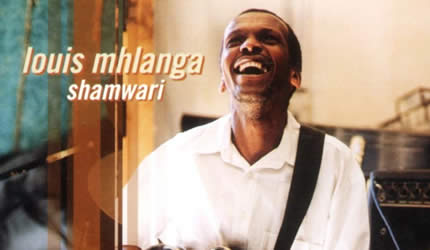
co-operation among people.
It brings together musicians, communities, schools and other groups all over the world to celebrate and learn more about the art of jazz, its roots and its impact and to highlight its important role as a means of communication that transcends differences.
In short, it brings communities together.
The famous American jazz musician and producer Quincy Jones once said: “Jazz has the power to make men forget their differences and come together.
“Jazz is the personification of transforming overwhelmingly negative circumstances into freedom, friendship, hope, and dignity.”
Around the world many governments, civil society organisations, educational institutions, and private citizens currently engaged in the promotion of jazz music are today embracing the opportunity to foster greater appreciation not only for the music but also for the contribution it can make to building more inclusive societies. The music called jazz was born sometime around 1895 in New Orleans, US.
Jazz, which initially was heavily influenced by work songs and church choral music, grew out of the cotton fields and plantations of the American South.
It was the music first sung by the descendants of African slaves as they toiled for their masters in the agricultural belt of the South, particularly in Georgia, the Carolinas, Texas and Mississipi.
As a musical language of communication, jazz is the first indigenous American style to affect music in the rest of the World.
From the beat of ragtime syncopation and driving brass bands to soaring gospel choirs mixed with field hollers and the deep down growl of the blues, jazz’s many roots are celebrated almost everywhere in the United States and the rest of the world.
Many musicians, whether they play soul, blues or rock, have taken their riffs from jazz music.
The city of New Orleans features prominently in the early development of jazz.
A port city with doors to the spicy sounds of the Caribbean and Mexico and large, well-established black populations, mainly of African descent, the Crescent City was ripe for the development of new music at the turn of the century.
Brass bands marched in numerous parades and played to comfort families during funerals. Also, numerous society dances required skilled musical ensembles. New Orleans was home to great early clarinettists such as Johnny Dodds, Jimmy Noone and Sidney Bechet. One of the first great cornetists, Joe “King” Oliver and his leading student and future star, Louis “Satchmo” Armstrong hailed from New Orleans along with other influential musicians including Jelly Roll Morton. However, the music did not stop there.
From Chicago and New York in the United States, jazz found its wings all over the world.
In Britain jazz clubs began to flourish at the beginning of the 20th century. Some of these clubs, such as Ronnie Scott’s are still in existence and have remained jazz centres for over 50 years.
In South Africa notable jazz artistes such as Hugh Masekela, Dollar Brand, the late Miriam Makeba, Kippie Moeketsi, Caephas Semenya, Letta Mbulu, Judith Sephuma and Sy Ntuli, among others, have kept this music genre alive. Every night at Kippies in Johannesburg and Mannenberg at the Waterfront in Cape Town, live jazz music is played.
In Zimbabwe the influence of jazz has also been felt in a big way. It began when Louis Armstrong visited the country (Rhodesia) in December, 1960 after the United States Information Services facilitated his tour of Africa. He was surprised at the similarities between kwela and jazz and later adopted August Musarurwa’s 1951 tune, “Skokiaan”.
Since then, a number of jazz groups have been formed. Although some groups prefer to call their type of music, kwela or township music, there is no doubt that the jazz influence is pervasive.
Kwela music in Zimbabwe started on penny whistles which were cheap musical instruments and was played on the streets. It developed into band music as more and more people began to appreciate it.
From the early 1950s to the year 2013, a lot of jazz bands and individuals playing jazz have sprung up in Zimbabwe.
Jazz has a fascinating history in Zimbabwe. Zimbabwe has had a profound influence on “African jazz” with such luminaries as Dorothy Masuka, The Cool Crooners, saxophonists Simangaliso Tutani, Albert Musarurwa, trumpeter Paul Lunga, pianists Chris Chabuka, guitarists Robert Moore, Louis Mhlanga, David Ndoro of Luck Street Blues, drummer Jethro Shasha and bassist Bryan Paul, who were the jazz heroes of the struggles of that time, who reached audiences beyond our borders.
In more recent years a new generation of powerful jazz artistes has emerged — all are well-known and acclaimed in Zimbabwe, and have also toured in the region and internationally. Many, many more perform at home, some struggling for the love of jazz.
Last weekend, the Book Café in Harare hosted several jazz groups to celebrate the International Jazz Day.
It kicked off with Prudence Katomeni-Mbofana on Thursday night then followed by Dudu Manhenga, Philbert Marova and Blaqberry Music featuring Eve Kawadza, Pablo Nakappa and Friends, Clare Nyakujara and The Real Deal featuring Pablo Nakappa, Blessing Muparutsa, Josh Meck and Nick Nare at the weekend.
Over the years, Zimbabwe has had many jazz groups and individuals such as The Cool Crooners, Mbare Trio, Epworth Theatrical Strutters, The City Quads, Shot-Gun Boogie, Sunny Sondo, The Milton Brothers, Faith Dauti, Kelly Rusike, Victoria Chingate, Summer Breeze, Harare Drive, The Gay Gaeties, Alick Nkata, Jeremiah Kainga, City Slickers, The Marshall Brothers, Broadway Quartet, Simangaliso Tutani, Chris Chabuka Jonah Marumahoko, Josh Meck, Andrew Chakanyuka, Louis Mhlanga, Lina Mataka, Mabel Bingwa, Dorothy Masuka, The Survivors’ Band, Two Plus Two, Harare Mambos, Fanyana Dube, Paul Lunga and Jazz Impacto, Basil Kampeu, Moses Kabubi, Mhepo, Mudzimu Hilton Mambo, Fungai Malianga, Bob Nyabinde, Philip Svosve, Jabavu Drive, Philbert Marova, Dumi Ngulube and Amagents, Roger Hukuimwe, Timmy Makaya, Ernest Tanga Wekwa Sando, Duduzile Manhenga, Maita Women’s Jazz Band, Patience Musa and The Other Four, Jazz Invitation, The Six Band, Mateo and Friends, Sam Mataure, Penny Yon, Gibson Mandishona, Too Open, Blessing Muparutsa, Jethro Shasha, Victor Kunonga and many more.
Events in Harare are mainly held at the Book Café or Jazz 105 and lately Dr Ibbo Mandaza has opened up a jazz venue at Sapes Trust in Belgravia.
In spite of this rich pool of jazz talent, the market is not strong, and many former jazz venues in the capital have branched out into other genres in order to survive. The jazz platform is therefore threatened, and every effort must be made to defend jazz platforms, promote its rich music culture of diversity and its artistes.
With so few venues and so many talented jazz musicians in the country, it looks like the future of jazz music is uncertain, but we all hope that jazz will survive.
l Fred Zindi is a professor at the University of Zimbabwe. He is also a musician and an author of several books on music. He can be contacted via e-mail on [email protected]


 Online Reporter