Talking Farming Ronald Veremu
LIVESTOCK production remains an important source of income, food security and household wealth for many Zimbabwean farmers.
From cattle and goats to sheep and pigs, the health of livestock determines the productivity and profitability of farming enterprises. Yet one of the most common challenges facing farmers, particularly small-scale producers, is the management of internal and external parasites.
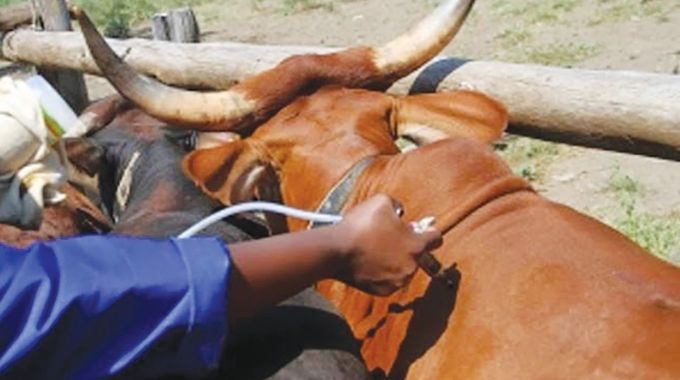
Dosing is an important livestock health management practice that helps control internal parasites, particularly worms. When properly implemented, it improves animal health, growth, reproductive performance and overall productivity. However, dosing should not be treated as a routine activity performed without considering the animal, the parasite, the season or the medicine being used.
In livestock production, dosing commonly refers to administering an appropriate veterinary medicine, particularly an anthelmintic or dewormer, to control internal parasites such as roundworms and tapeworms. Some products also target liver flukes. Internal parasites compete with animals for nutrients, damage the digestive system and may cause anaemia, diarrhoea, poor growth, reduced milk production and, in severe cases, death.
Young animals are particularly vulnerable because their immune systems are still developing. Calves, lambs and kids may experience poor growth when parasite burdens are high. For breeding animals, parasite infections can contribute to poor body condition and reduced reproductive performance. For the small-scale farmer, these losses can be substantial. A calf that fails to grow properly represents lost future income, while a breeding cow in poor condition may take longer to conceive.
There is no single dosing calendar suitable for every farm. The timing of treatment should be guided by the parasite involved, the animal’s age and condition, the production system, seasonal conditions and veterinary advice. Nevertheless, Zimbabwe’s seasonal pattern provides useful guidance.
At the end of the rainy season, warm temperatures and wet conditions generally favour the development and survival of many gastrointestinal worm larvae on grazing pastures. As a result, parasite exposure may increase during the rainy season. Strategic treatment around the end of the rains may be appropriate where parasite burdens are significant.
At the beginning of the dry season, farmers should assess the health and parasite burden of their animals as they transition from wet-season grazing to dry-season conditions. Research conducted in Zimbabwe’s communal cattle production systems has demonstrated the benefits of appropriately timed treatment against gastrointestinal nematodes, including improvements in weight gain in treated animals.
Before breeding, breeding cows, heifers and bulls should be assessed for parasite burdens and general health before the breeding season. Treatment may be necessary where parasites are compromising body condition or reproductive performance.
For young animals, that is, calves, lambs and kids require particular attention. Their dosing schedules should be determined according to age, exposure, clinical signs and veterinary recommendations.
When signs of infestation appear, evident through persistent diarrhoea, poor growth, a rough coat, weight loss, pale mucous membranes or swelling beneath the jaw may indicate parasitism.
However, these signs can also be caused by other diseases, so diagnosis is important.
Cattle, goats, sheep and pigs can all be affected by internal parasites, but their parasite burdens and treatment requirements differ. Goats, for example, are particularly vulnerable to certain gastrointestinal worms, including Haemonchus contortus, which can cause severe anaemia. Sheep may also experience significant worm burdens, especially under intensive grazing systems. Farmers should never assume that a dewormer suitable for cattle will automatically be appropriate for goats, sheep or pigs. The medicine, dosage, route of administration and withdrawal period must be suitable for the particular species.
One of the most common mistakes in livestock dosing is administering an incorrect quantity of medicine. Under-dosing may fail to eliminate parasites and can contribute to the development of anthelmintic resistance. Overdosing may cause toxicity, depending on the product and species.
Farmers should therefore, estimate or measure animal body weight as accurately as possible, use the correct product for the target parasite, follow the manufacturer’s instructions, use properly calibrated dosing equipment, observe meat and milk withdrawal periods and keep records of treatments administered.
Withdrawal periods are particularly important for farmers supplying milk, cattle or goats to commercial markets. They ensure that veterinary medicine residues do not enter the human food chain.
Repeatedly using the same dewormer without proper guidance can result in parasites becoming resistant to the medicine. When resistance develops, the product becomes less effective, making parasite control increasingly difficult and expensive. Farmers should avoid indiscriminate dosing and seek veterinary guidance on appropriate parasite control strategies. These may include faecal egg counts, targeted treatment, pasture management and the use of different anthelmintic classes where justified.
Dosing alone cannot compensate for poor nutrition, inadequate water, overcrowding or poor hygiene. Animals that are undernourished may struggle to recover even after parasite treatment.
For Zimbabwe’s small-scale livestock farmers, the most effective approach is to combine strategic dosing with good feeding, clean water, proper housing, routine observation and veterinary support.
Ultimately, healthy livestock are productive livestock. By understanding when, why and how to dose, farmers can reduce avoidable losses, protect their breeding stock and improve the profitability of their enterprises.
Ronald Veremu is an independent livestock and agriculture development specialist. He writes in his own capacity.
Feedback: [email protected] Cell: +263772898722.